Blog

AMP workshop – dis-assembly of a refrigerator

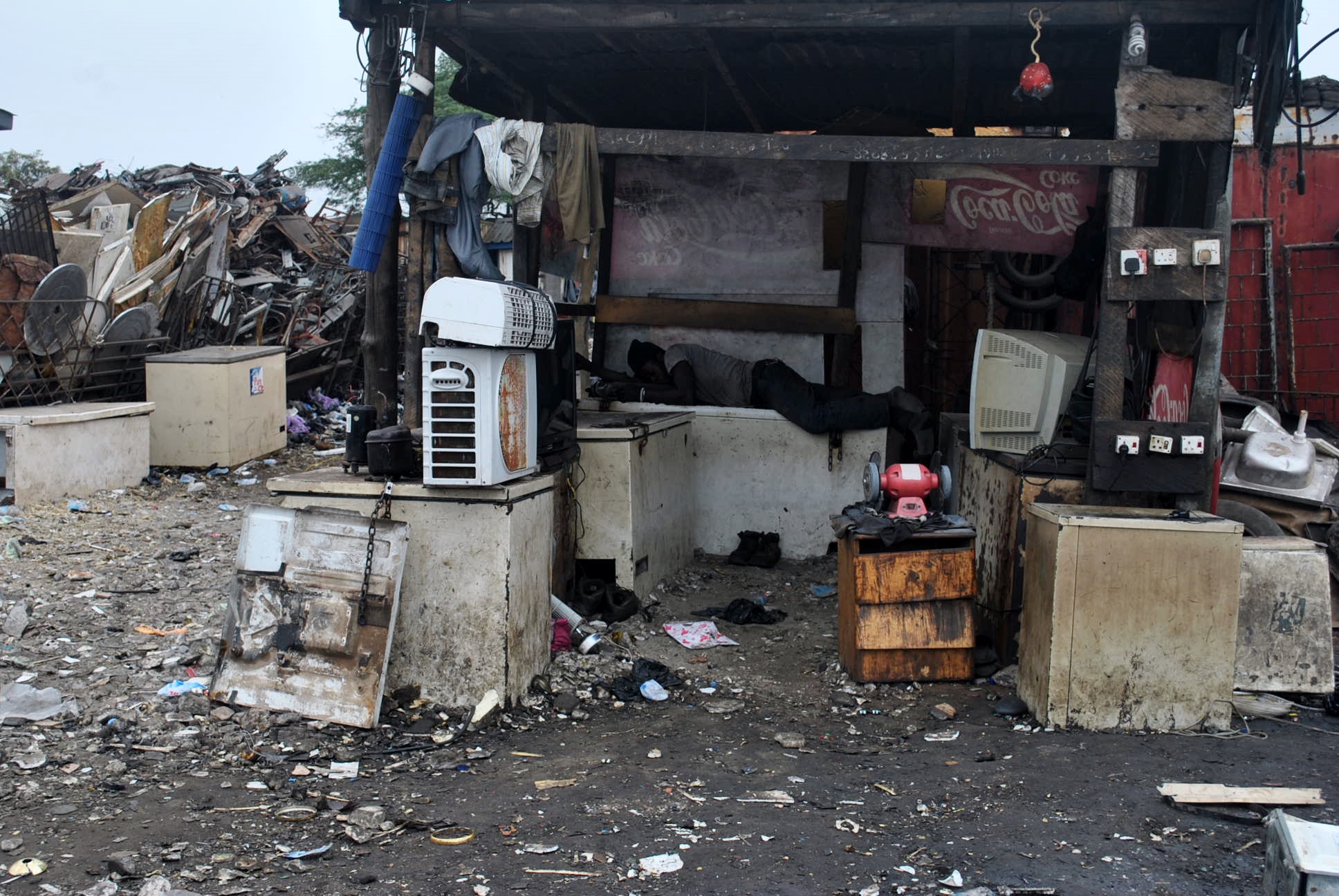
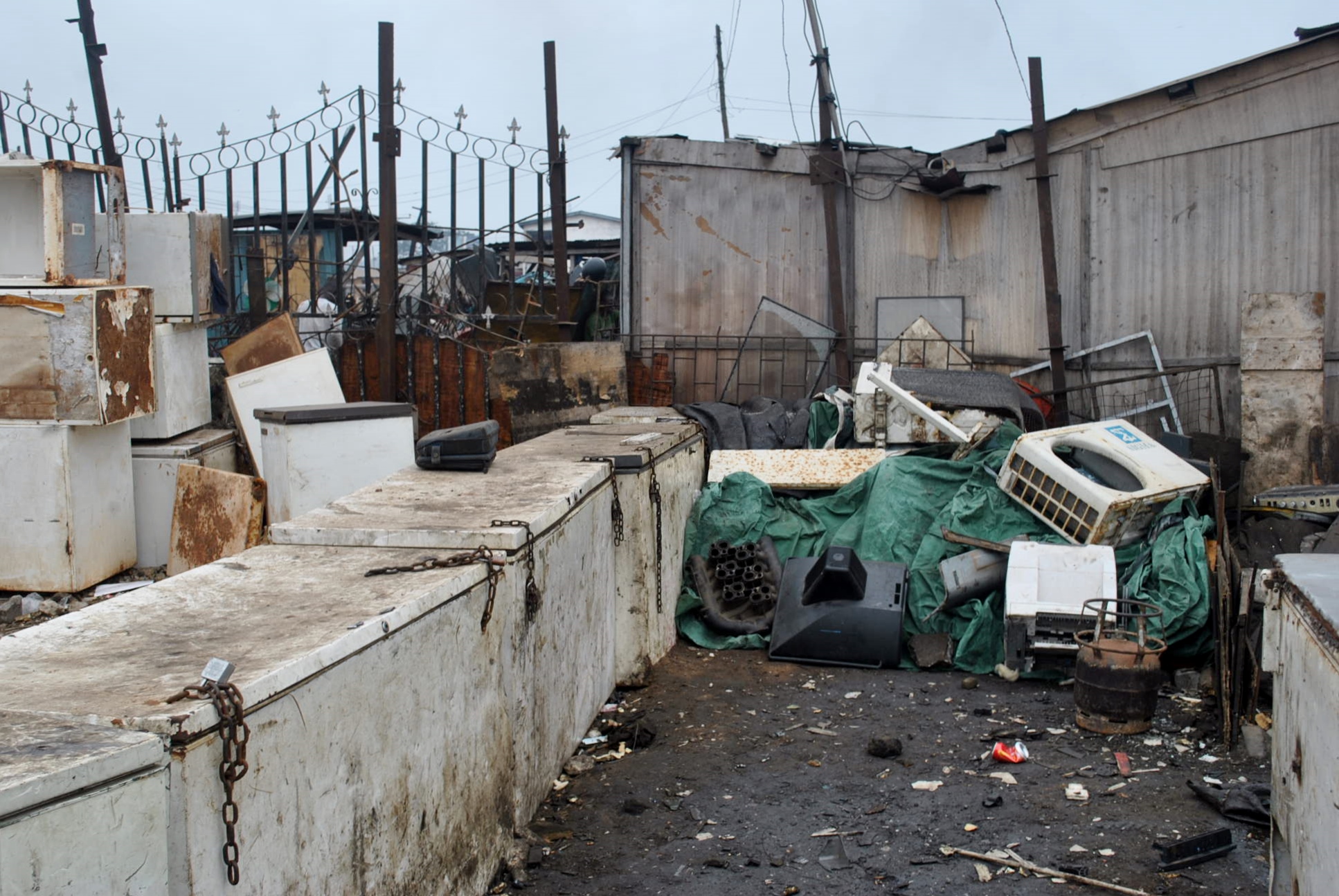
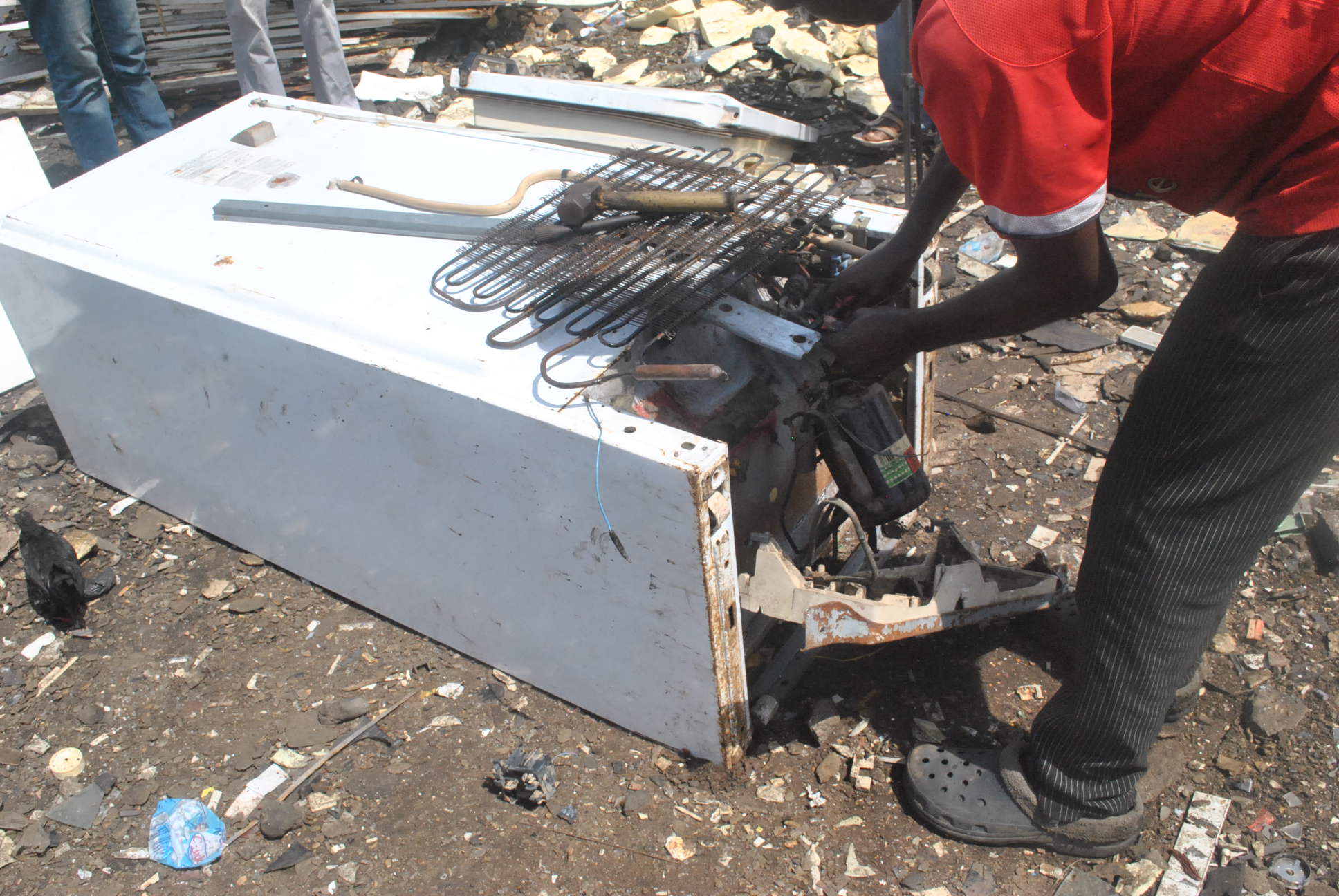
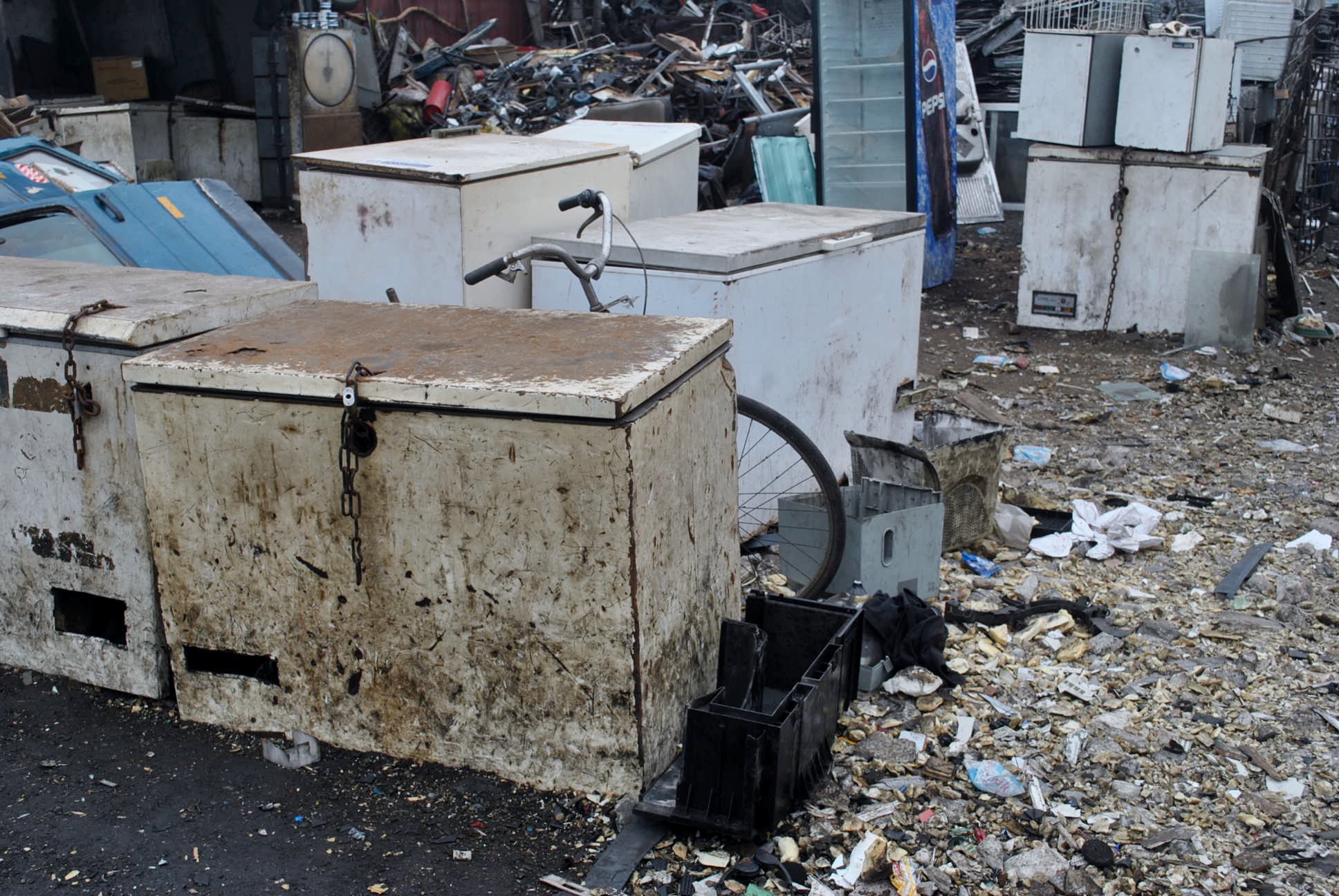
Refrigerators are among the most dismantled electronic equipment in Agbogbloshie if not the most dismantled. This is evidenced by the large numbers of the post-dis-assembly debris found all over the Agbogbloshie landscape. Data from Customs, Excise and Preventive Services (CEPS), Government of Ghana, on the import of EEE (all products) was obtained for the period 2006 to 2009. The records indicate that for the 4-year period, a total of 3,763,100 units of EEE were imported and refrigerators recorded the highest in 2009. They are used especially for the purposes of storing personal belongings and tools (see photos).

On the 5th of April 2014, the AMP team was onsite at Agbogbloshie for a refrigerator dismantling workshop. This workshop was a critical first, in a series of e-waste worker centered workshops that would be held in Agbogbloshie. The main purpose of these is to gain a deeper understanding of the process involved in the dis-assembly at Agbogbloshie, the tools involved, material components of equipment, and their prices at Agbogbloshie. Quite apart from this, they would enable us tailor the EEE manual, to suit the information needs of the e-waste workers and maker community in Agbogbloshie as well as interested STEAM workers.

The day before the workshop, Emmanuel, our design associate, aided by Mohammed, an e-waste worker, purchased a refrigerator.

The workshop was held in a space owned by Rauf. This was because, the team realized, it was going to be a more efficient use of its time to have it here, where there is already some degree of shelter, rather that erect a new one on the AMP site. In Agbogbloshie, the harsh noon day solar conditions, can make the high levels of pollution feel considerably worse. Hence the initial decision to build a new temporary shelter.

Zack (an e-waste worker) started by taking apart the doors, then the compressor, fan and all other components in the lower recesses of the fridge. Following this, he detached the outermost body, which is made out of steel. After these, he proceeded to remove the evaporator fan, evaporator coils and other components in the freezer section (See image Workshop photos). Now all that was left was a large open chest, comprised essentially of polyurethane foam (which he proceeded to remove next) and the plastic inner lining of the refrigerator. In the final stage, the doors were dismantled, by unscrewing and detaching their inner plastic components from the steel outer casing. All the dismantled parts were then photographed (see Parts of a refrigerator).

Subsequently, Andrew (from Afrimakers) made a video, in which Zack shared his knowledge in the local dialect (Dagomba) and English, on the dismantling process. This would be the first of many such local dialect explanatory videos.

Here a few discoveries that were made

  1. The  process of dismantling refrigerators in Agbogbloshie is not directed towards potential reuse of parts. Thus far, the orientation is towards breaking it all down to its basic material for smelting. Hence very little care is taken in the process:
  2. The items were weighed and the prices were as follows
  • Steel: 61 kilograms (Equivalent to 18 GHC)
  • Copper: 4 pounds  (Equivalent to 24 GHC)
  • Aluminium : 5 pounds (Equivalent to 5 GHC)
  • Timer: 3-5 GHC
  1. The fridge was bought for 100GH cedis, twice more than the price of its dismantled parts.
  2. During the opening/dismantling of the compressor, Zack inhaled without bother, the freezer gas that was emitted. This gas is non-toxic to human beings however inhaling directly could be dangerous and could settle in the lungs and cause adverse effects.

The day ended with a barbeque on the AMP site (see AMP barbecue). In line with the dictates of Islam, the goat was prayed over and slaughtered by an Imam at the market and transported to the site, where some e-waste workers (2 in number, supported by several others-about 6 others) aided in its preparation. When it was all done, a number of the e-waste workers came over for the feast and this helped the team bond with a number of them.
 

DSC_0022DSC_0204DSC_0179DSC_0168

The Emergent Vernacular

Sénamé-Behrang

The M&D seminar organized a round table on the emergent vernacular.

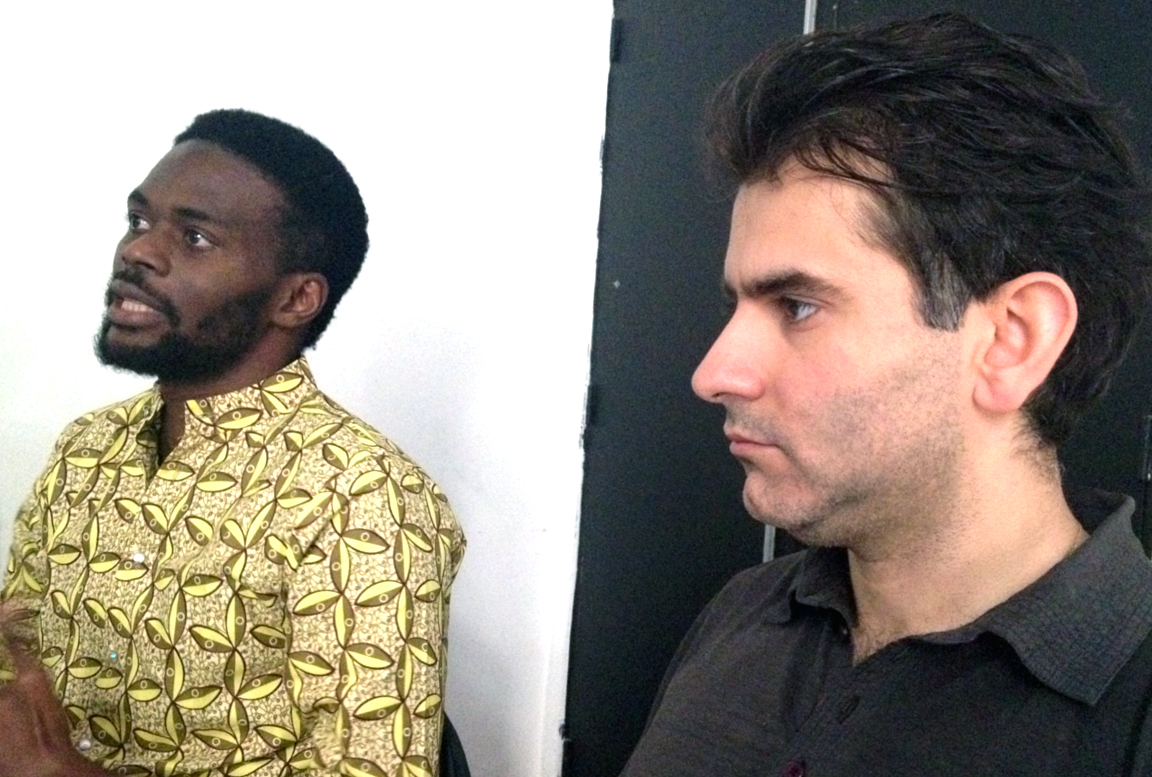
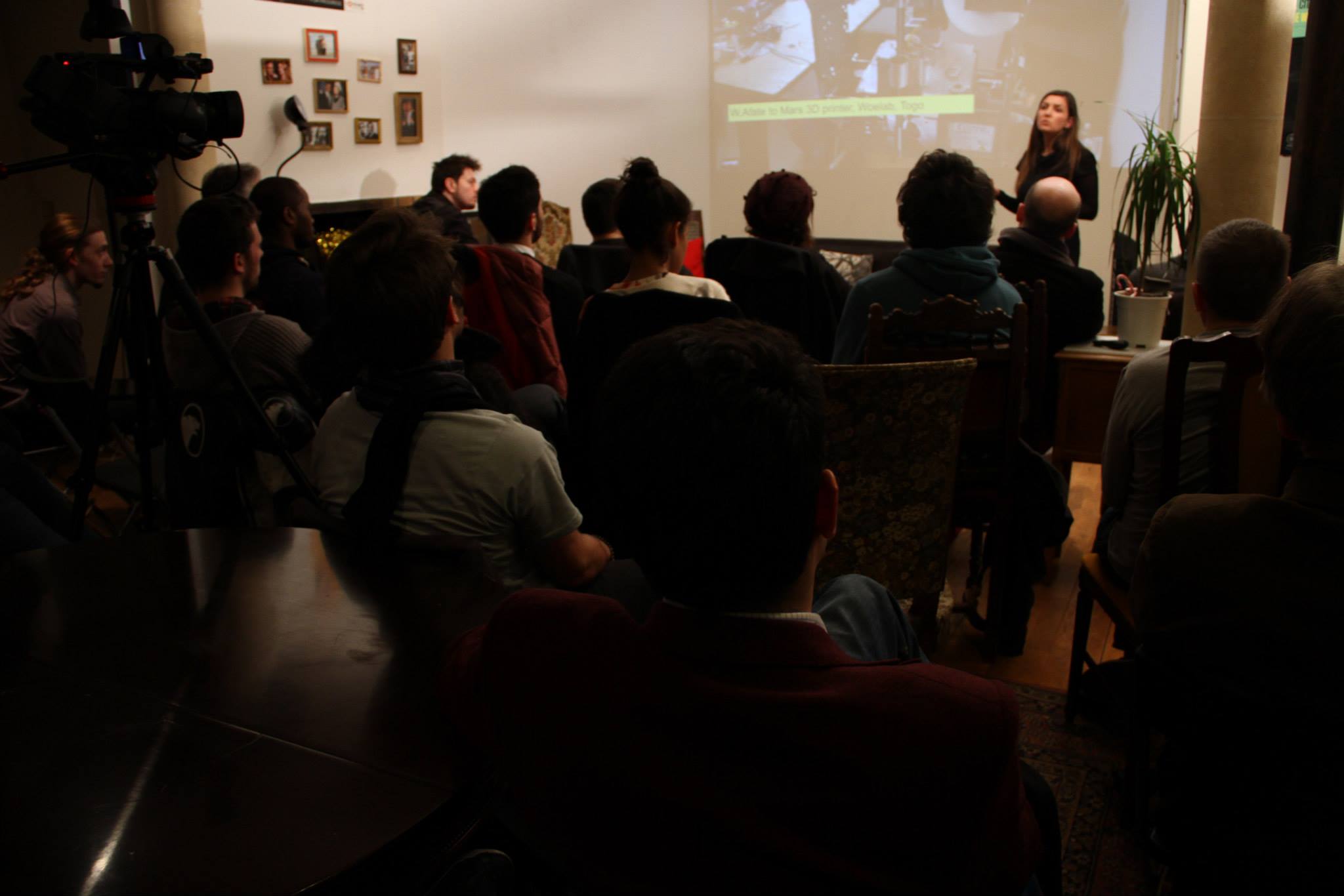
Behrang Fakharian, vernacular architecture expert and Sénamé Koffi A., architect and anthropologist, co-founder of the association L’Africaine d’Architecture and the Woelab, the first makerspace in Togo, have shared their respective experiences to explore the hypothesis that vernacular architecture and “open-source” design have comparable modes of production such as the peer-to-peer transmission of knowledge or the creation of “architecture without architectes”.

The Makers and Development seminar is a semester 6 course taught by Yasmine Abbas, Professeur Associé at l’Ecole Spéciale d’Architecture. People of the seminar MAKE, a semester 5 course taught by Marie Aquilino at l’ESA, joined the round table. The M&D and MAKE seminars are organized as a vertical offering to explore in depth issues of making in complex contexts.

We filmed the conference and we hope to share it with you very soon!

Meanwhile, find some readings/viewings on the neo-vernacular here and here.

M&D STUDENTS WINS THE PRESELECTION TO THE 2014 NASA CHALLENGE!

[FRENCH]
[ Original post by Yasmine Abbas]

12-13 April 2014, “student seminar S6 Makers & Development (M & D) taught by Yasmine Abbas and seminar S5 Make taught by Marie Aquilino had the opportunity to participate in the hackathon organized by the NUMA (first space Co-working in Paris) and CNES . The event took place at fablab the Digital Crossroads 2 of the Cité des Sciences (with stunning views of the Geode!). Students are divided into three interdisciplinary teams to meet NASA challenges that republishes a series of challenges organized into five themes: robotics, technologies related to space, space travel, observation of asteroids and the planet earth.

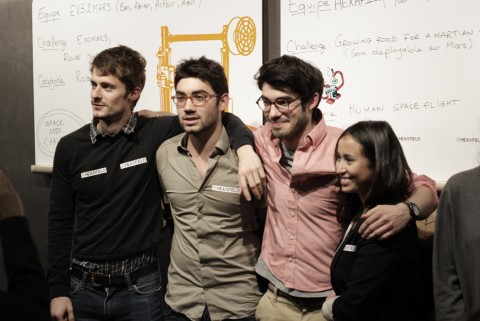
Hexafield TeamHexafield Team from left to right – Frederic Grandjean, Nicolas Benmussa (ESA S6), Charles Clement (ESA S6) and Yasmine Sarehane (S9) whose work focuses on the degree of lunar habitat © Guilhem Boyer

A team worked on the deflection of an asteroid, the other on creating a budget small satellite and the third generation of a deployable greenhouse on Mars. The educational goal was to immerse themselves in the world of a fablab pourproduire in one weekend a coherent concept in collaboration with people from different worlds and discussion with teachers from both seminars (coaches mobilized for the weekend) and robotics experts (including Olivier Grossat who spoke to ESA for a conference and workshops on 3D printers), computer and user experience.

This is the public, visitors to the city of sciences and participants hackathon, which ultimately decided the two winning teams from the five who competed. Students were part of the ESA-teams HEXAFIELD Send “flowers” on Mars (the greenhouse on Mars) and SWARM EXPLORER (satellite budget)!

Yasmine Sarehane (S9), Nicolas Benmussa (S6), Charles Clément (S6), Kawtar Sayegrih (S5) and Muriel Ferneini (S5) now “galactic problem solvers” were among the shortlisted for the support of the NASA teams and each received a membership card for one year fablab the Cité des Sciences. ”

Read more .

The value of un-making

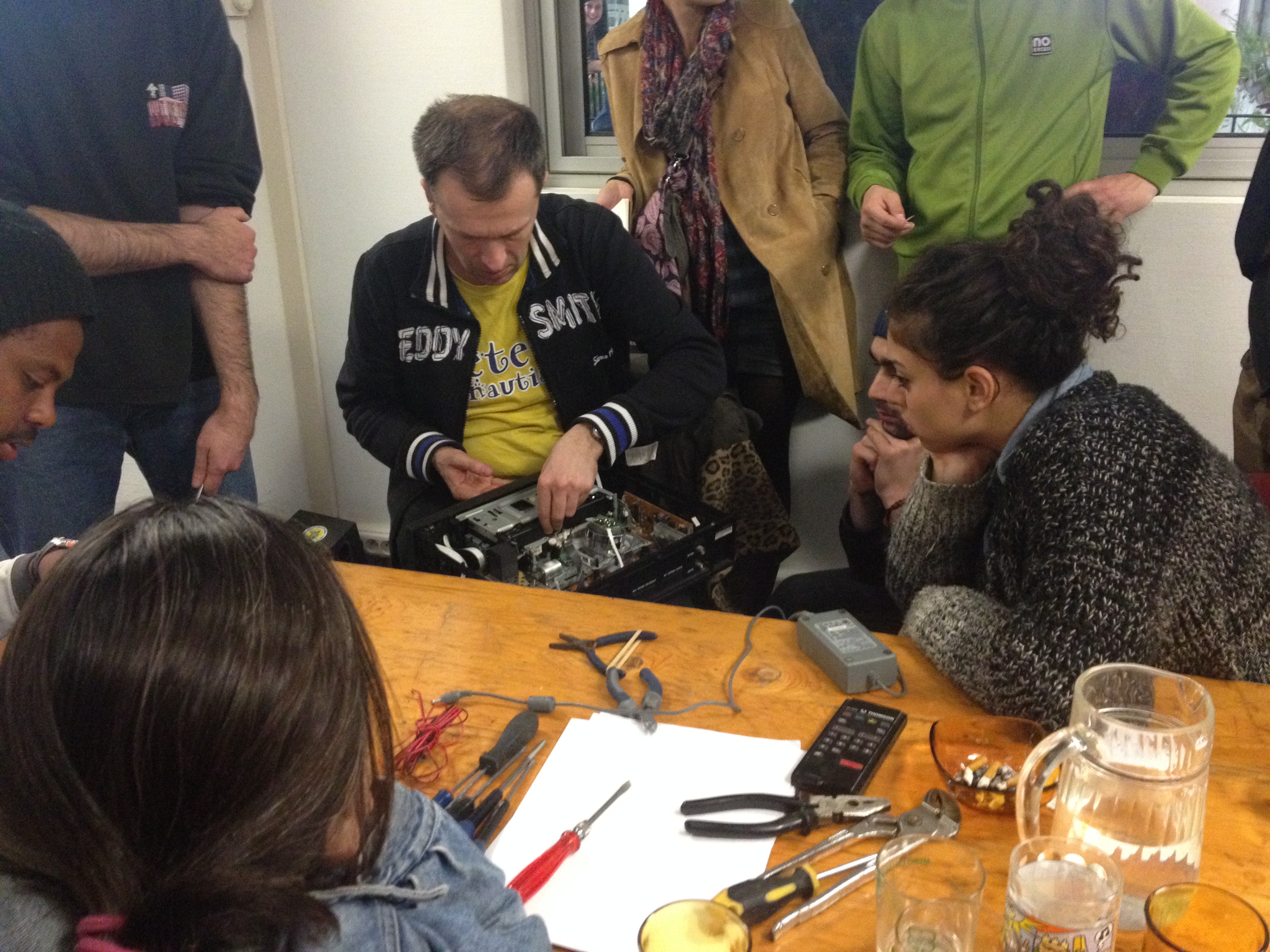
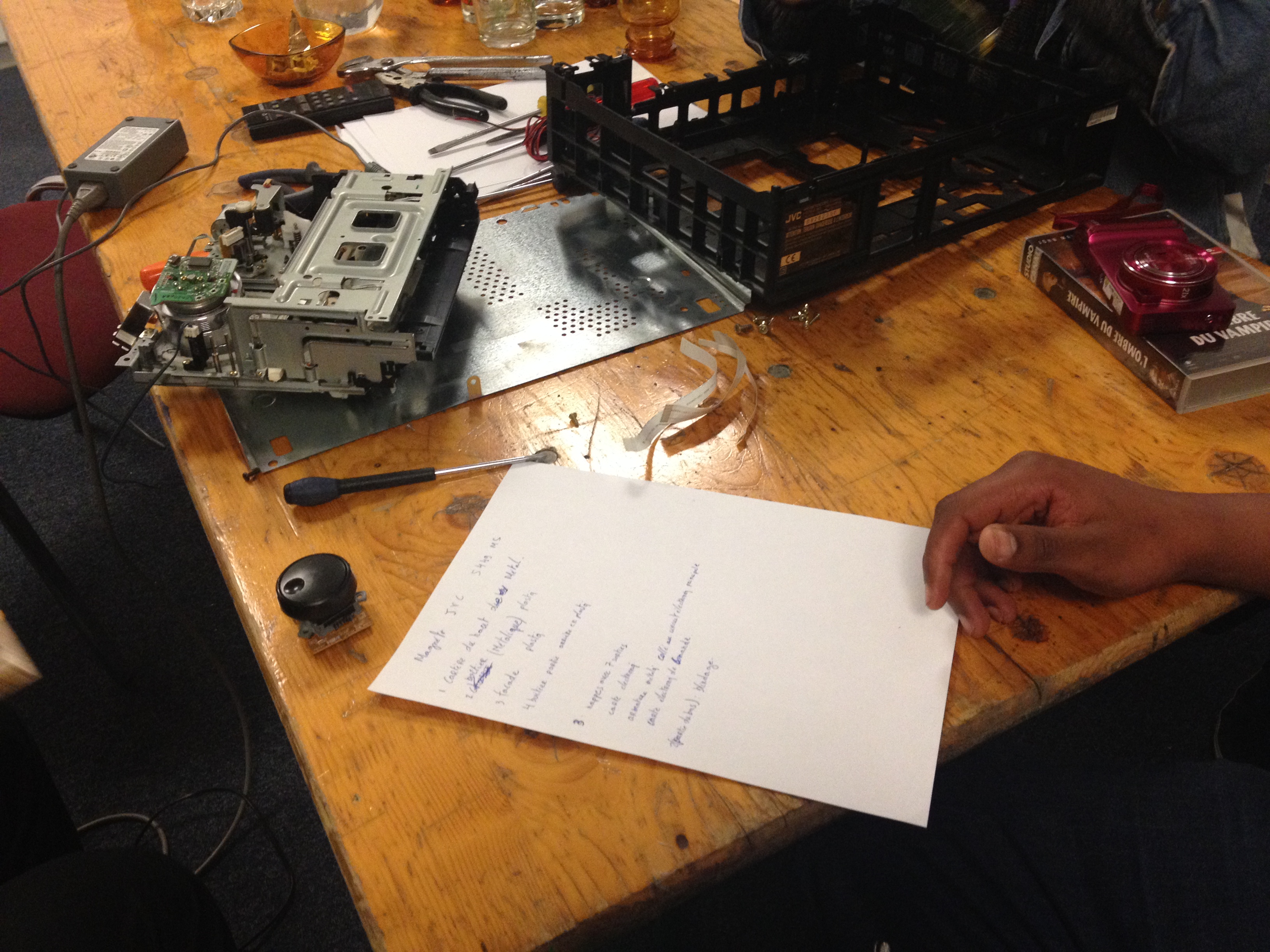
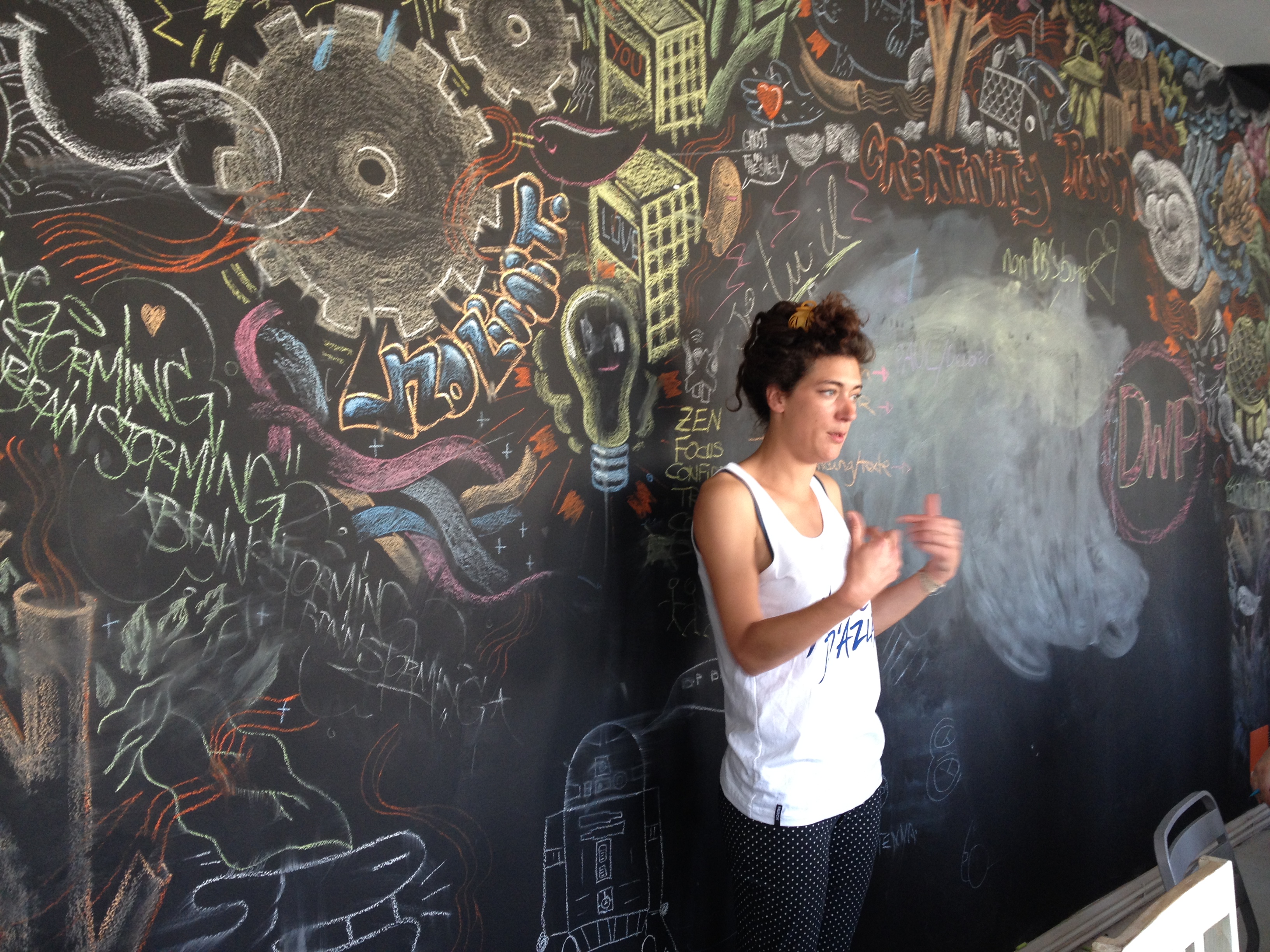
Friday March 14, 2014, the M&D class went to an e-waste dis-assembly workshop at La Rockette Libre, a collective comprising of open-source associations. Thank you to Cyril, co-founder of Electrocycle, the association which organized the event. Find the list of items that Cyril and his friends have already catalogued and don’t hesitate to join them every second Friday of the month to contribute!

This workshop was pedagogical for various reasons:

  • It de-emphasized the high level know-how needed to dis-assembly
  • It made participants realize that as the electrical and electronic equipment becomes obsolete, few parts could be reused for electronic mash-up, some could be kept to repair similar equipments (for example keeping a special connection that could be faulty in another device)
  • Participants realized that while sorting appeared essential, it did require a thorough record of process and organization (number or weight of the pieces collected, step-by-step dis-assembly manual)
  • It became clear that given the wide range of brands and models, keeping parts for future use necessitates storage facilities – screws could be sorted out by type and size (size number to be found by comparing them to these found in stores)
  • Un-making or “reverse engineering” is a valuable learning process, which can also be a fun activity
  • It taught us about the importance of saving resources and doing so in the safest manners as possible–thanks to the experts who came along

Following the session, a team of students comprised of Nicolas Benmussa, Charles Clément and Oscar Aguila produced a short video entitled “In E-waste We Trust” and describing how the dis-assembly process went.

This video is not yet a step by step tutorial but it makes us think that it could be. In the context of Agbogbloshie, where not everyone speaks the same language or where many are illiterate, video tutorials could be a medium for delivering basic understanding of e-waste handling much like the videos of the Khan Academy which deliver knowledge to students around the globe.

unmake 3 unmake 5

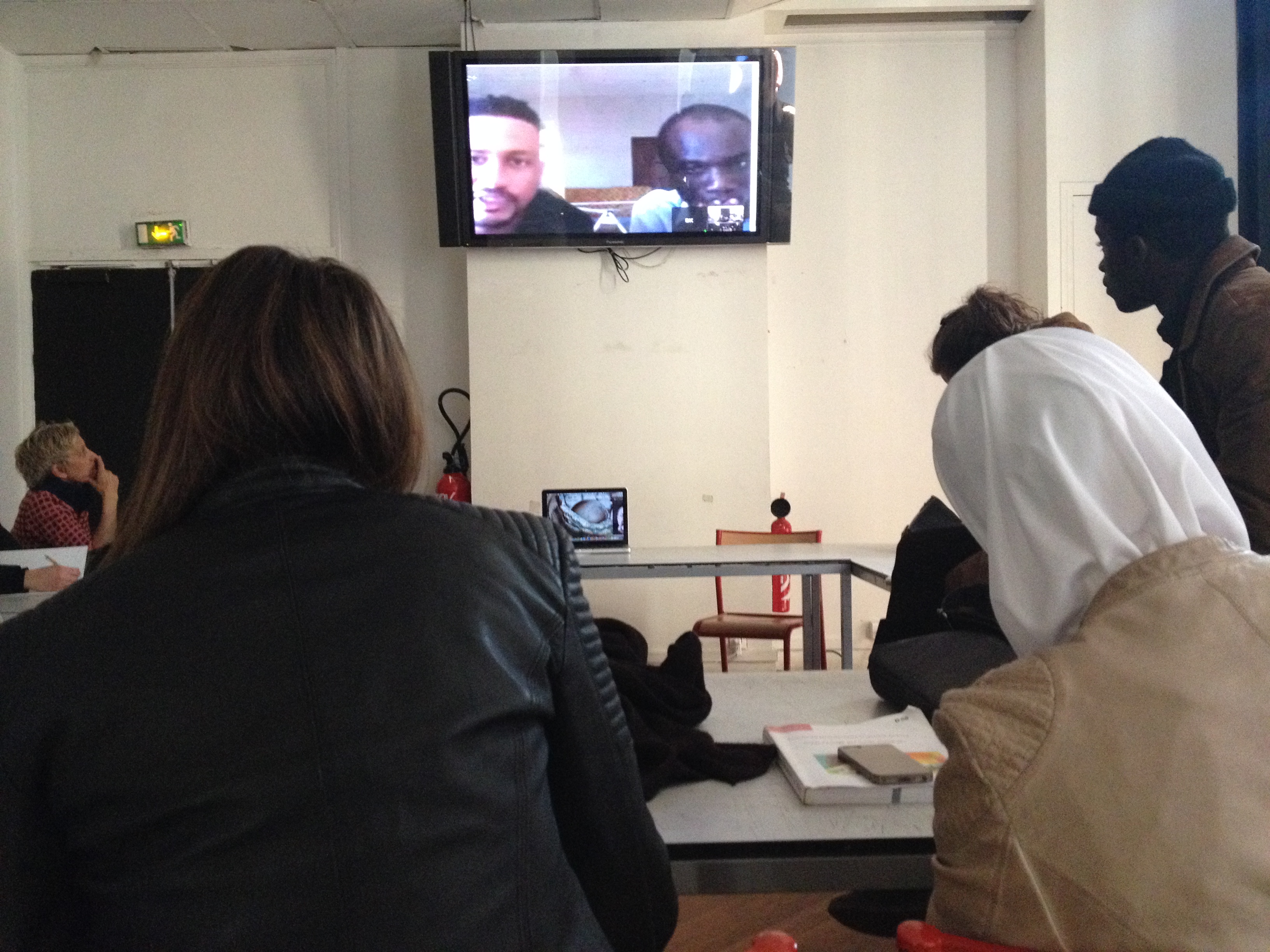
Q&A session with the AMP team in Ghana!

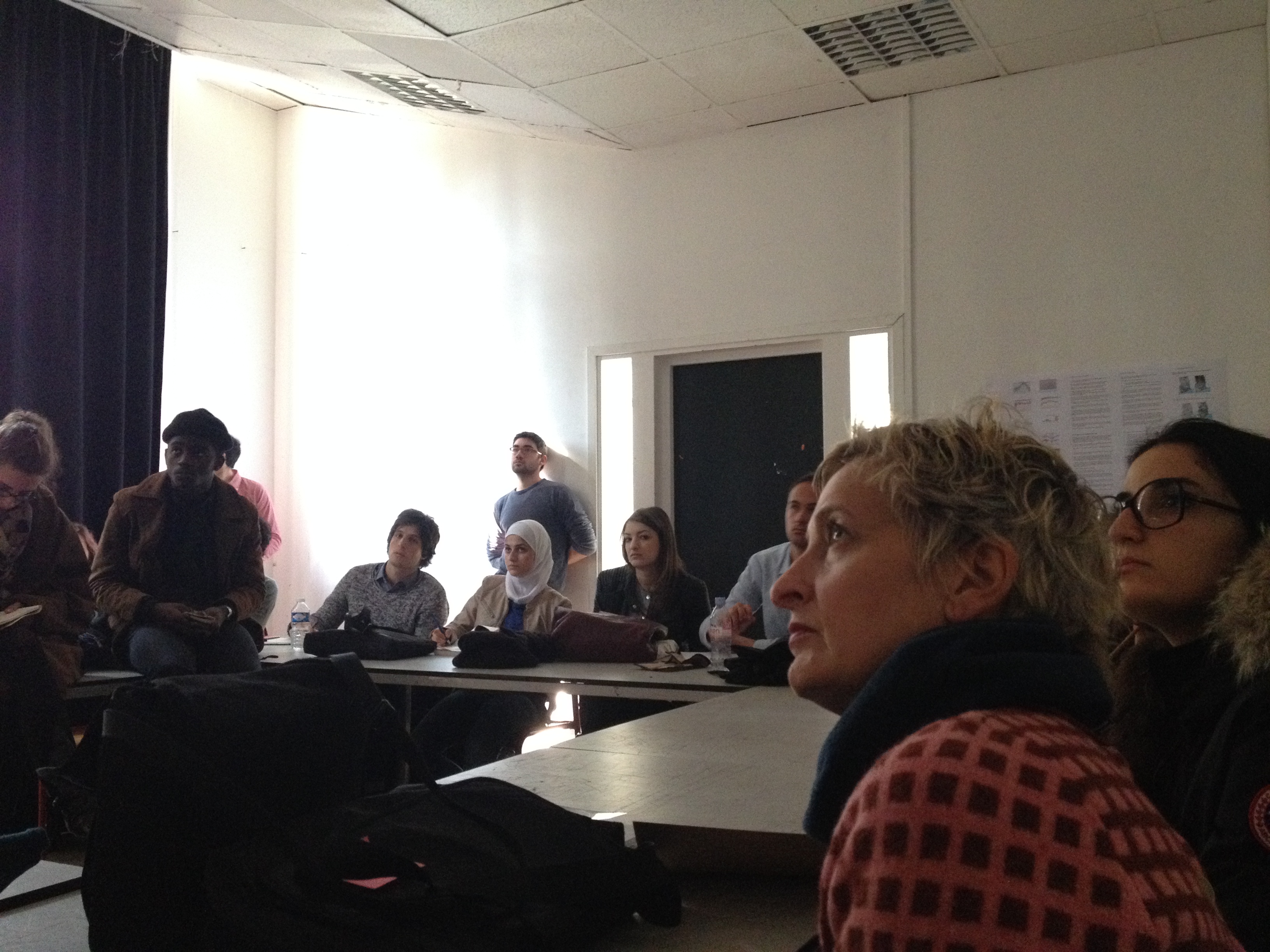
Find below a couple of pictures of the Q&A session organized for the Makers & Development (M&D, aka QAMP) seminar at l’ESA this past Wednesday. Marie Aquilino’s seminar Make joined the session. Thank you for making this collaboration happen !!! The conversation that took place revealed the many dimensions of the AMP project, social, environmental and economic, how for example e-waste was brought to site and how did we map the ecosystem of e-waste and deeper insights into current e-waste handling practices as observed during these months of fieldwork. Thank you Dk Osseo-Asare and Emmanuel Kusi Ofori-Sarpong for taking the time to answer the many questions that students had. We look forward to share with you the progress of the class !

photo 1 photo 2 photo 3 photo 4

Afrimakers tour Agbogbloshie

DSC_0245

The AMP team proudly hosted Afrimakers-Ghana at their Agbogbloshie site on the 13th of March 2014. The guided tour of the e-waste dump and maker community turned out to be highly informative for both groups, as it occurred amidst casual conversation and exchange of ideas. Among the Afrimakers group were, Stefania Druga (founder of HacKIDmedia, a global network, that gives kids hands-on problem solving skill through play centered workshops and tools), Victor Ofoegbu (organiser of Afrimakers-Ghana workshop – pics on qampnet), Ahmed Bastawy (entrepreneur, facilitator, and engineer).

The AMP team is excited about the visit and the prospects of future collaboration that it promises.

20140321_123552-MOTION
Arduino bot Afrimakers Ghana Maker Faire at Ghana Technology College

Spring 2014 QAMP seminar – NUMA visit!

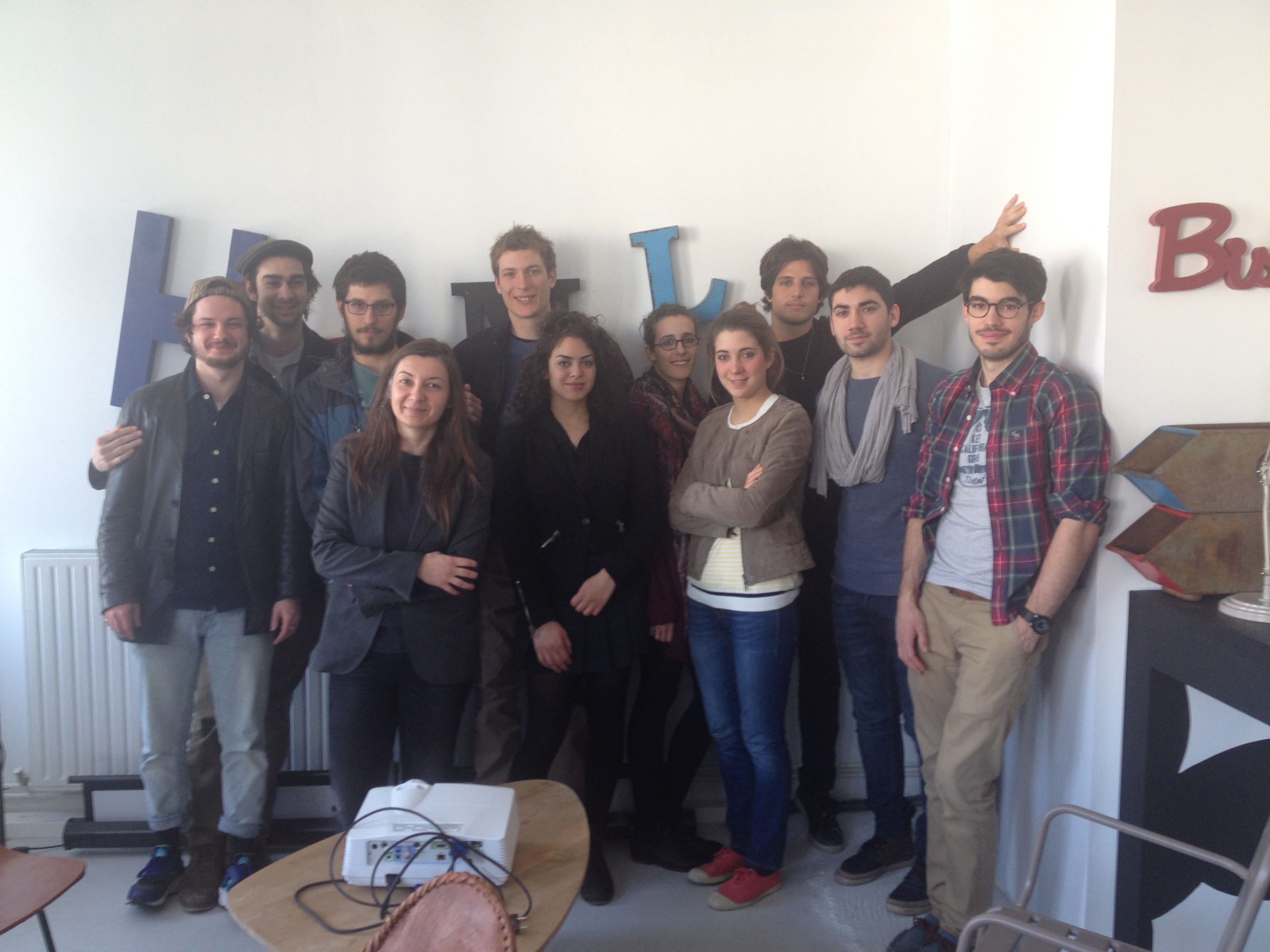
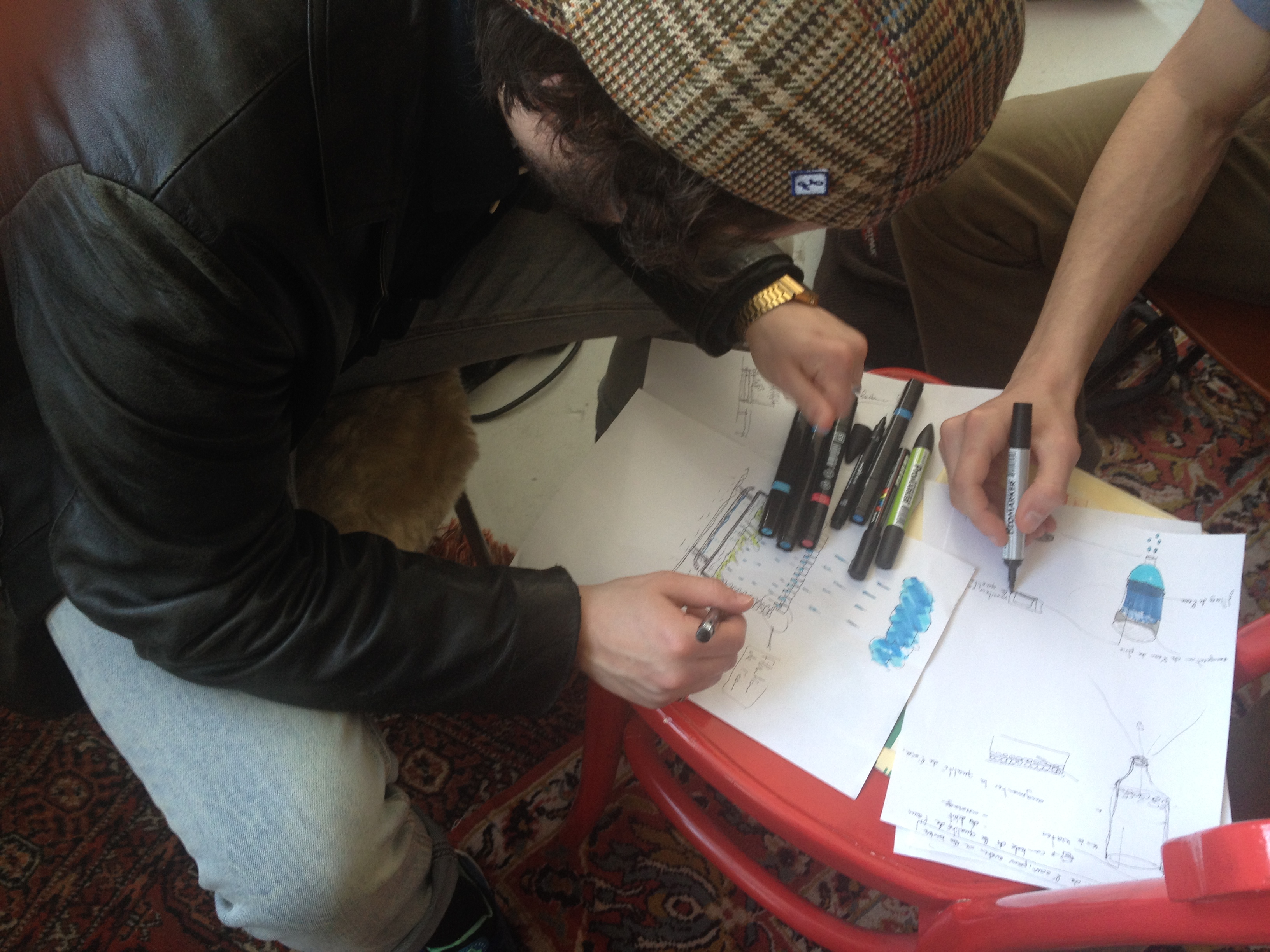
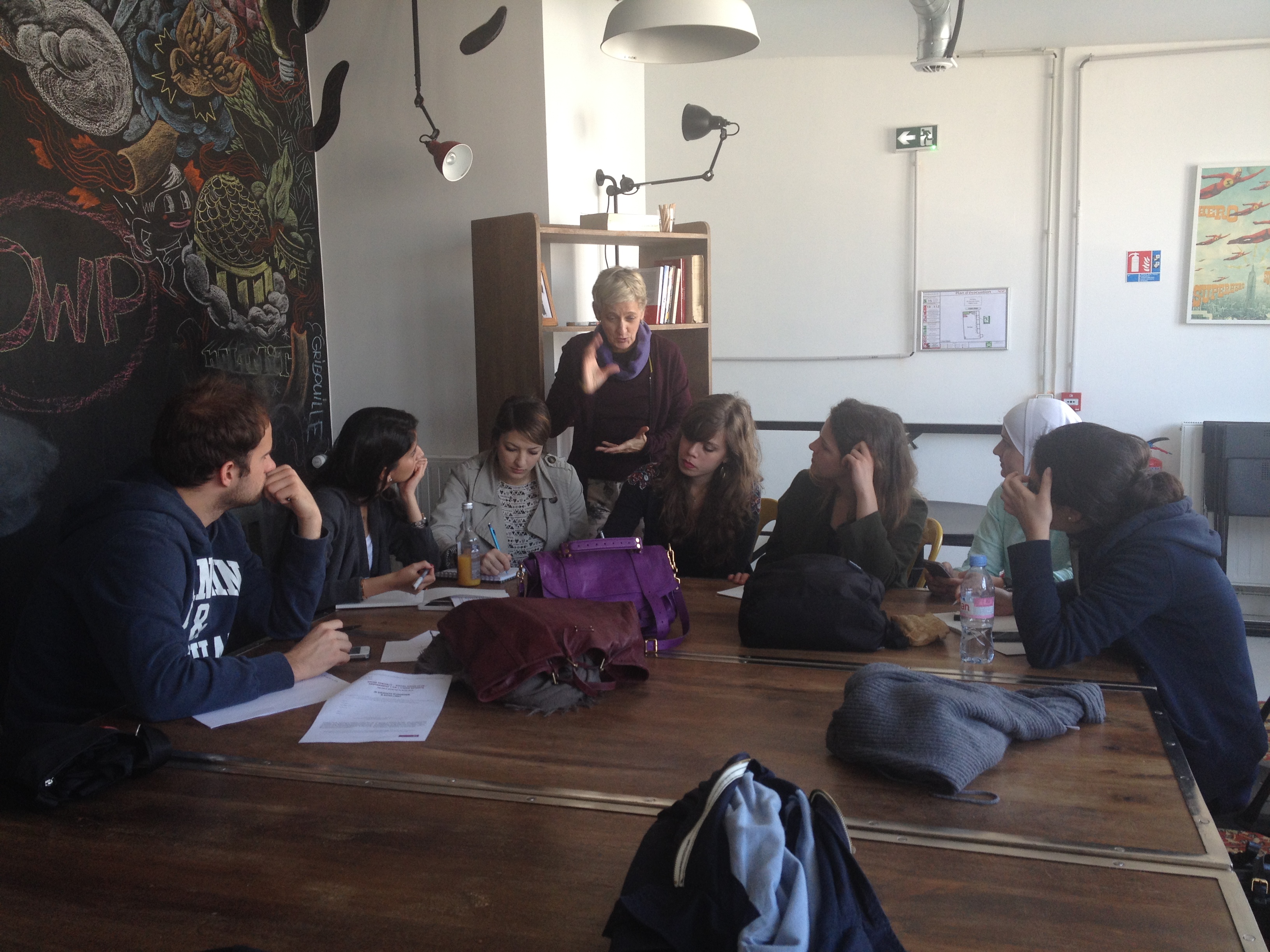
The 2014 Spring Seminar (Semester 6) has started ! Yasmine has scheduled a number of of activities such as the visit and workshop at the NUMA (previously La Cantine)–Paris first coworking space, participation in an e-waste dis-assembly workshop at La Rockette Libre and a round table to discuss about the new vernacular with Behrang Fakharian and Sénamé Koffi A. of L’Africaine d’Architecture and the Woelab.

Below are some pictures of the NUMA visit: Pictures of the students taking the seminar and engaging in workshop activities… Marie Aquilino and the students of her MAKE seminar (Semester 5) joined us this time and we are looking forward to more collaboration in the near future! Thank you to Hélène Girard and Claudio Vandi for hosting us.

IMG_3505 IMG_3515 IMG_3520 IMG_3527
IMG_3502

Mapping Agbogbloshie

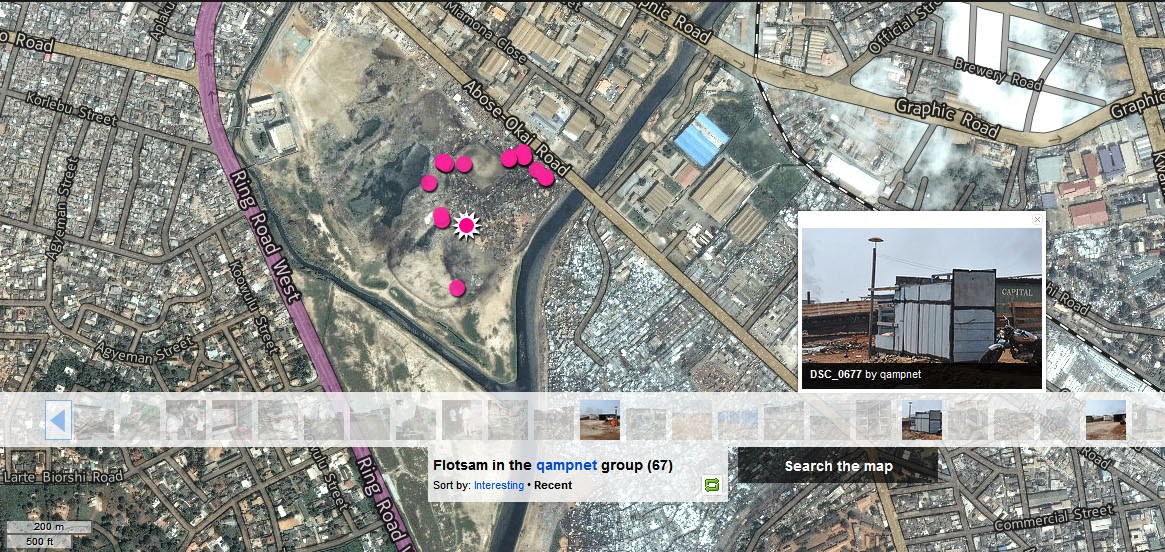
The past few weeks have been full of amazing new discoveries as the Agbogbloshie Makerspace Platform (AMP) team continues to learn from and with the e-waste recycling and scrap dealers community, on site. Check out our Flickr map which will serve as a tool for documenting and better understanding this ecosystem within Accra’s urban ecology.

Looking for a good option for sorting and sharing image pool on maps with better zoom and options for aerial imagery overlay, either on OpenStreetMap or another platform. Please let us know if you have any thoughts/advice


FLICKR map

AMP presented at the Family

Thanks to Hugo Amsellem for the invitation and to Remy Bourganel for the introduction to THE FAMILY, Yasmine Abbas presented AMP, an example of urban innovation and social entrepreneurship, to a community of tech entrepreneurs. The principal messages were that to innovate, entrepreneurs need to engage the context and that innovation happens through M&D, Makers and Development (in lieu of R&D!). Here is the link to the video!

Yasmine the Family

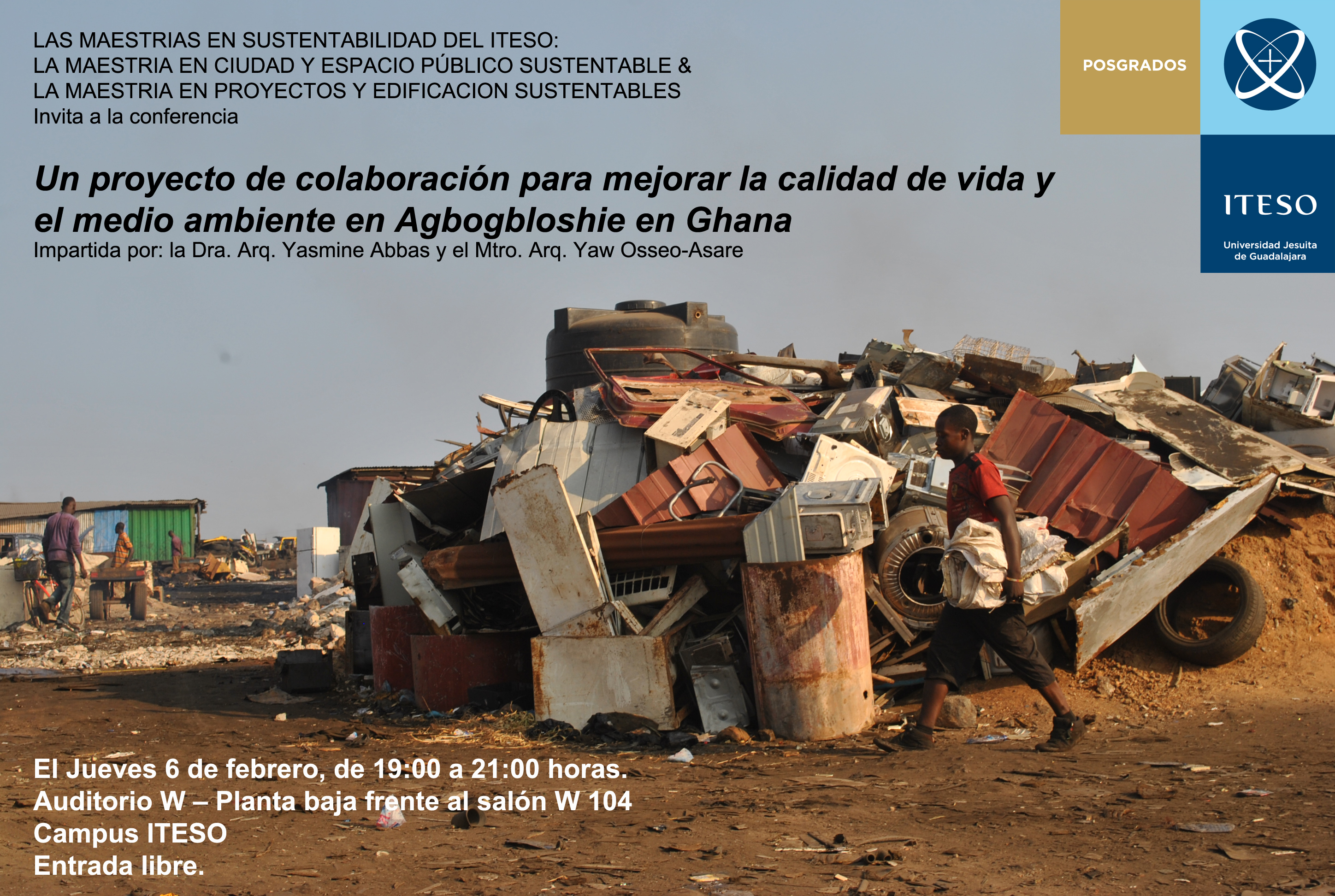
Presentation at ITESO (Mexico)

2014-2-6_ITESO Poster

Thanks to the School of Architecture at the ITESO for the opportunity to present AMP to the Masters in City and Sustainable Public Space and Masters in Sustainable Construction programs in Guadalajara, Mexico. Great questions and discussion. Apparently 60% of Mexico’s economy is also “informal sector”…a lot to be done & also possibilities for future collaboration across the “global South”. Conference report “Waste as an opportunity: Agbogbloshie” by Adriana López-Acosta is online (in Spanish).