


…
…
…
…
The AMP team guided Archibots: Remaking Agbogbloshie design participants through Agbogbloshie by first introducing them to the the executives of the scrap dealers’ association. We proceeded through Rauf’s shop, where large volumes of refrigerators are processed, to the National Youth Authority Building, through dismantling and processing sites, past the areas where copper cables are burnt and all the way to the plastics recycling sector near the International Central Gospel Church.
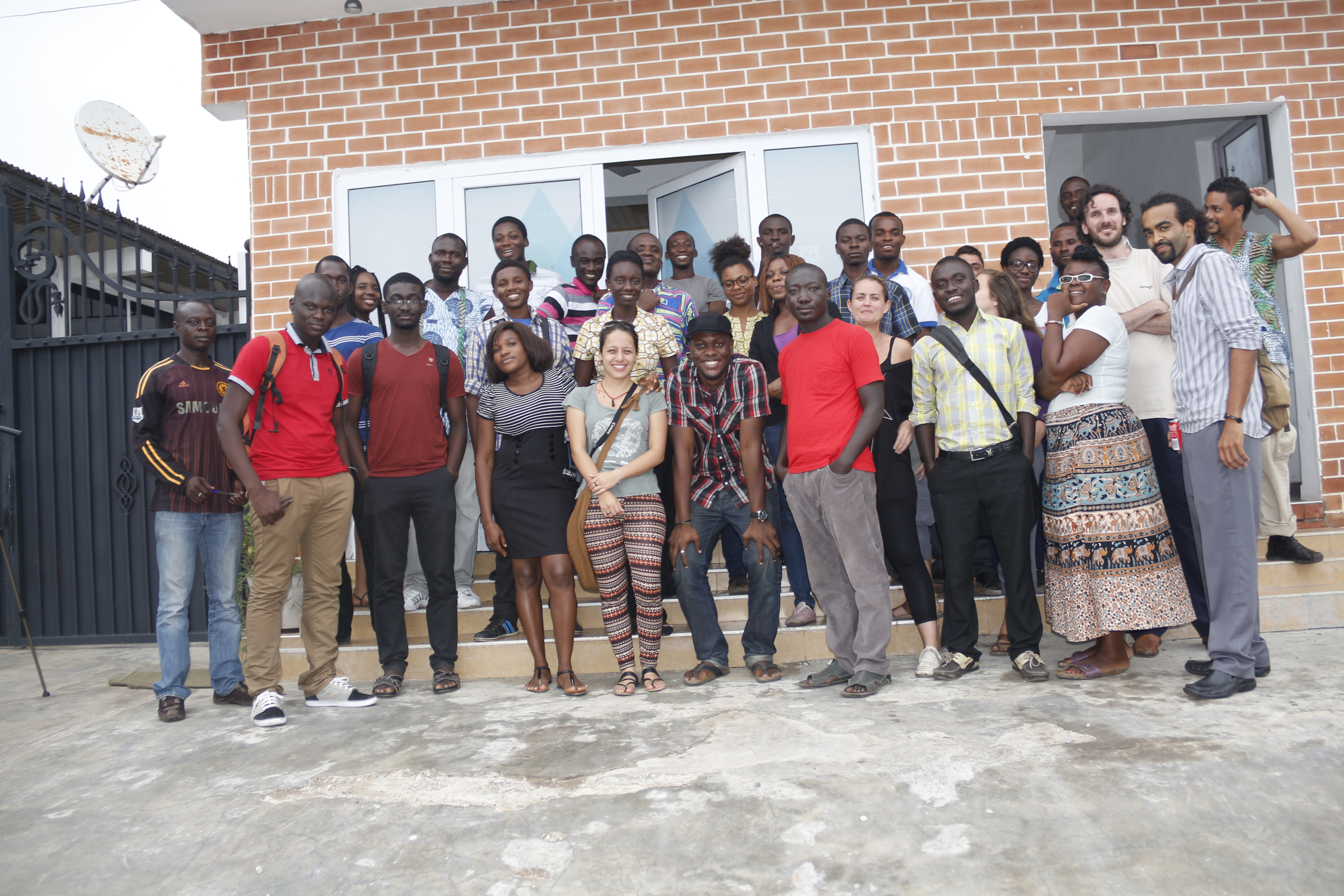
Back to Hub Accra (thanks for hosting us!), the fun could begin! After hearing a brief introduction about AMP (DK Osseo-Asare, AMP co-PI) and the objectives of the design workshop (Juliet Sakyi, TAP: Build founder), participants brainstormed about possible architecture robots for Agbogbloshie and its population. Sam Yusuf, who hails from Agbogbloshie and currently works with AMP on interviews and GPS mapping, also attended in order to share some of the ideas with informal sector community. MESH has prepared a video showing highlights of the event.
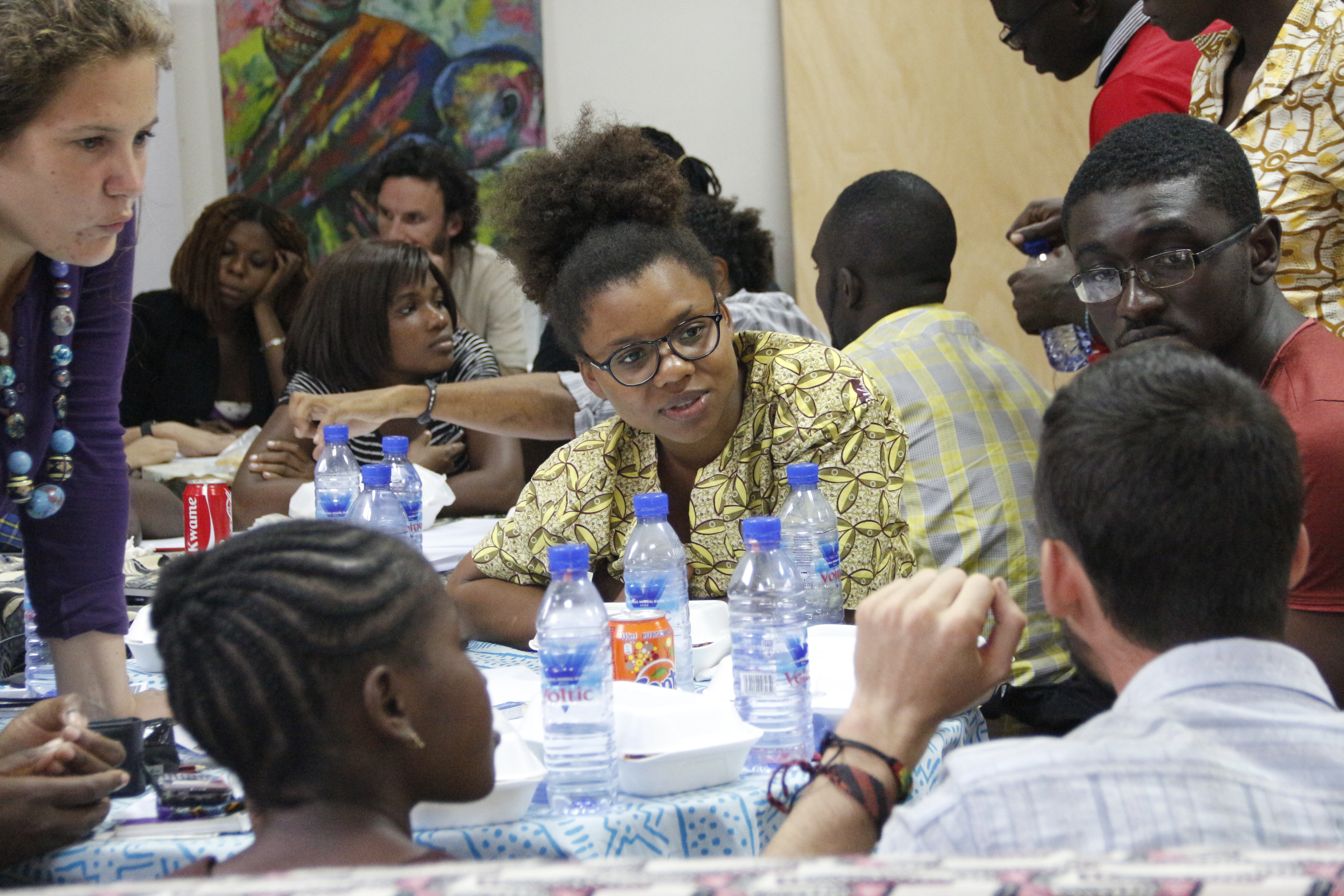
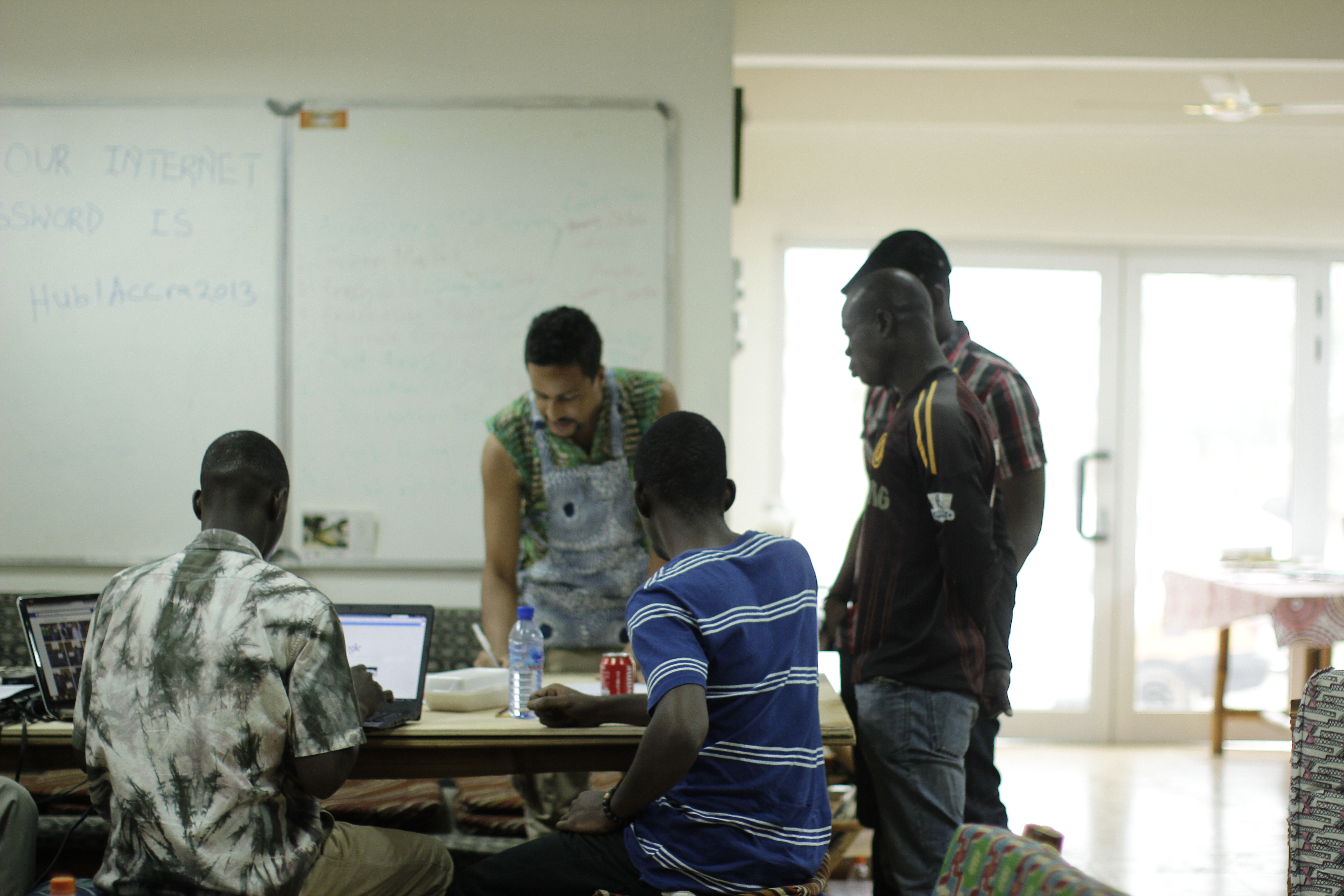
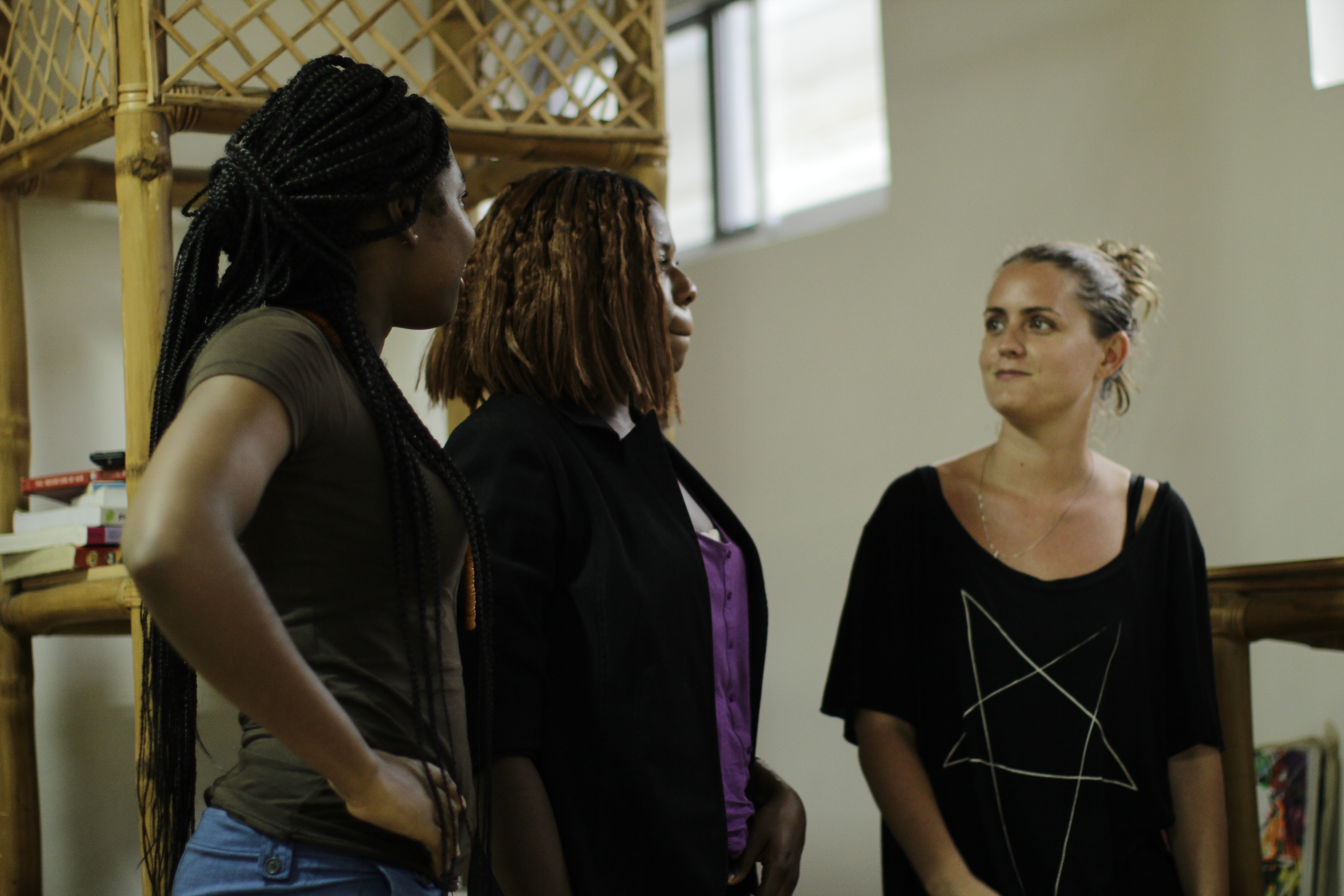
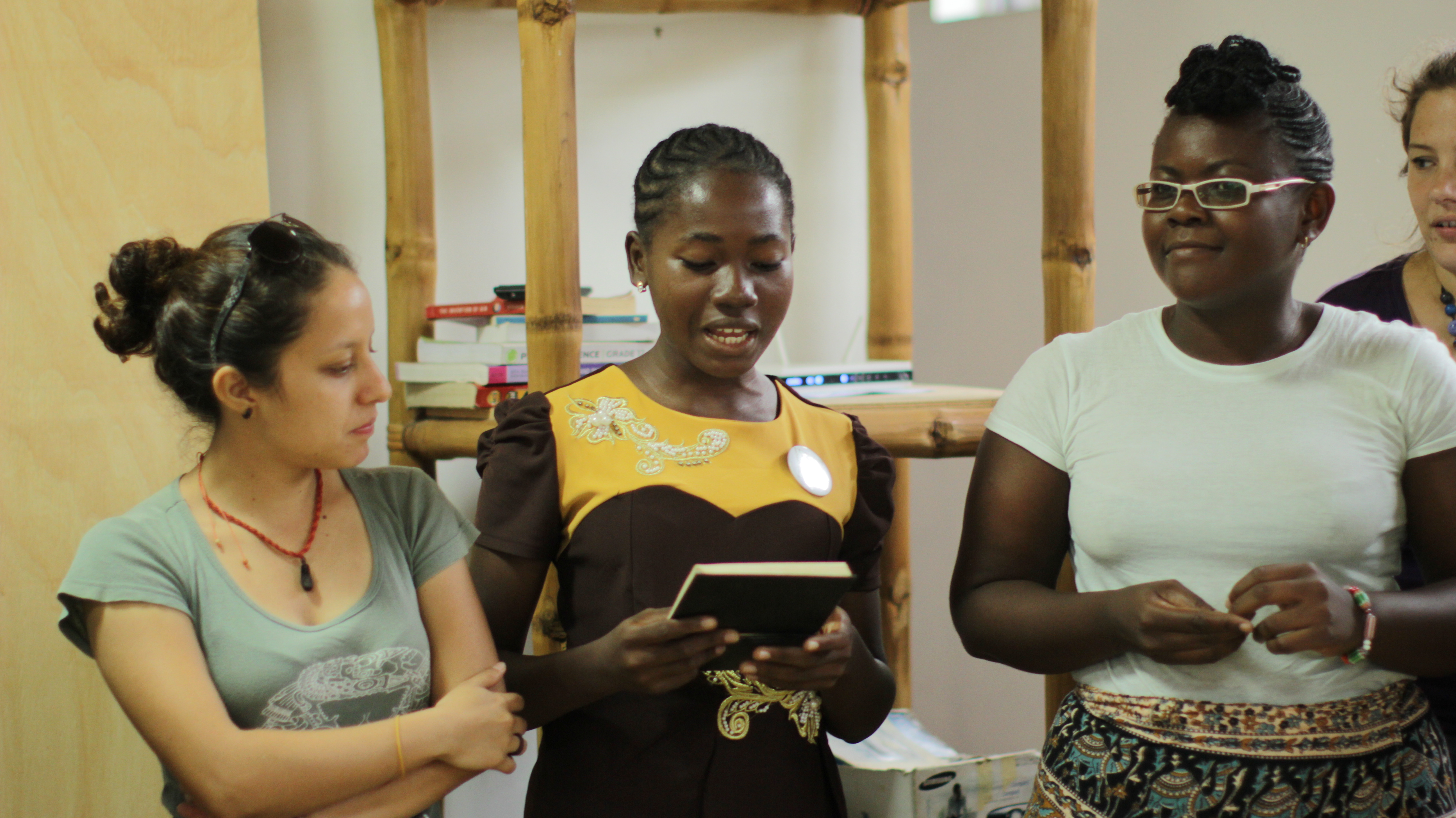

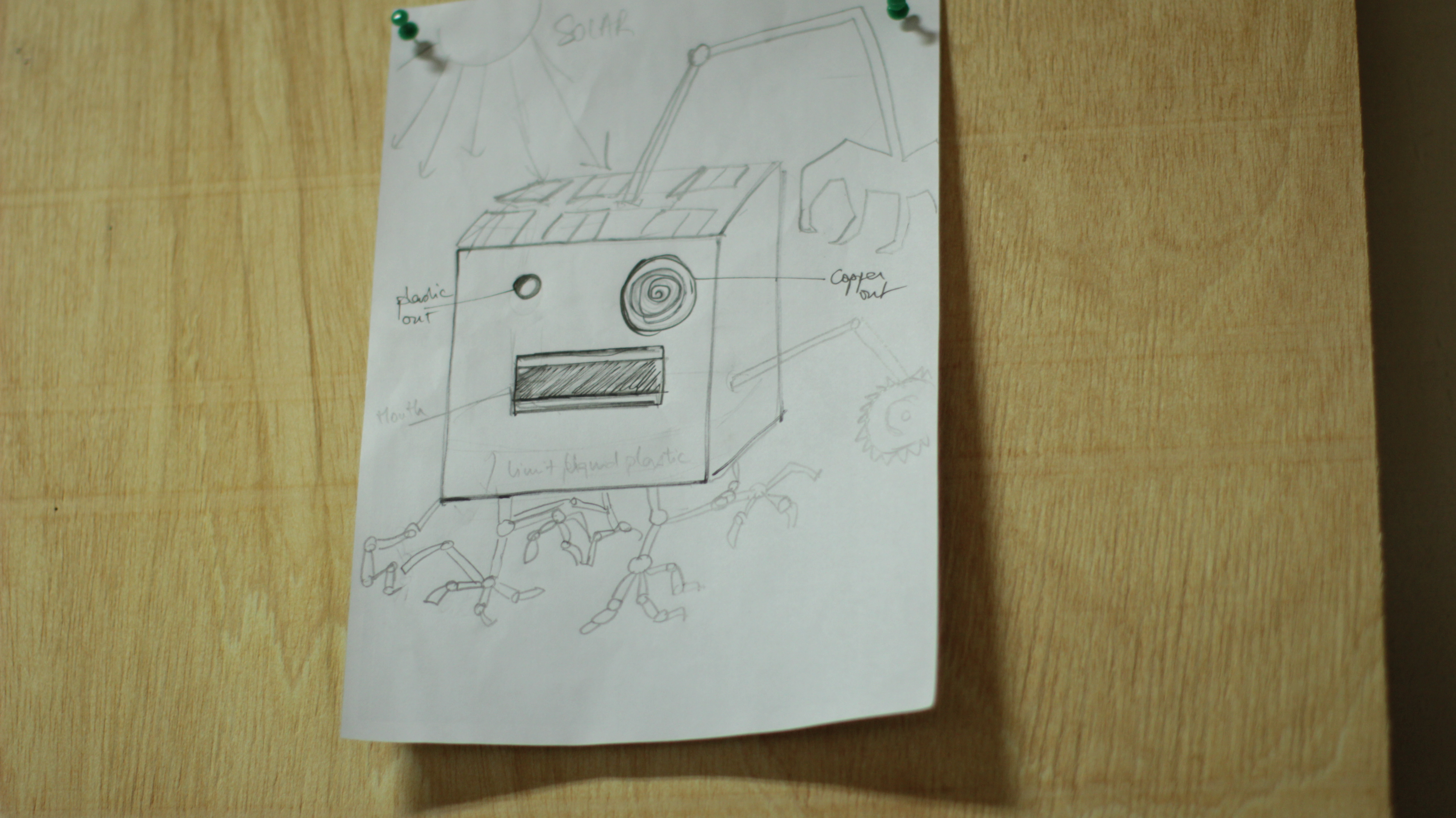
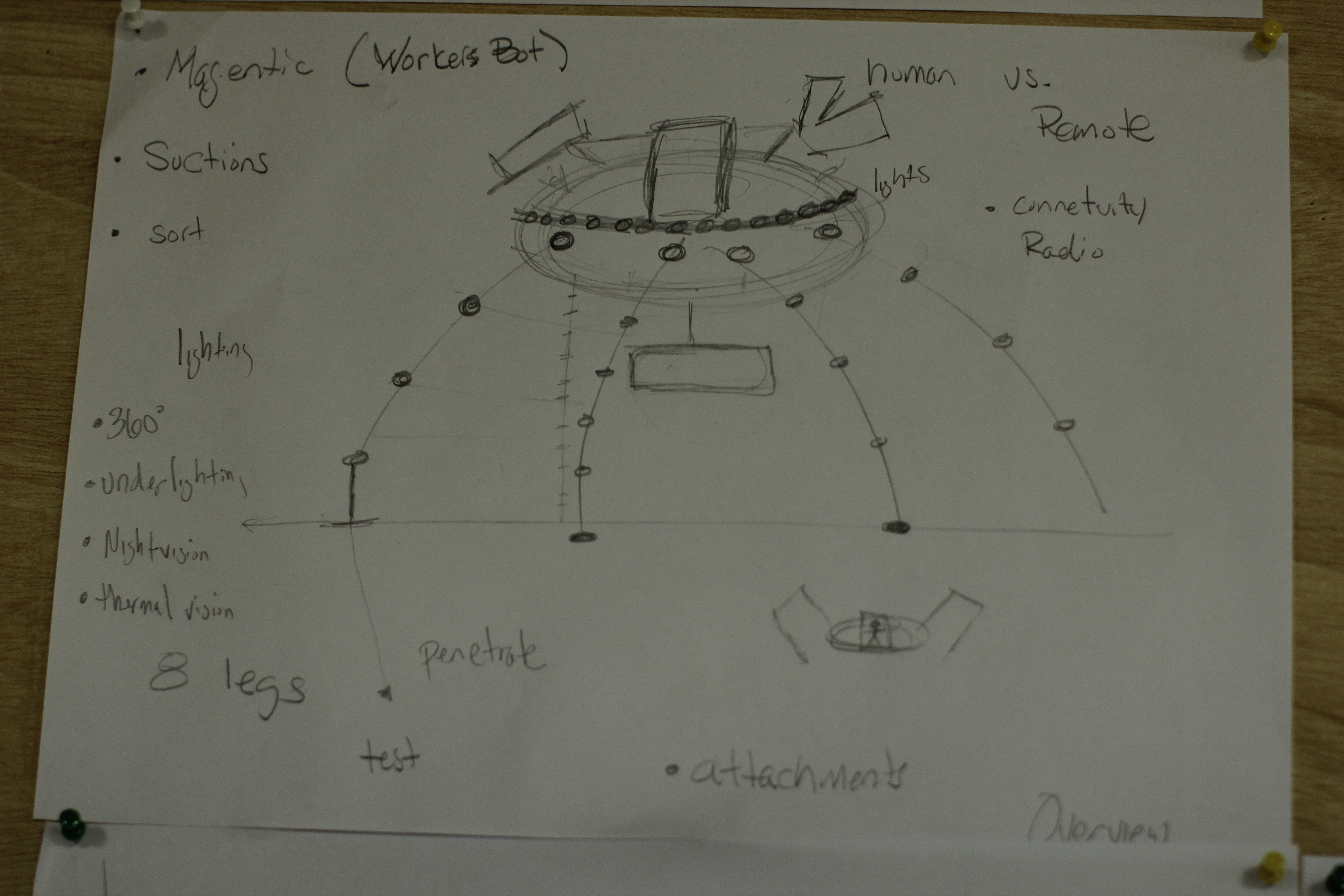
Amongst the multitude of ideas that emerged, participants chose to pursue investigating the following: SMOKEYBOT – a robot that reduces the smoke in Agbogbloshie by grinding and processing copper wires ; SOLARBOT – a mobile tent, with a capacity to harvest solar energy, detect light and intelligently self adjust to provide conducive working environments ; SPIDERBOT – a zoomorphic robot with the ability to collect, transport and process large volume of e -waste at a time and a POWERSUIT – an apparel for humans, with the capacity to read, interpret and transmit biological data to the wearer, boost physical performance and contain computing capacity.
Teams self-organized once more to each tackle one of the 4 ideas selected. In the future a swarm of similar architecture robots could be used to terraform the electronic landscape…


So the adventure isn’t finished yet… Participants have expressed their interest in following-up with M&D – Making and Development. AMP is actually formalizing a 3 week summer workshop, so stay tuned!
The turnout was awesome and we thank all participants for coming and our partner organisations MESH and Tap for their support and contributions.
Are you interested in technology? Do you like making things? Does environmental pollution bother you? Have you ever imagined the future as something awesome?
Are you a student or recent graduate in the fields of science, technology, engineering, art, mathematics, planning, architecture and design, or environment and natural resources?
Apply today to be a part of this year’s AMP QAMP, a three-week camp for young makers in Accra.

Agbogbloshie Makerspace Platform (AMP) is a collaborative project to upgrade the quality of life and environment at Agbogbloshie, the largest e-waste ecosystem in Ghana. AMP is an experiment in design innovation and youth-led M&D (makers & development). The short-term goal is to design and build a makerspace for the hyper-local context of Agbogbloshie, together with an open-source technology platform to support its operation. The long-term goal is to rehabilitate the environment of Agbogbloshie and to help green the community’s current recycling practices. We believe this can happen through the site’s transformation into a network for more advanced materials processing and small-scale distributed manufacturing. AMP as a open-source project seeks to create an alternate convention that partners e-waste, scrap and recycling industry with the technical know-how and social entrepreneurial framework to remake the landscape themselves, over time.
AMP contends that (domains of) architecture and electronics have converged. At such a moment—if we capitalize on this opportunity to make open, democratic and collective the capability of manipulating materials from the level of chemistry up, by means of digital technology, we can move beyond the notion of “e-waste”. Electrical and electronic equipment (EEE or 3E)—old or new—constitute a vital stream of raw material for the global production chain. Not only are such 3E-materials in reality the physical building blocks of electronic landscapes and digital space, but many are also recyclable, i.e. plastics, steel, aluminium, copper, glass or other valuable materials. If successful, AMP will amplify the economic potential of Agbogbloshie and Ghana’s makers.
AMP QAMP is a series of informal maker “camps” to build the future of Agbogbloshie. The primary session of QAMP for 2014 runs from the 1st to the 20th of July in Accra, Ghana.
Participants will work collaboratively as part the AMP makers collective to address key aspects of building an ecology of makers in and around the Agbogbloshie e-waste stream, from the ground up. We are interested in young people who are proactive, intellectually curious, open-minded, imaginative, detail-oriented and able to work in teams.
If interested, please submit a cover letter to qampnet@gmail.com by June 30th including the following information: Area of Specialization / Course of Study (year of graduation); Digital Media and Graphics Software (with level of proficiency); CAD/CAM and 3D Modeling Software (with level of proficiency); Programming Languages (with level of proficiency); and Fabrication Experience (sewing, cabinetry, furniture-making, jewellery, glass-blowing, welding, circuit board etching, breadboarding, etc.) Short-listed candidates will be scheduled for in-person interviews starting the week of June 23, 2014.
The first session of the Archibots workshop came off as scheduled on the May 30th 2014. The event was well attended by people from various disciplinary backgrounds. There were engineers, architects, CAD technicians, business men & women and lecturers as well as from various nationalities, such as Spain and the Netherlands. This was the introductory session for Archibots, a design workshop to prototype architecture robots for Agbogbloshie. As part of the event, all three collaborating organizations (tap, AMP and MESH) made presentations on what they do. AMP co-lead DK Osseo-Asare, introduced participants to Agbogbloshie E-waste circuitry, which is the context for the architecture robots to be designed and the key design concepts as far as AMP is concerned. Some of the videos that were selected to provide inspiration for participants can be found here . The team is eagerly awaiting the next phase which is the design session scheduled for June 7th 2014 at Hub Accra. This promises to be just as exciting as the May 30th event. Thanks to our friend and ally, media partners MESH Ghana for compiling footage of the event, which can be found at Archibots: Remaking Agbogbloshie.

On May 19, 2014, Yasmine Abbas (AMP co-founder) gave a 10 minutes presentation on AMP and AMP’s mobile phone application for makers in Africa at the Mobile Monday (MoMo) event held at the NUMA. Currently the team uses mobile phone to map fieldwork in Agbogbloshie. The AMP digital platform, yet to be developed, is thought to become a mobile learning and banking tool. Via the AMP digital platform, makers will be able to get information on e-waste, to share how to manuals and information on makers’ production–MADE IN AGBOGBLOSHIE–, to get training on (dis)assembly–we are very much inspired by the videos of the Khan Academy (ours will be filmed in the spacecraf)t. The digital platform is envisaged to become a commercial platform to sell makers’ production and make micro-finance transactions. We are working on the project–so don’t get caught by the use of a smart phone (which are increasingly available in Africa) to visualize the concept!
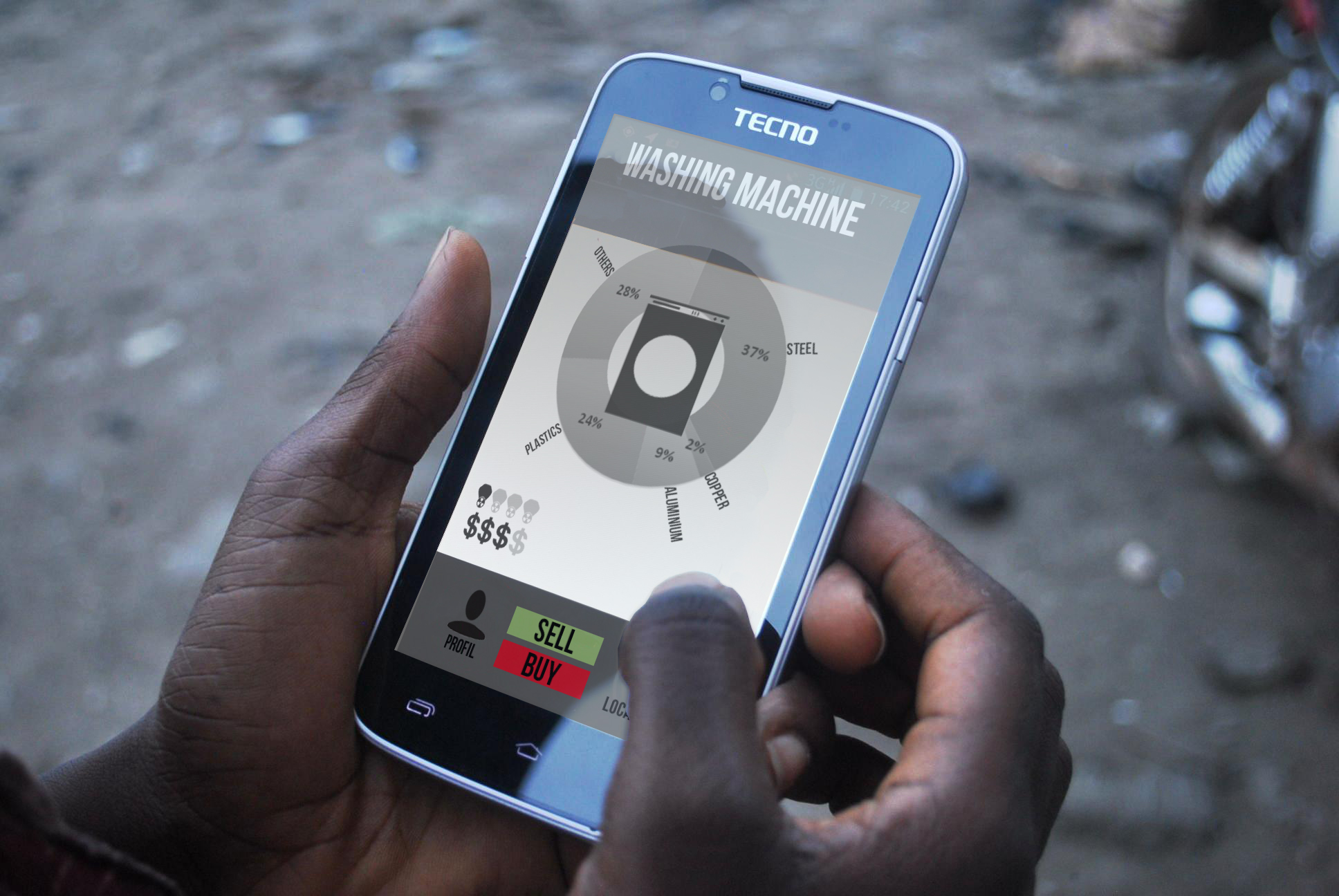 Image produced by intern Yasmine Sarehane
During that event, UNICEF representatives mentioned the Rio Youth Mapping project developed in collaboration with the MIT Mobile Experience Lab.
This project explores tools to help youth in Rio de Janeiro build impactful, communicative digital maps using mobile and web technologies. A phone application allows youth to produce a realtime portrait of their community through geo-located photos and videos, organized in thematic maps.
This project is evidently of great inspiration to us as we are developing maps to visualize fieldwork conducted in Agbogbloshie.
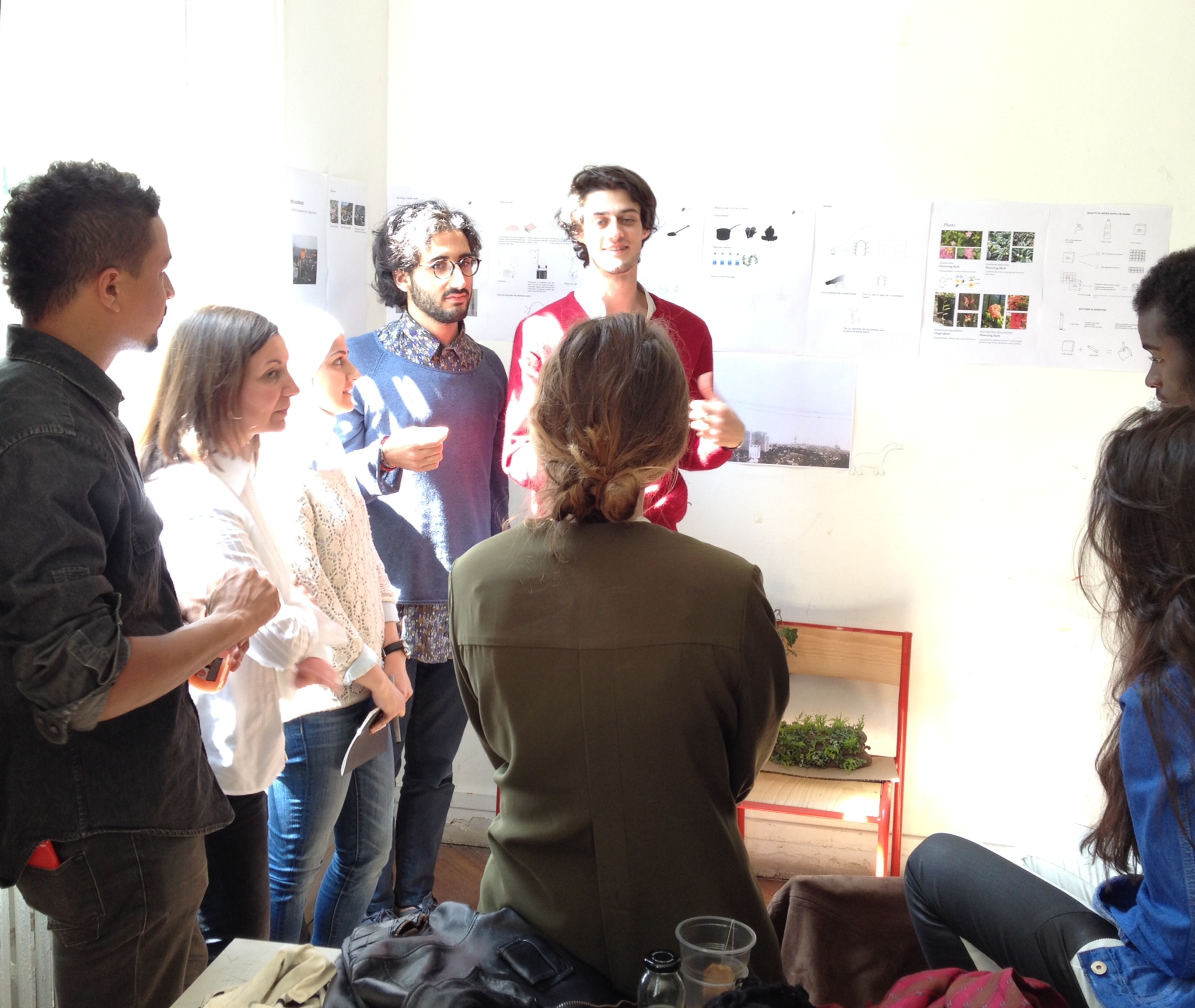
Dk Osseo-Asare, Low Design Office principal and AMP (Agbogbloshie Makerspace Platform) co-founder was in Paris for the M&D mid review (Semester 6 course taught by Yasmine Abbas) carried out in parallel with that of Make (S5 course taught by Marie Aquilino). Having conducted fieldwork in Agbogbloshie for over 6 months and with his 7 years of experience working on the informal sector, community participation and kiosk culture, Osseo-Asare provided students with invaluable insights on usability, community needs and buy-in. Amongst the numerous projects presented were a hydroponic micro-farm (using old refrigerators) to grow tomatoes (S6), a “water distillery” to extract cleaner water from polluted rain water (S6), a gas mask called “awearness” to provide protection against toxic fumes (S6) and a concept for a green wall to create safer enclaves in Agbogbloshie (S5). S6 Students had to show early prototypes and a poster (akin to those presented at scientific conference) to explain their design.
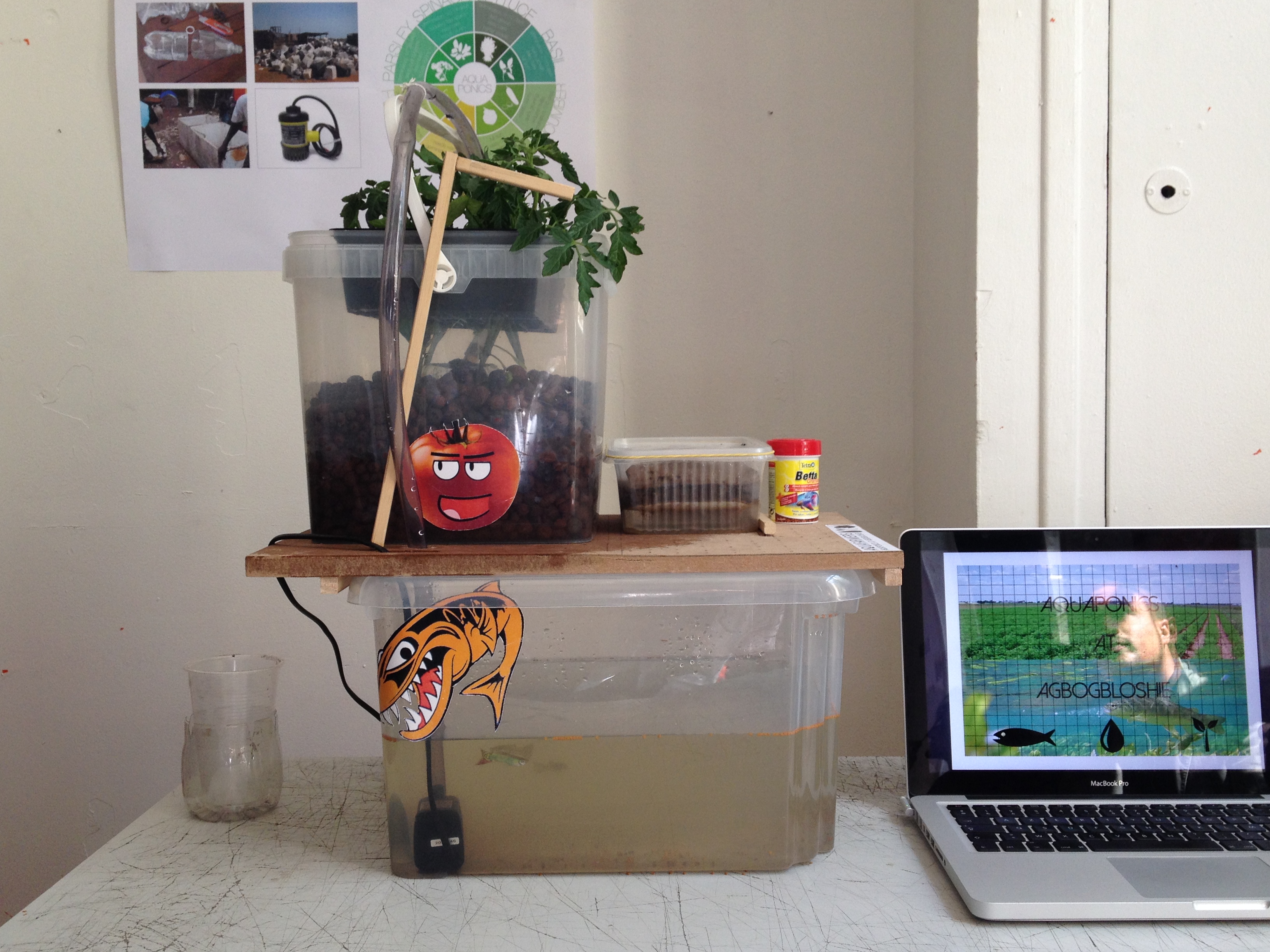 Prototype of a hydroponic micro-farm by Oscar AGUILA, Nicolas BENMUSSA and Charles CLEMENT (S6)
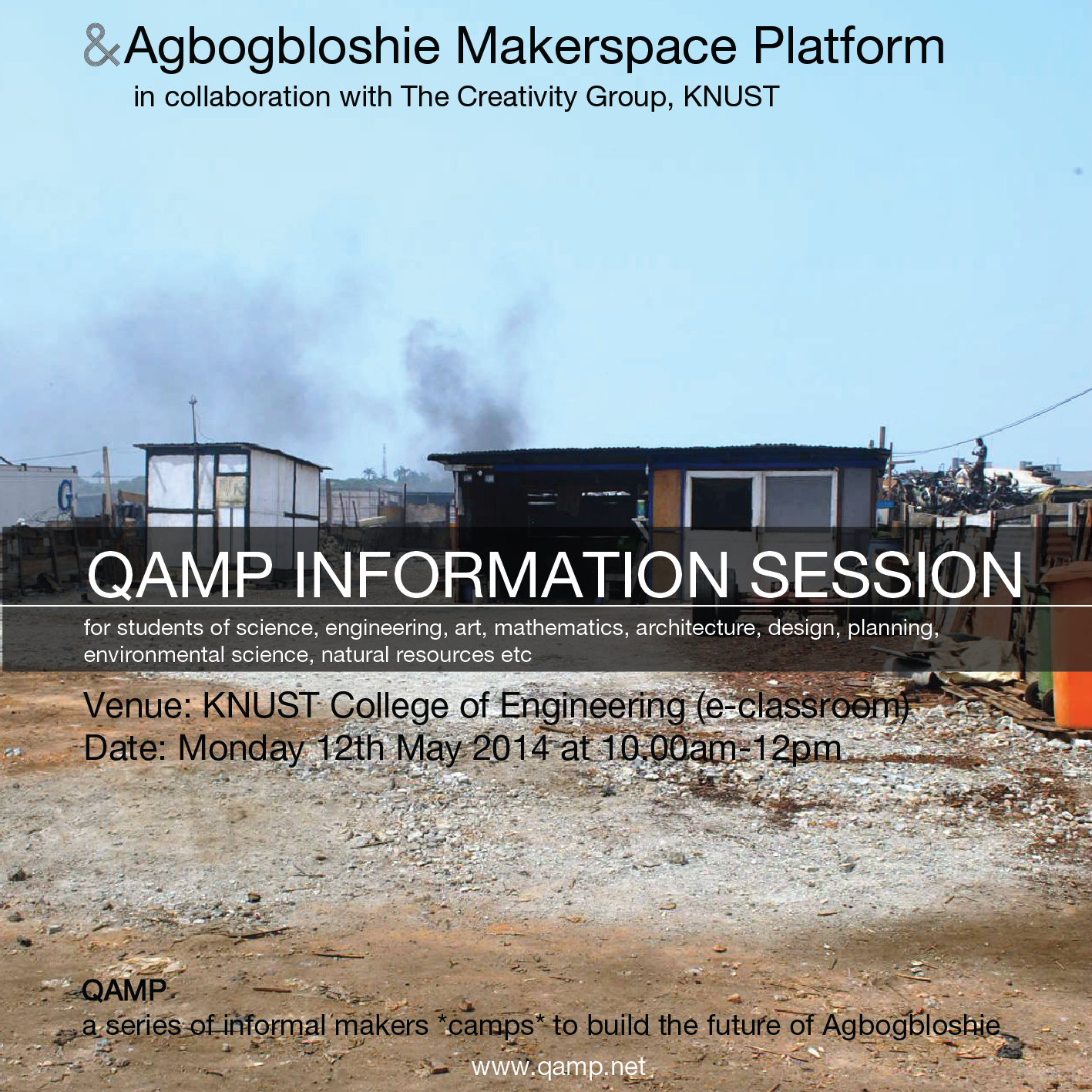
On Monday, the 12th of May 2014, the AMP team was at the college of engineering KNUST, meeting up with the Creativity Group of the college and students from around the university, for an AMP information session. The session provided attendants with information about the QAMP summer program and invited them to be a part of the AMP maker collective. In addition to this, the team will also provided information about AMP workshops, such as the impending Archibots: Remaking Agbogblodshie workshop, future workshops and encouraged them to apply to attend these. The team learned a lot from the interaction. Some of the projects that the students of the creativity group, expressed interest in were the bicycle with a pedal-powered grinding wheel (for pulverizing electronic waste), the EEE manual and research into material flows. The team had a wonderful time at KNUST and looks forward to an exciting summer full of fresh ideas.

The African Innovation Foundation held a round-table discussion on the theme “A Path to Building Industrial Nation Skillsets in Africa” ahead of the 2014 Innovation Prize for Africa awards ceremony in Abuja, Nigeria. Thanks to invitation via Emeka Okafor, I participated on the first panel, where we explored the question “Africa’s Innovation Spaces: How do they unleash African ingenuity and are they enough?”
Other panelists were Karim SY (founder of Jokko Labs); McLean Sibanda (CEO of Innovation Hub in Pretoria); Kamau Gachigi (Founder Fablab University of Nairobi, Chairman and Coordinator of UoN Science and Technology Park); and Hauwa Yabani (Director of Abuja Technology Village).
Emeka Okafor — who in addition to AIF advisor is also curator of Maker Faire Africa, superblogger and director of TED Global in Arusha, Tanzania — mediated the panel and set up the conversation as follows:
“Unstructured interdisciplinary avenues ranging from hubs to fablabs promise to kickstart innovation across Africa in a multitude of ways. There is the further prospect of vastly more dynamic output from laboratories and inventors shops, adoption of non-traditional educational methods; quicker design for manufacturing techniques amongst other things.
“Expanding the focus of these ‘spaces’ from their existing concentration in software over to agri-industry, manufacturing, research, medical equipment etc. could provide an accelerated alternate paths into industrialization.
“Leading practitioners at the IPA 2014 roundtable will examine the existing landscape and formulate potential paths and in doing so provide a foretaste of what to expect in the near future.”
@emeka_okafor introducing panel. how do we make more things in Africa continent & be globally competitive? #IPA2014 pic.twitter.com/ZQ78ijAYUR
— Yaw DK Osseo-Asare (@dkoa) May 5, 2014
interesting question from @emeka_okafor “What should be the relationship btw universities & makerspaces?” #IPA2014
— Yaw DK Osseo-Asare (@dkoa) May 5, 2014
final question #IPA2014 panel 1: IMHO: right model, but not enough. need to link to resources, extractive industry pic.twitter.com/ixxAx0FIFy — Yaw DK Osseo-Asare (@dkoa) May 5, 2014
how @dkoa uses interclass #innovation to connect #AfricasYouth, build new cities and solve problems like ewaste? #IPA2014
— IPA Prize (@IPAprize) May 5, 2014
Left Abuja inspired by the incredible innovations that the other panelists and IPA finalists are driving across the continent, and appreciative of the opportunity to present AMP — a design experiment in interclass innovation that is both related to but distinct from typical “makerspace” projects, in that the tools and technologies we are co-developing are tailored specifically for the Agbogbloshie e-waste ecosystem. Our work to build e-learning content and micro-factories that can assist youth with remaking 3E-materials (Electrical and Electronic Equipment) is an effort to transcend the narrative of “e-waste” not as an end in itself, but as a vehicle to amplify at the grassroots indigenous innovation linked to youth-led entrepreneurship.
While I believe that universities have a role to play in nurturing maker culture, I see makerspaces as something separate, if not symbiotic. At the same time, we need to move beyond the idea that maker tech means making little Arduino-powered gadgets only. To truly innovate, African makerspaces need not only to 3D-print, solder and code, but also to sequence, grow, etch, mill, cast and forge.
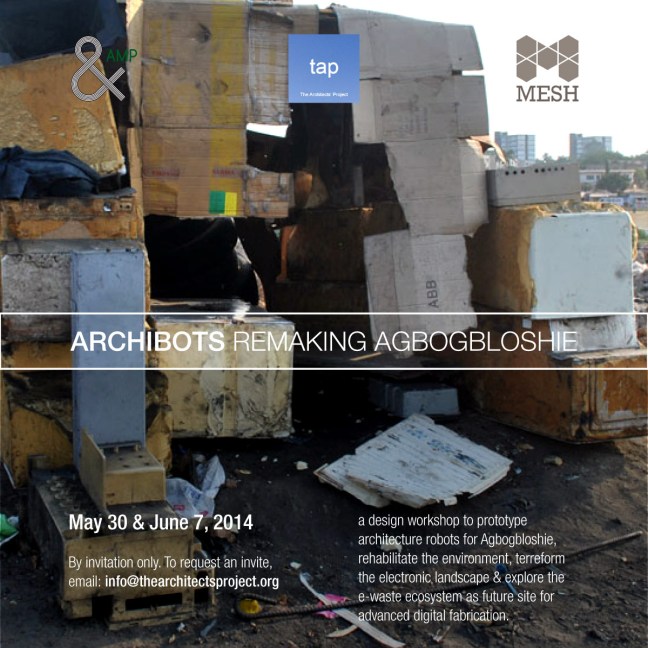
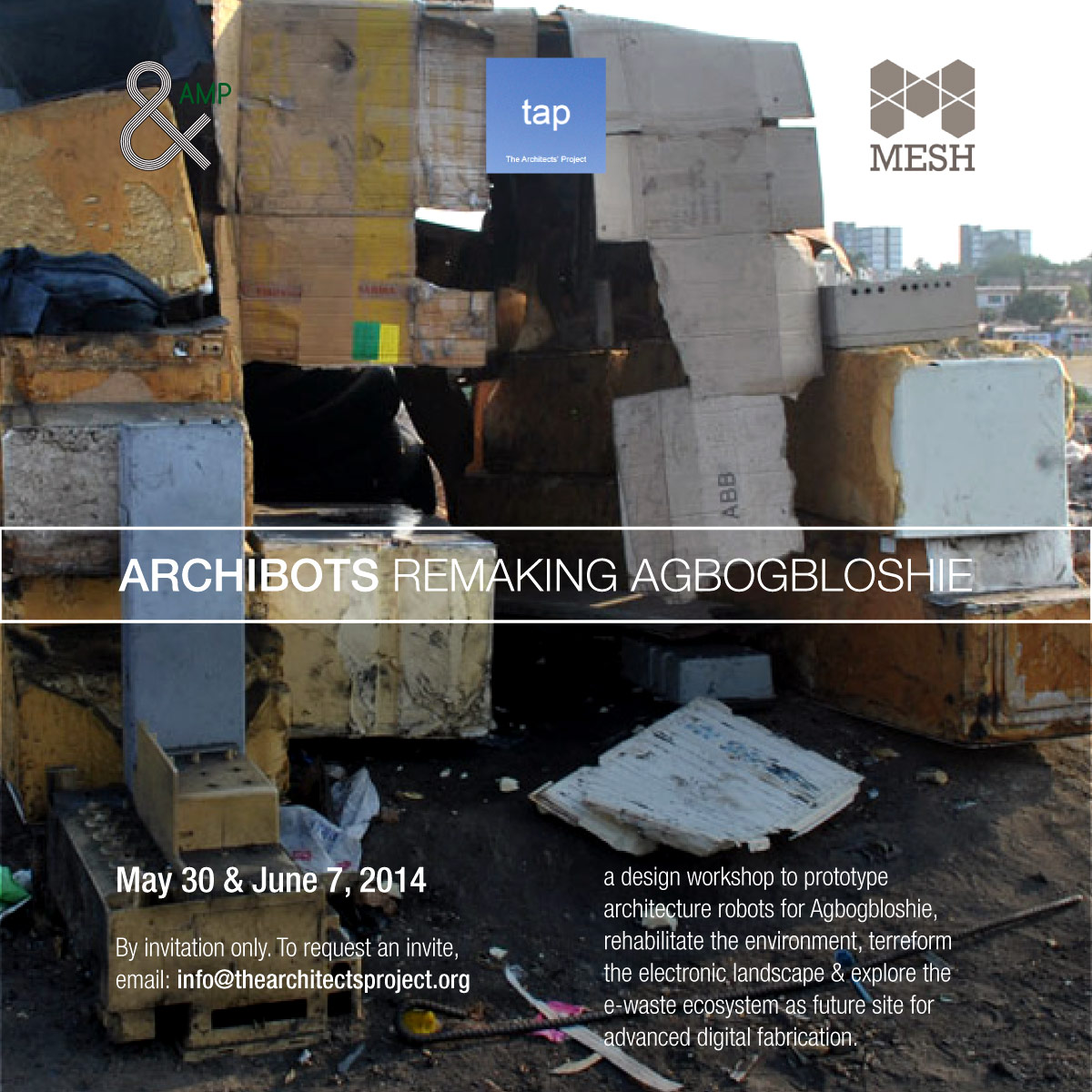
Re-making Agbogbloshie is a tap:Build design workshop conducted as part of the Agbogbloshie Makerspace Platform QAMP series of maker workshops. MESH Ghana is the media partner.
AMP approach contends that (domains of) architecture and electronics have converged. At such a moment — if we can make open, democratic and collective the capability of manipulating materials from the level of chemistry up, by means of digital technology, we can move beyond the notion of “e-waste”. Electrical and electronic equipment (EEE or 3E), old or new, constitute a vital stream of raw material for the global production chain. In particular, while there is fundamental overlap with the elemental “stuff” of digital space, it is equally important to note that the majority of EEE materials* are generally recyclable such as plastics, steel, aluminium, copper, or other specialized or high-value materials.
Re-making Agbogbloshie is a collaboration between Agbogbloshie Makerspace Platform (AMP) and The Architects’ Project (tap:). The workshop seeks to design and prototype practicable architectural interventions — at the level of equipment — that can inform the discourse of industrial landscapes like Agbogbloshie scaled through kiosk-size 3E materials processing machines, i.e. micro-industrial digital fabrication bots.
Re-making Agbogbloshie design workshop is an exploration of small-scale architectural interventions that operate more than as kinetic micro- shelters — they additionally include “robotic” or electronic systems and tool/equipment functions. The workshop seeks to design “architecture robots” that could assist humans in processing 3E materials, phytoremediation of the contaminated landscape and actively supporting the Agbogbloshie lifecycle.
Agbobloshie: Every year, tons of electronic waste arrives on the shores of Ghana. A huge proportion of this deluge of e-waste flows through Agbogbloshie, where a vibrant community of e-waste workers and makers reuse, recycle and upcycle end-of-life electrical and electronic equipment. However, some of the crude methods used for dismantling e-waste and processing scrap (such as burning wires and cords to recover the copper) are highly polluting: they negatively impact the health of e-waste workers and have led to Agbogbloshie’s notorious position as “the most polluted place on Earth” for 2013, according to Green Cross Switzerland and the nonprofit Blacksmith Institute (USA).
E-waste: E-waste or Waste Electrical and Electronic Equipment (WEEE) is typically portrayed as highly toxic old computers, televisions, etc. that are “dumped” in poor countries by rich countries, in violation of the Basel Convention (an international treaty which expressly prohibits such forms of international transhipment of WEEE). While it is true that e-waste contains hazardous materials, and that improper handling and disposal of these materials can greatly pollute the environment and compromise public health, it does not negate the fact that the materials embedded within e-waste are incredibly valuable. In fact, e-waste — considered pound-for-pound as a “raw material” of the global production chain — is among the most valuable on the planet: one ton of old mobile phones has 100X the concentration of precious metals like gold and silver than does an equivalent amount of ore mined from the earth.
Architecture: Usually when most people think about (the practice of) “architecture”, they think about high-end residences or large-scale projects. In Africa, these are typically the only kind of construction projects (along with smaller interventions by the government and NGOs) that have large enough budgets to pay the professional service fees of architects. This leaves the majority of workers and construction works on the continent, which occur in what social scientists call the “informal sector”, outside the design domain of architects, or the scope of formal architecture. The point of departure for this workshop is to propose that this default strategy for Africa’s built environment misses the point. If to date architecture has had limited success in re-configuring the African terrain, perhaps it is time to invert the approach: try to introduce innovation at the bottom, and let it spread.
* EEE- or 3E-materials: Consider electrical and electronic equipment, at all condition levels, as a raw material for global production chain. 3-E materials are a broader and more inclusive range of materials compared to e-materials, e.g. electronics materials based on silicon or other semiconducting materials, and such materials in aggregate, i.e. a circuit board.
Video highlights:
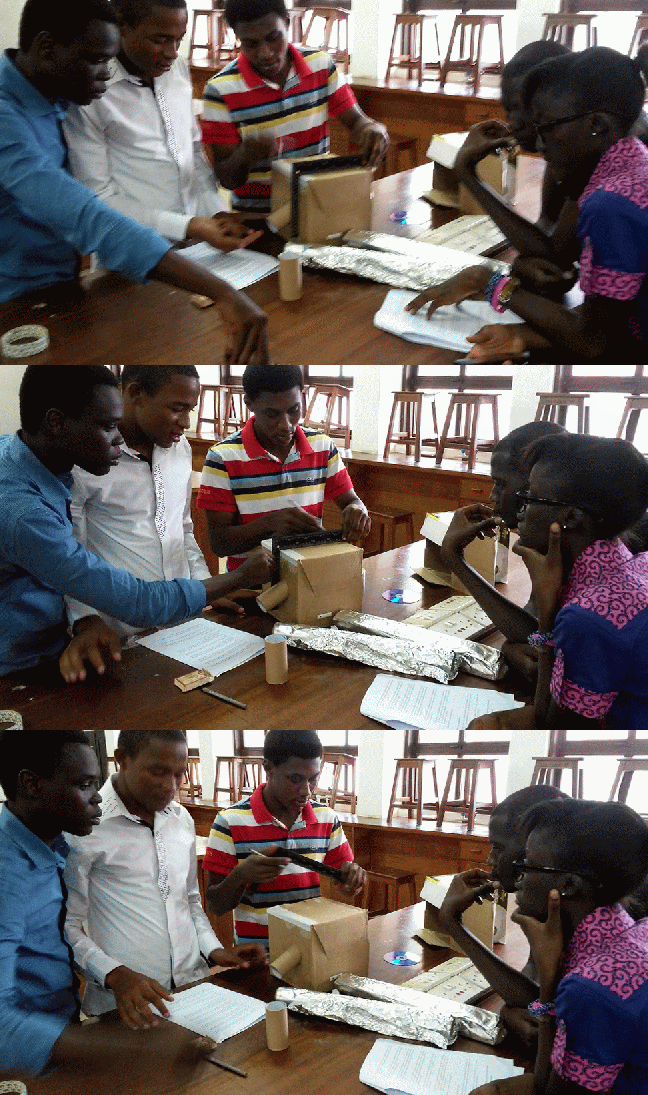
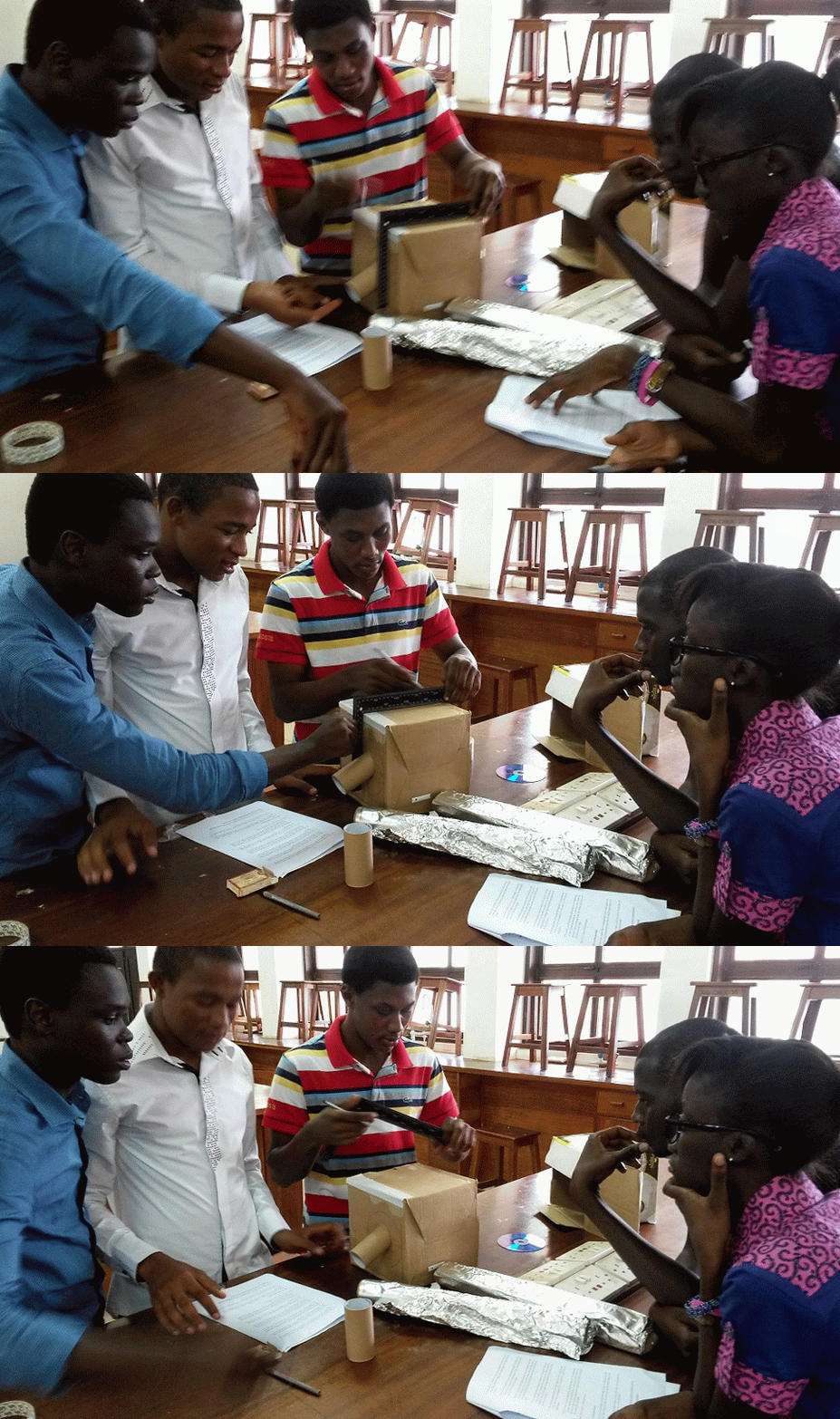
For the past few months, the AMP team has engaged e-waste workers within Agbogbloshie. This time, on Saturday the 26th of April, the team organized its latest workshop intended to initiate the conversation with the STEAM world, who form a critical part of the AMP platform. Eventually, these professionals will come together with the e-waste workers and makers in Agbogbloshie to form the AMP makers collective. The knowledge that these professionals bring to the Agbogbloshie site will be useful for achieving AMP targets such as empowering makers to handle e-waste according to best practices and enabling makers to upcycle e-waste into value-added products.
The agenda was to:
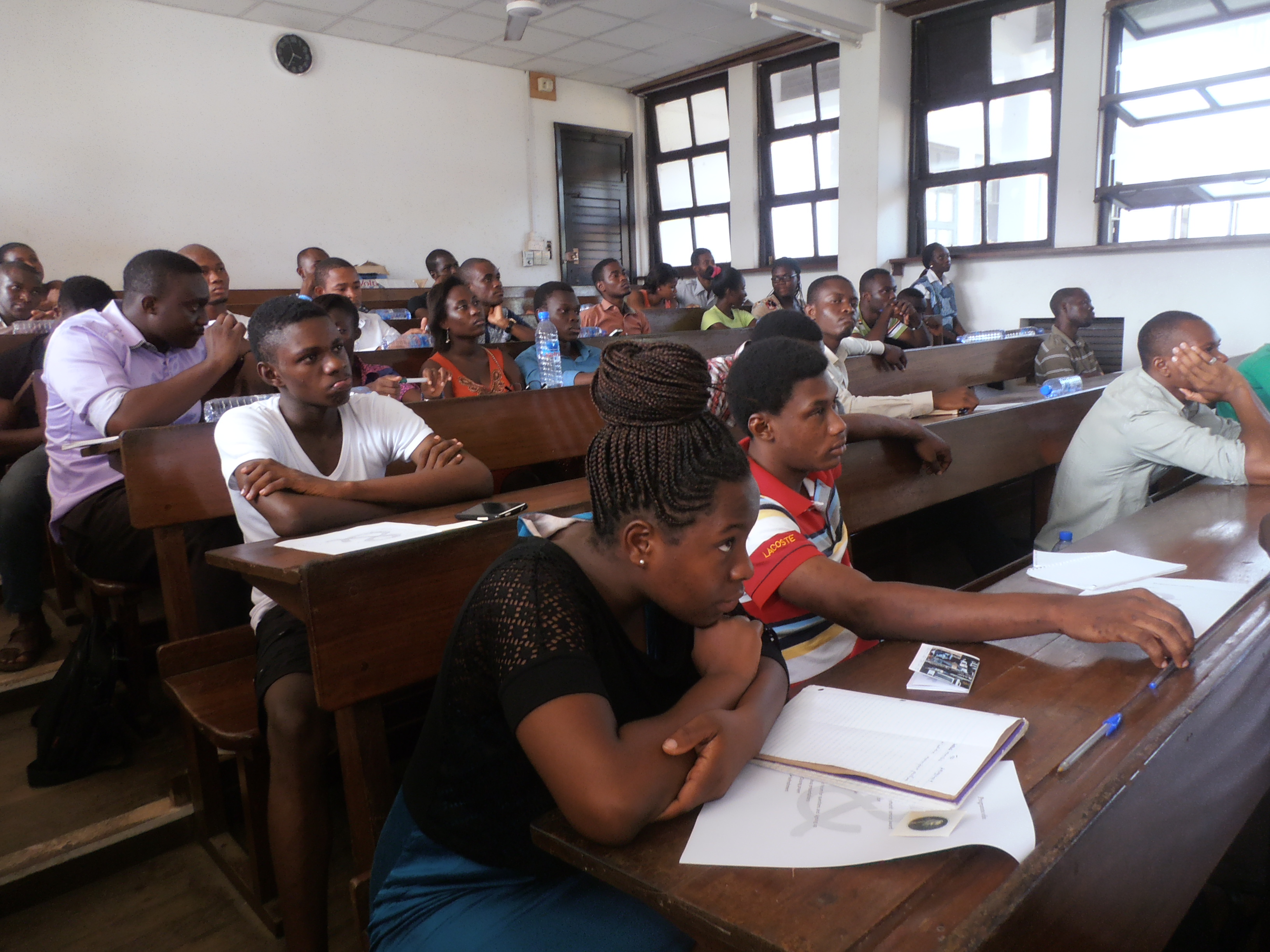
The workshop took place at the lower lecture hall of the Physics department in the University of Ghana, Legon. Students from the host physics department, as well as chemistry, computer science and psychology students attended. There were also students from the architecture department of the Central University College. In all, there were 50 participants.
The workshop started with an introduction of the AMP team, followed by an interactive session, during which members of the AMP team engaged in conversation with the students.
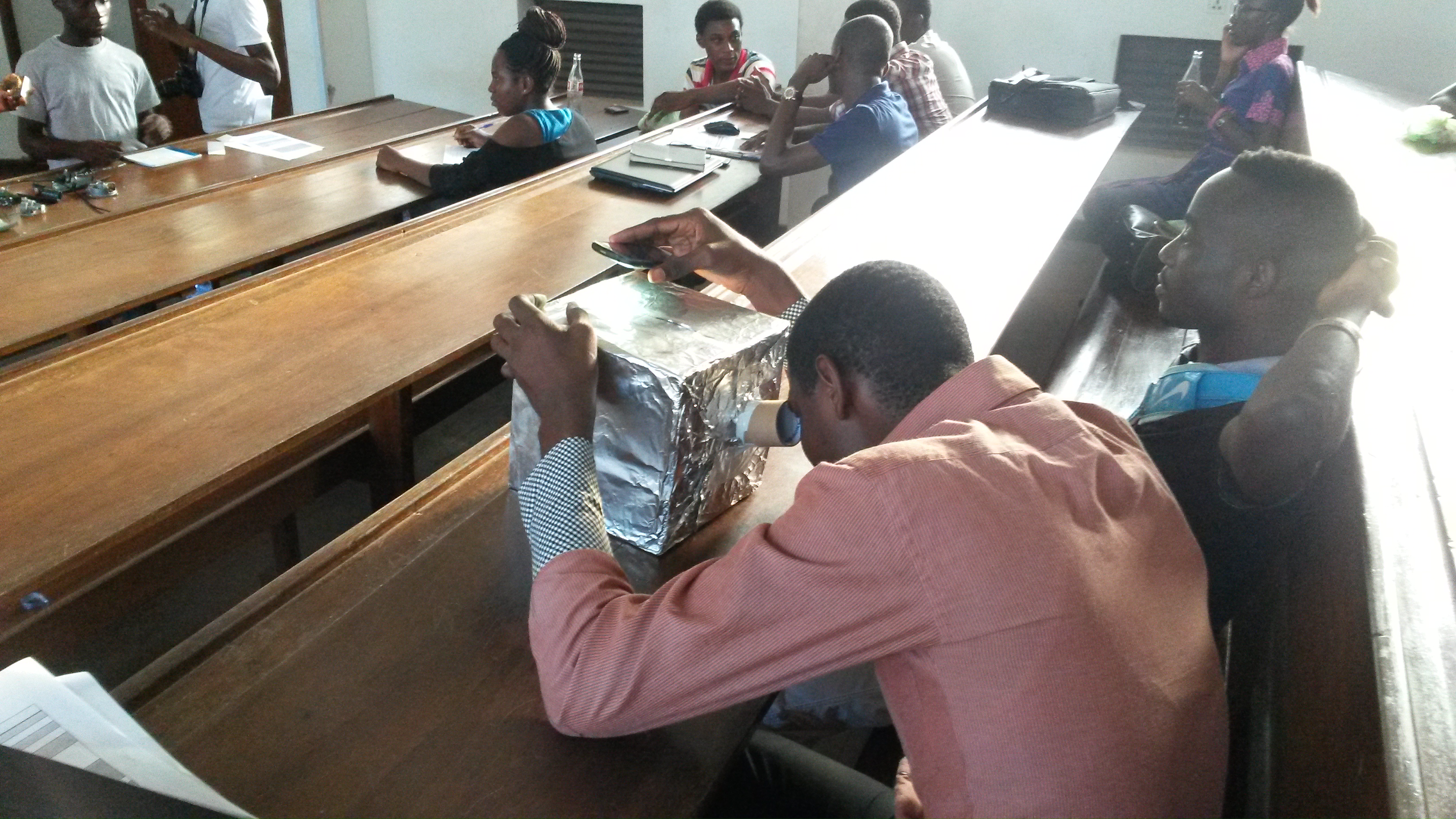
After the interaction and lecture, participants were divided into four groups and made to work on the various projects. Each team documented the brand, the year of manufacture, and all other information they considered relevant. They were required to state to the best of their knowledge, which components were in the equipment and to what other uses these could be put.
We discovered that students from the physics department in particular had a fundamental awareness of the nature and uses of parts, as well as how these contributed to the total functioning of the equipment. After this session each team presented its findings to the larger group of participants.
Upon the completion of the workshop, participants by way of evaluation, passed on comments such as:
The program was insightful and inspirational. I am very happy I came and met other brilliant students and how they agitated minds to think critically. A great experience that will stay with me a long time.
A successful workshop in my opinion. I learned a lot and I am happy to know that such great ideas are being implemented. As I leave, my mind is racing through ways I can contribute to this positive revolution.
See photos on Flickr : STEAM Photos
 AMP
AMP 