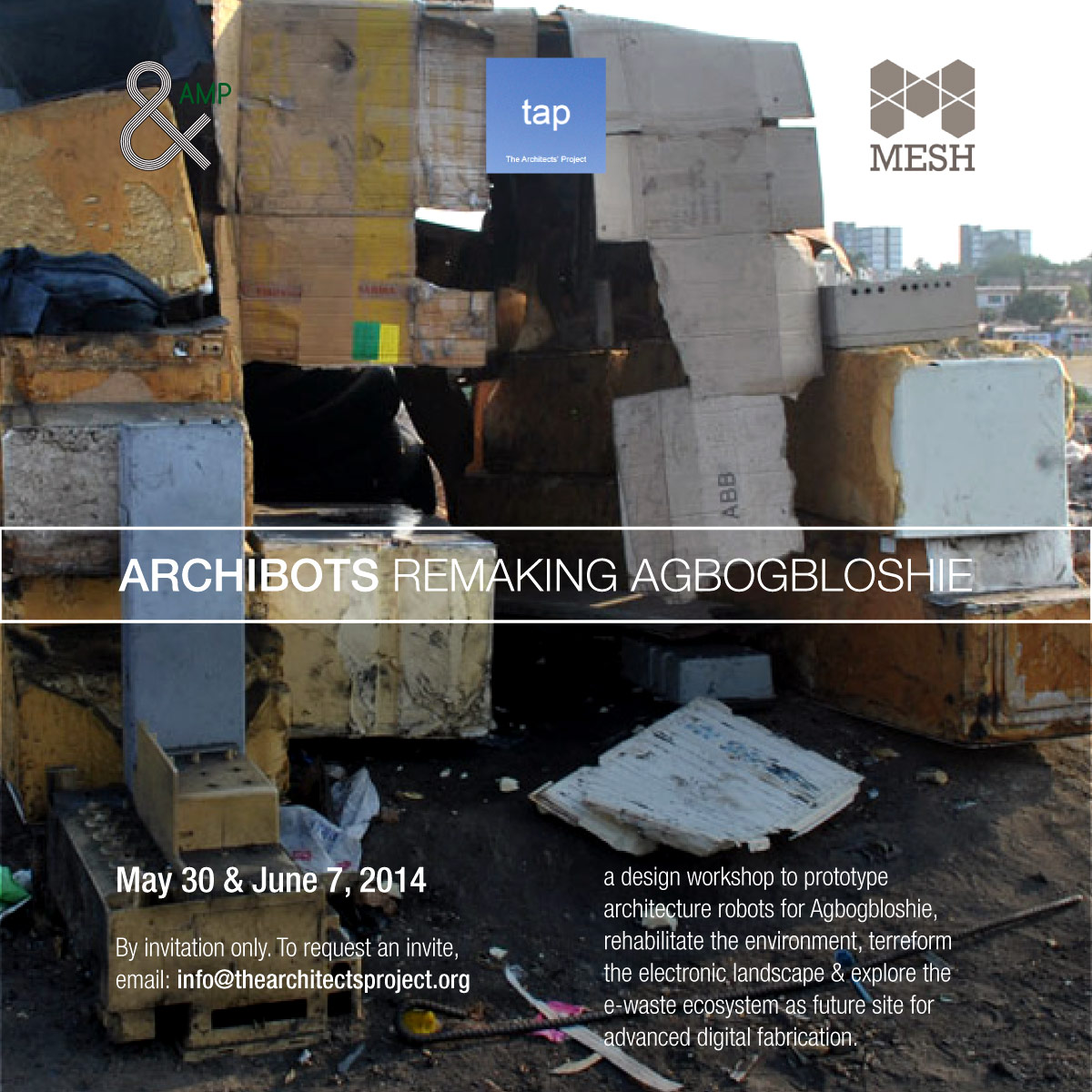
Archibots: Re-making Agbogbloshie

Re-making Agbogbloshie is a tap:Build design workshop conducted as part of the Agbogbloshie Makerspace Platform QAMP series of maker workshops. MESH Ghana is the media partner.

AMP approach contends that (domains of) architecture and electronics have converged. At such a moment — if we can make open, democratic and collective the capability of manipulating materials from the level of chemistry up, by means of digital technology, we can move beyond the notion of “e-waste”. Electrical and electronic equipment (EEE or 3E), old or new, constitute a vital stream of raw material for the global production chain. In particular, while there is fundamental overlap with the elemental “stuff” of digital space, it is equally important to note that the majority of EEE materials* are generally recyclable such as plastics, steel, aluminium, copper, or other specialized or high-value materials.

Re-making Agbogbloshie is a collaboration between Agbogbloshie Makerspace Platform (AMP) and The Architects’ Project (tap:). The workshop seeks to design and prototype practicable architectural interventions — at the level of equipment — that can inform the discourse of industrial landscapes like Agbogbloshie scaled through kiosk-size 3E materials processing machines, i.e. micro-industrial digital fabrication bots.

Re-making Agbogbloshie design workshop is an exploration of small-scale architectural interventions that operate more than as kinetic micro- shelters — they additionally include “robotic” or electronic systems and tool/equipment functions. The workshop seeks to design “architecture robots” that could assist humans in processing 3E materials, phytoremediation of the contaminated landscape and actively supporting the Agbogbloshie lifecycle.

Agbobloshie: Every year, tons of electronic waste arrives on the shores of Ghana. A huge proportion of this deluge of e-waste flows through Agbogbloshie, where a vibrant community of e-waste workers and makers reuse, recycle and upcycle end-of-life electrical and electronic equipment. However, some of the crude methods used for dismantling e-waste and processing scrap (such as burning wires and cords to recover the copper) are highly polluting: they negatively impact the health of e-waste workers and have led to Agbogbloshie’s notorious position as “the most polluted place on Earth” for 2013, according to Green Cross Switzerland and the nonprofit Blacksmith Institute (USA).

E-waste: E-waste or Waste Electrical and Electronic Equipment (WEEE) is typically portrayed as highly toxic old computers, televisions, etc. that are “dumped” in poor countries by rich countries, in violation of the Basel Convention (an international treaty which expressly prohibits such forms of international transhipment of WEEE). While it is true that e-waste contains hazardous materials, and that improper handling and disposal of these materials can greatly pollute the environment and compromise public health, it does not negate the fact that the materials embedded within e-waste are incredibly valuable. In fact, e-waste — considered pound-for-pound as a “raw material” of the global production chain — is among the most valuable on the planet: one ton of old mobile phones has 100X the concentration of precious metals like gold and silver than does an equivalent amount of ore mined from the earth.

Architecture: Usually when most people think about (the practice of) “architecture”, they think about high-end residences or large-scale projects. In Africa, these are typically the only kind of construction projects (along with smaller interventions by the government and NGOs) that have large enough budgets to pay the professional service fees of architects. This leaves the majority of workers and construction works on the continent, which occur in what social scientists call the “informal sector”, outside the design domain of architects, or the scope of formal architecture. The point of departure for this workshop is to propose that this default strategy for Africa’s built environment misses the point. If to date architecture has had limited success in re-configuring the African terrain, perhaps it is time to invert the approach: try to introduce innovation at the bottom, and let it spread.

* EEE- or 3E-materials: Consider electrical and electronic equipment, at all condition levels, as a raw material for global production chain. 3-E materials are a broader and more inclusive range of materials compared to e-materials, e.g. electronics materials based on silicon or other semiconducting materials, and such materials in aggregate, i.e. a circuit board.

Video highlights:
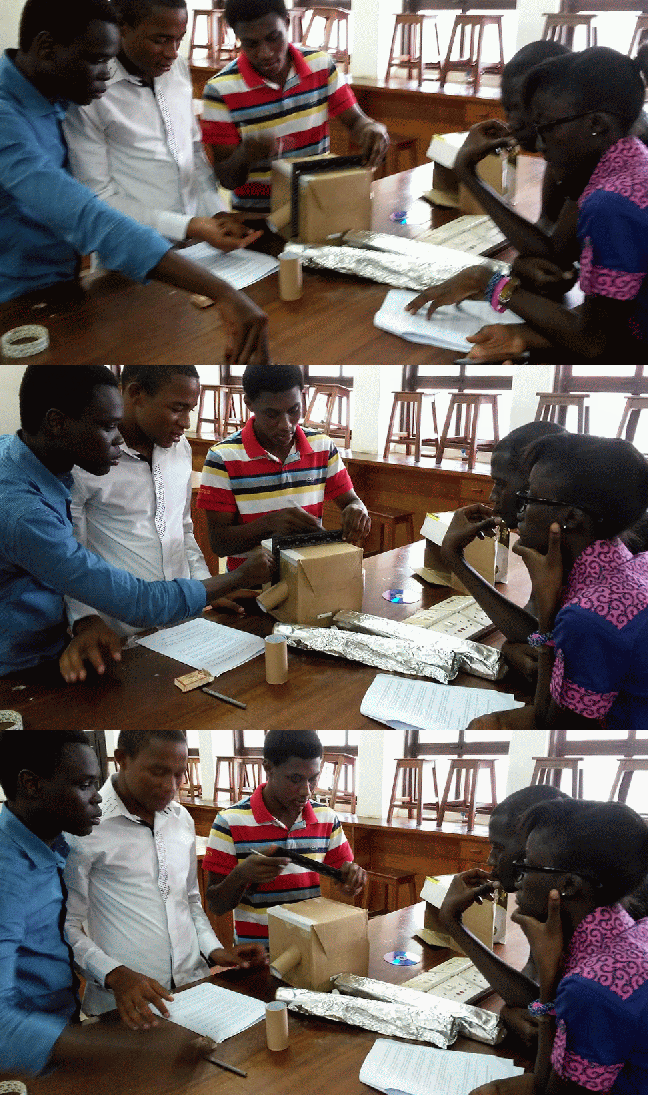
STEAM workshop

20140426_163707-MOTION

For the past few months, the AMP team has engaged e-waste workers within Agbogbloshie. This time, on Saturday the 26th of April, the team organized its latest workshop intended to initiate the conversation with the STEAM world, who form a critical part of the AMP platform. Eventually, these professionals will come together with the e-waste workers and makers in Agbogbloshie to form the AMP makers collective. The knowledge that these professionals bring to the Agbogbloshie site will be useful for achieving AMP targets such as empowering makers to handle e-waste according to best practices and enabling makers to upcycle e-waste into value-added products.

The agenda was to:

  • Introduce AMP to the STEAM world, and invite them to apply for summer internships.
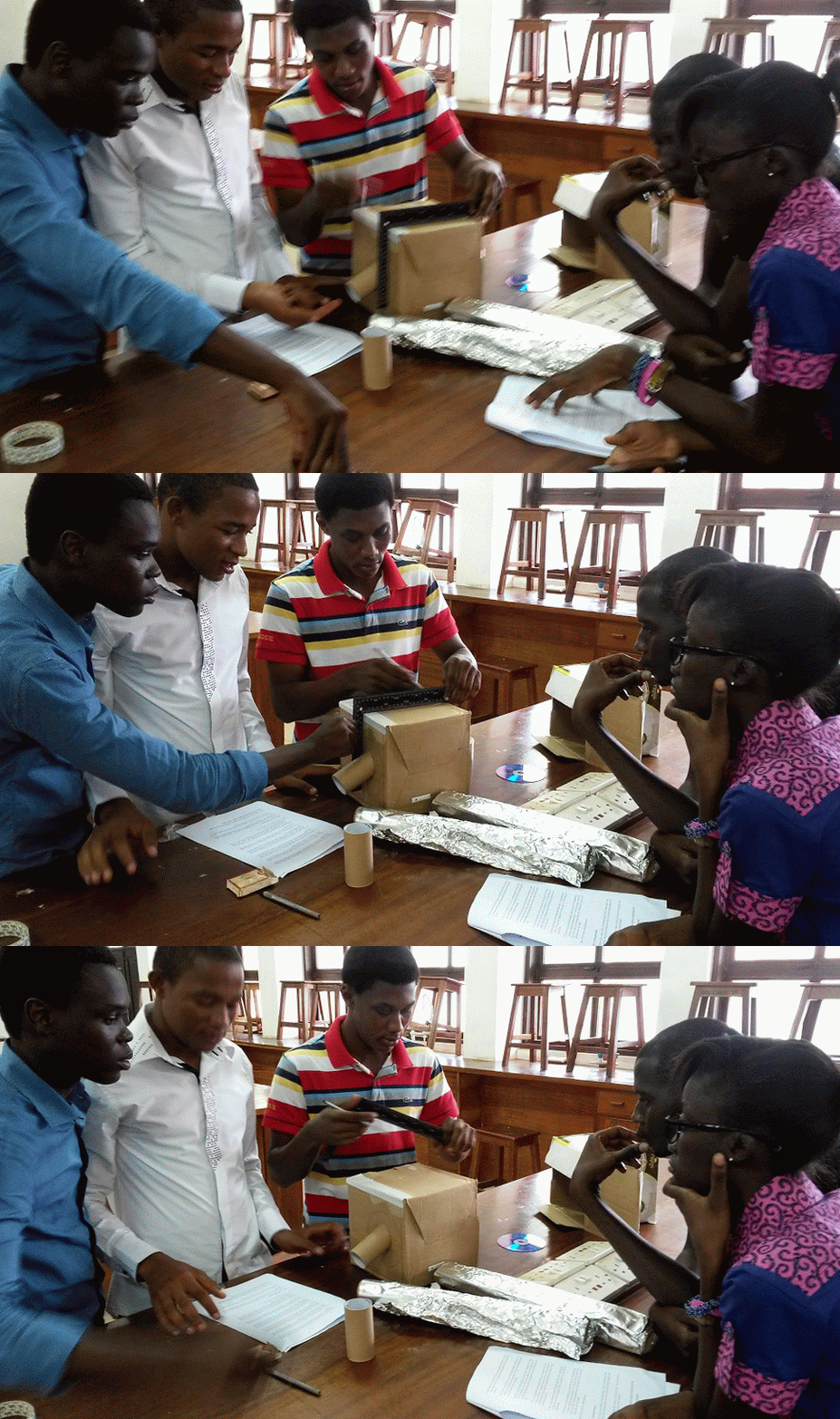
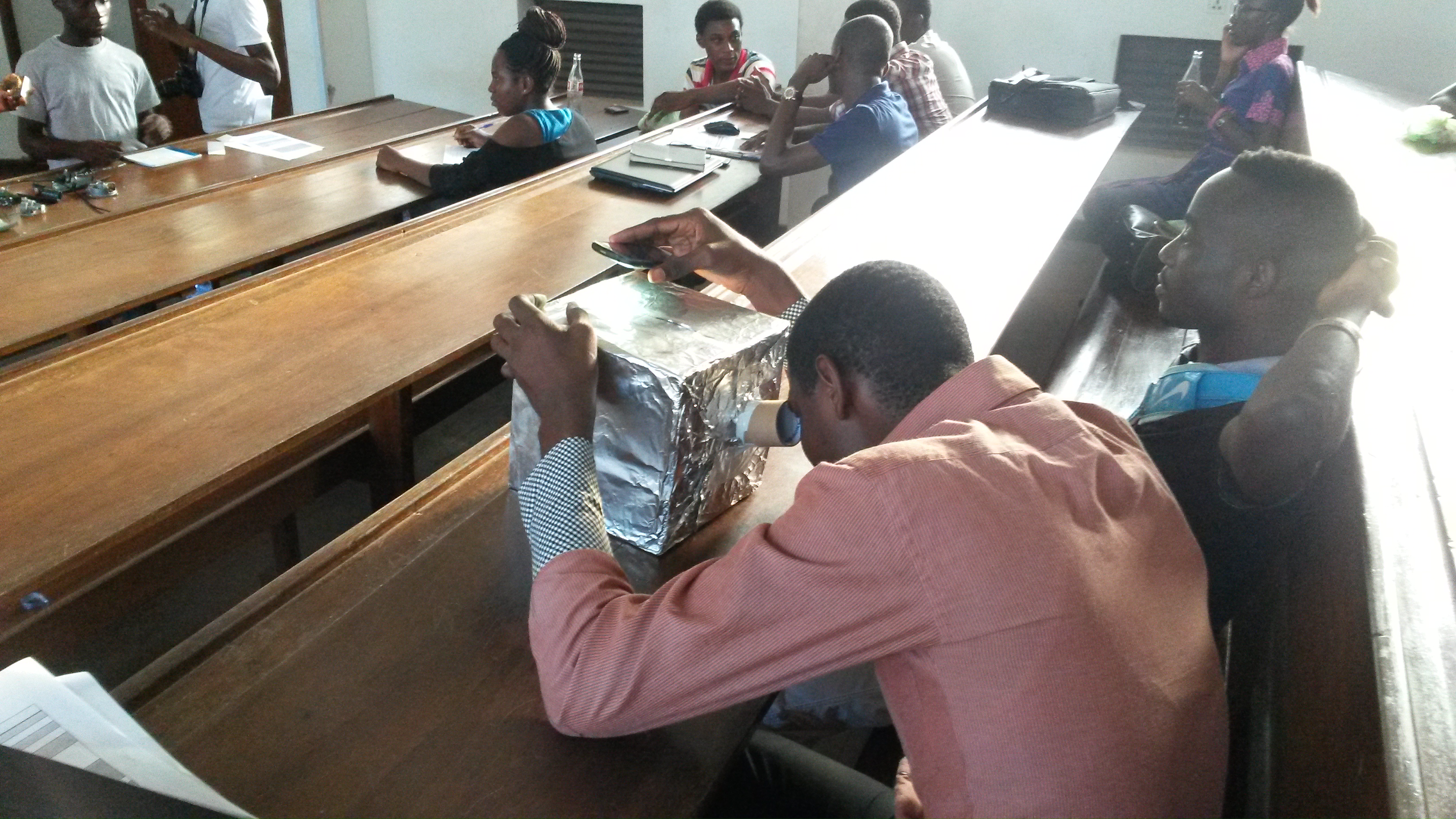
  • Engage students in hands-on projects that involved building a paper spectroscope, dis-assembly of a microwave oven, a printer and a fan.

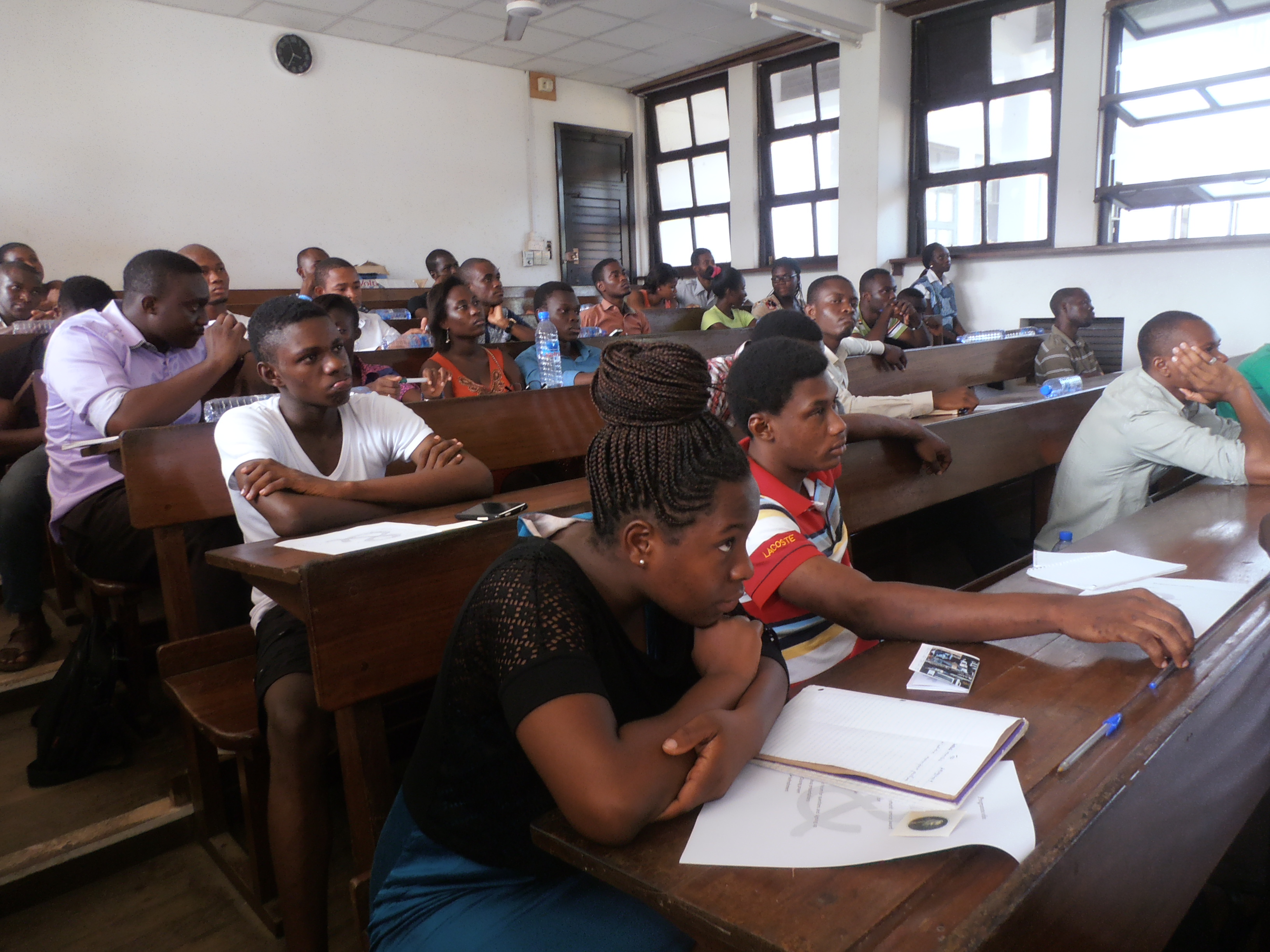
The workshop took place at the lower lecture hall of the Physics department in the University of Ghana, Legon. Students from the host physics department, as well as chemistry, computer science and psychology students attended. There were also students from the architecture department of the Central University College. In all, there were 50 participants.

The workshop started with an introduction of the AMP team, followed by an interactive session, during which members of the AMP team engaged in conversation with the students.

After the interaction and lecture, participants were divided into four groups and made to work on the various projects. Each team documented the brand, the year of manufacture, and all other information they considered relevant. They were required to state to the best of their knowledge, which components were in the equipment and to what other uses these could be put.

We discovered that students from the physics department in particular had a fundamental awareness of the nature and uses of parts, as well as how these contributed to the total functioning of the equipment. After this session each team presented its findings to the larger group of participants.

Upon the completion of the workshop, participants by way of evaluation, passed on comments such as:

The program was insightful and inspirational. I am very happy I came and met other brilliant students and how they agitated minds to think critically. A great experience that will stay with me a long time.

A successful workshop in my opinion. I learned a lot and I am happy to know that such great ideas are being implemented. As I leave, my mind is racing through ways I can contribute to this positive revolution.

See photos on Flickr : STEAM Photos

OLYMPUS DIGITAL CAMERA

Spectrascope test model


AMP workshop – dis-assembly of a refrigerator

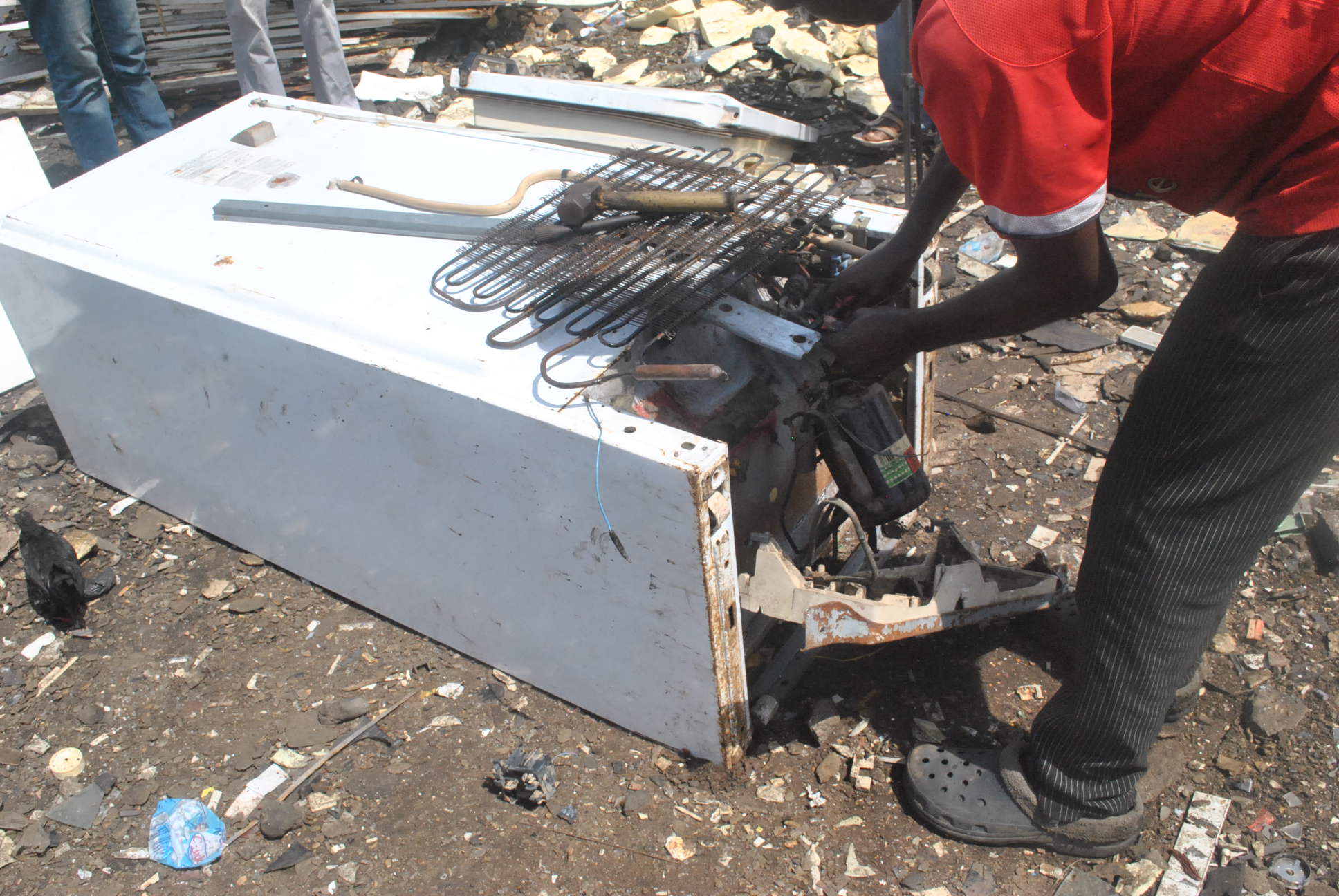
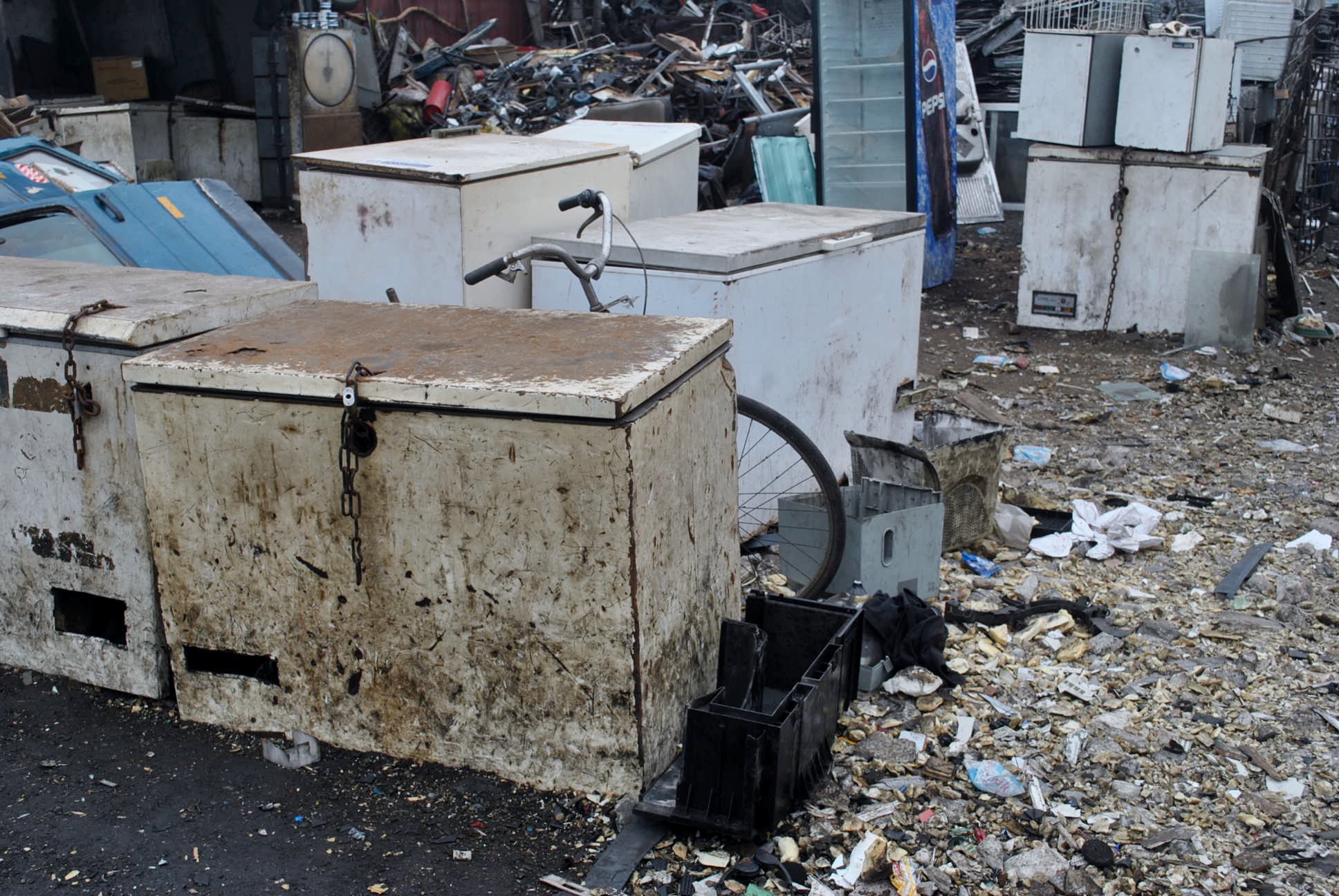
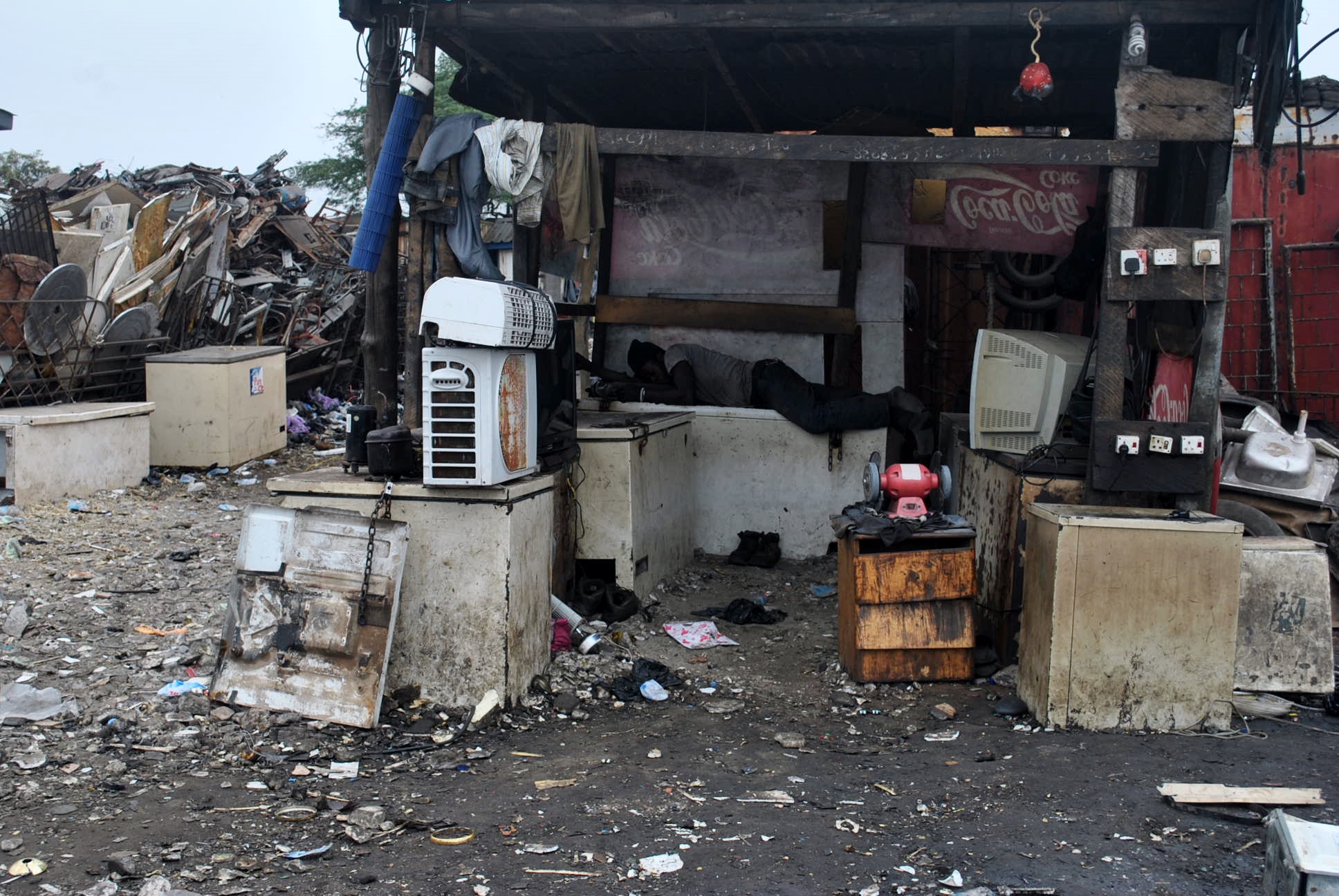
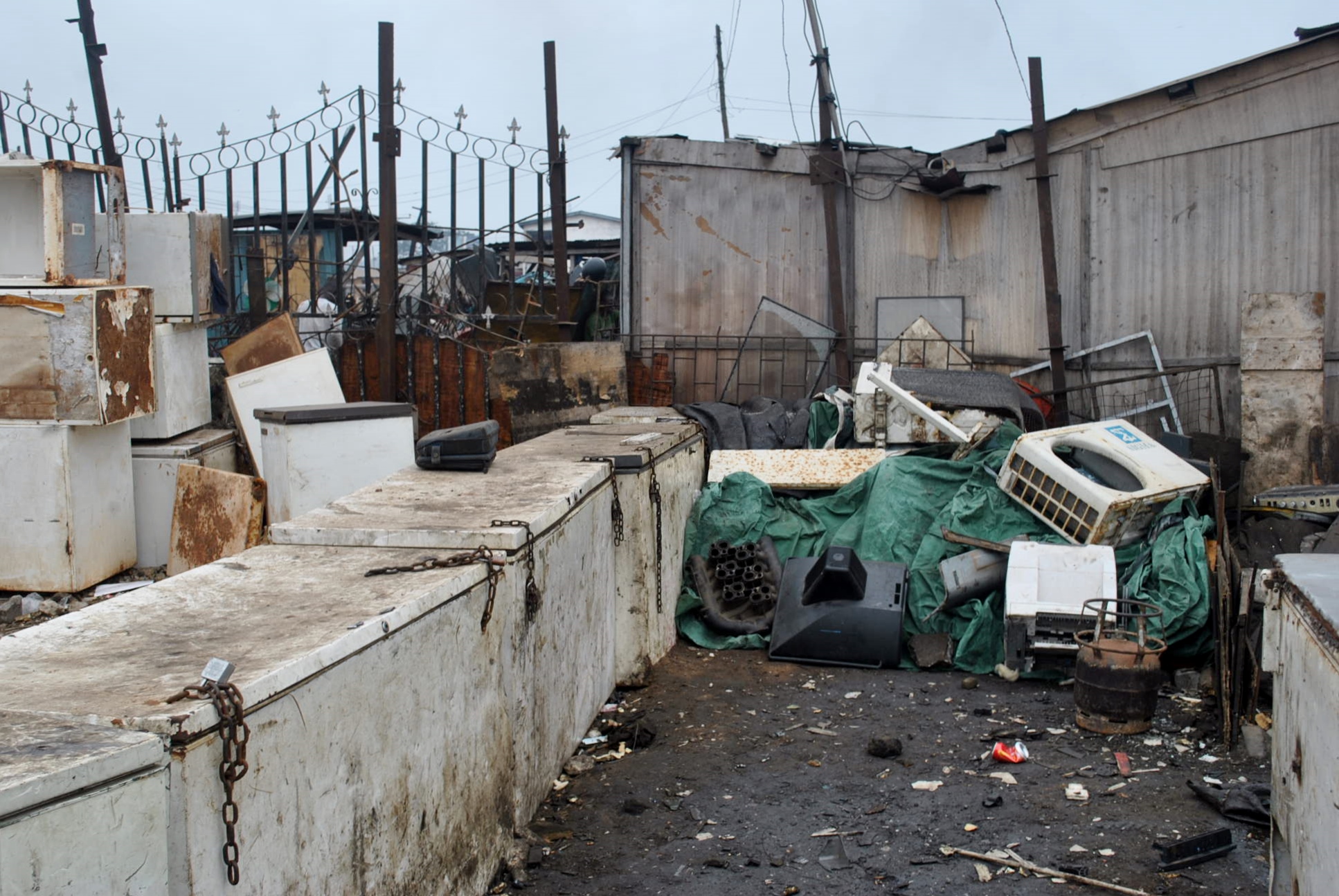
Refrigerators are among the most dismantled electronic equipment in Agbogbloshie if not the most dismantled. This is evidenced by the large numbers of the post-dis-assembly debris found all over the Agbogbloshie landscape. Data from Customs, Excise and Preventive Services (CEPS), Government of Ghana, on the import of EEE (all products) was obtained for the period 2006 to 2009. The records indicate that for the 4-year period, a total of 3,763,100 units of EEE were imported and refrigerators recorded the highest in 2009. They are used especially for the purposes of storing personal belongings and tools (see photos).

On the 5th of April 2014, the AMP team was onsite at Agbogbloshie for a refrigerator dismantling workshop. This workshop was a critical first, in a series of e-waste worker centered workshops that would be held in Agbogbloshie. The main purpose of these is to gain a deeper understanding of the process involved in the dis-assembly at Agbogbloshie, the tools involved, material components of equipment, and their prices at Agbogbloshie. Quite apart from this, they would enable us tailor the EEE manual, to suit the information needs of the e-waste workers and maker community in Agbogbloshie as well as interested STEAM workers.

The day before the workshop, Emmanuel, our design associate, aided by Mohammed, an e-waste worker, purchased a refrigerator.

The workshop was held in a space owned by Rauf. This was because, the team realized, it was going to be a more efficient use of its time to have it here, where there is already some degree of shelter, rather that erect a new one on the AMP site. In Agbogbloshie, the harsh noon day solar conditions, can make the high levels of pollution feel considerably worse. Hence the initial decision to build a new temporary shelter.

Zack (an e-waste worker) started by taking apart the doors, then the compressor, fan and all other components in the lower recesses of the fridge. Following this, he detached the outermost body, which is made out of steel. After these, he proceeded to remove the evaporator fan, evaporator coils and other components in the freezer section (See image Workshop photos). Now all that was left was a large open chest, comprised essentially of polyurethane foam (which he proceeded to remove next) and the plastic inner lining of the refrigerator. In the final stage, the doors were dismantled, by unscrewing and detaching their inner plastic components from the steel outer casing. All the dismantled parts were then photographed (see Parts of a refrigerator).

Subsequently, Andrew (from Afrimakers) made a video, in which Zack shared his knowledge in the local dialect (Dagomba) and English, on the dismantling process. This would be the first of many such local dialect explanatory videos.

Here a few discoveries that were made

  1. The  process of dismantling refrigerators in Agbogbloshie is not directed towards potential reuse of parts. Thus far, the orientation is towards breaking it all down to its basic material for smelting. Hence very little care is taken in the process:
  2. The items were weighed and the prices were as follows
  • Steel: 61 kilograms (Equivalent to 18 GHC)
  • Copper: 4 pounds  (Equivalent to 24 GHC)
  • Aluminium : 5 pounds (Equivalent to 5 GHC)
  • Timer: 3-5 GHC
  1. The fridge was bought for 100GH cedis, twice more than the price of its dismantled parts.
  2. During the opening/dismantling of the compressor, Zack inhaled without bother, the freezer gas that was emitted. This gas is non-toxic to human beings however inhaling directly could be dangerous and could settle in the lungs and cause adverse effects.

The day ended with a barbeque on the AMP site (see AMP barbecue). In line with the dictates of Islam, the goat was prayed over and slaughtered by an Imam at the market and transported to the site, where some e-waste workers (2 in number, supported by several others-about 6 others) aided in its preparation. When it was all done, a number of the e-waste workers came over for the feast and this helped the team bond with a number of them.


DSC_0022DSC_0204DSC_0179DSC_0168

The Emergent Vernacular

Sénamé-Behrang

The M&D seminar organized a round table on the emergent vernacular.

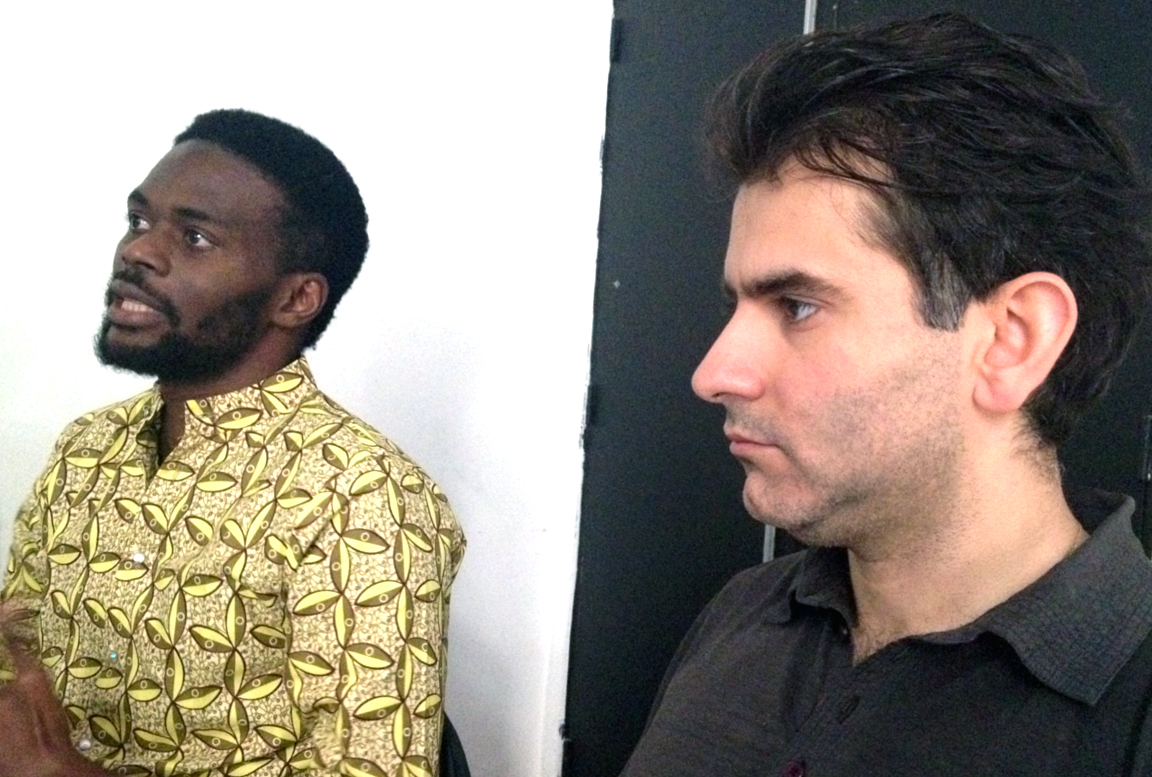
Behrang Fakharian, vernacular architecture expert and Sénamé Koffi A., architect and anthropologist, co-founder of the association L’Africaine d’Architecture and the Woelab, the first makerspace in Togo, have shared their respective experiences to explore the hypothesis that vernacular architecture and “open-source” design have comparable modes of production such as the peer-to-peer transmission of knowledge or the creation of “architecture without architectes”.

The Makers and Development seminar is a semester 6 course taught by Yasmine Abbas, Professeur Associé at l’Ecole Spéciale d’Architecture. People of the seminar MAKE, a semester 5 course taught by Marie Aquilino at l’ESA, joined the round table. The M&D and MAKE seminars are organized as a vertical offering to explore in depth issues of making in complex contexts.

We filmed the conference and we hope to share it with you very soon!

Meanwhile, find some readings/viewings on the neo-vernacular here and here.

M&D STUDENTS WINS THE PRESELECTION TO THE 2014 NASA CHALLENGE!

[FRENCH]
[ Original post by Yasmine Abbas]

12-13 April 2014, “student seminar S6 Makers & Development (M & D) taught by Yasmine Abbas and seminar S5 Make taught by Marie Aquilino had the opportunity to participate in the hackathon organized by the NUMA (first space Co-working in Paris) and CNES . The event took place at fablab the Digital Crossroads 2 of the Cité des Sciences (with stunning views of the Geode!). Students are divided into three interdisciplinary teams to meet NASA challenges that republishes a series of challenges organized into five themes: robotics, technologies related to space, space travel, observation of asteroids and the planet earth.

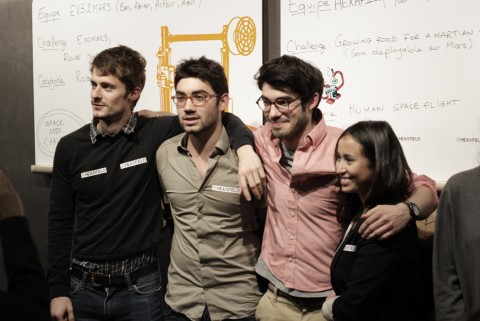
Hexafield TeamHexafield Team from left to right – Frederic Grandjean, Nicolas Benmussa (ESA S6), Charles Clement (ESA S6) and Yasmine Sarehane (S9) whose work focuses on the degree of lunar habitat © Guilhem Boyer

A team worked on the deflection of an asteroid, the other on creating a budget small satellite and the third generation of a deployable greenhouse on Mars. The educational goal was to immerse themselves in the world of a fablab pourproduire in one weekend a coherent concept in collaboration with people from different worlds and discussion with teachers from both seminars (coaches mobilized for the weekend) and robotics experts (including Olivier Grossat who spoke to ESA for a conference and workshops on 3D printers), computer and user experience.

This is the public, visitors to the city of sciences and participants hackathon, which ultimately decided the two winning teams from the five who competed. Students were part of the ESA-teams HEXAFIELD Send “flowers” on Mars (the greenhouse on Mars) and SWARM EXPLORER (satellite budget)!

Yasmine Sarehane (S9), Nicolas Benmussa (S6), Charles Clément (S6), Kawtar Sayegrih (S5) and Muriel Ferneini (S5) now “galactic problem solvers” were among the shortlisted for the support of the NASA teams and each received a membership card for one year fablab the Cité des Sciences. ”

Read more .