


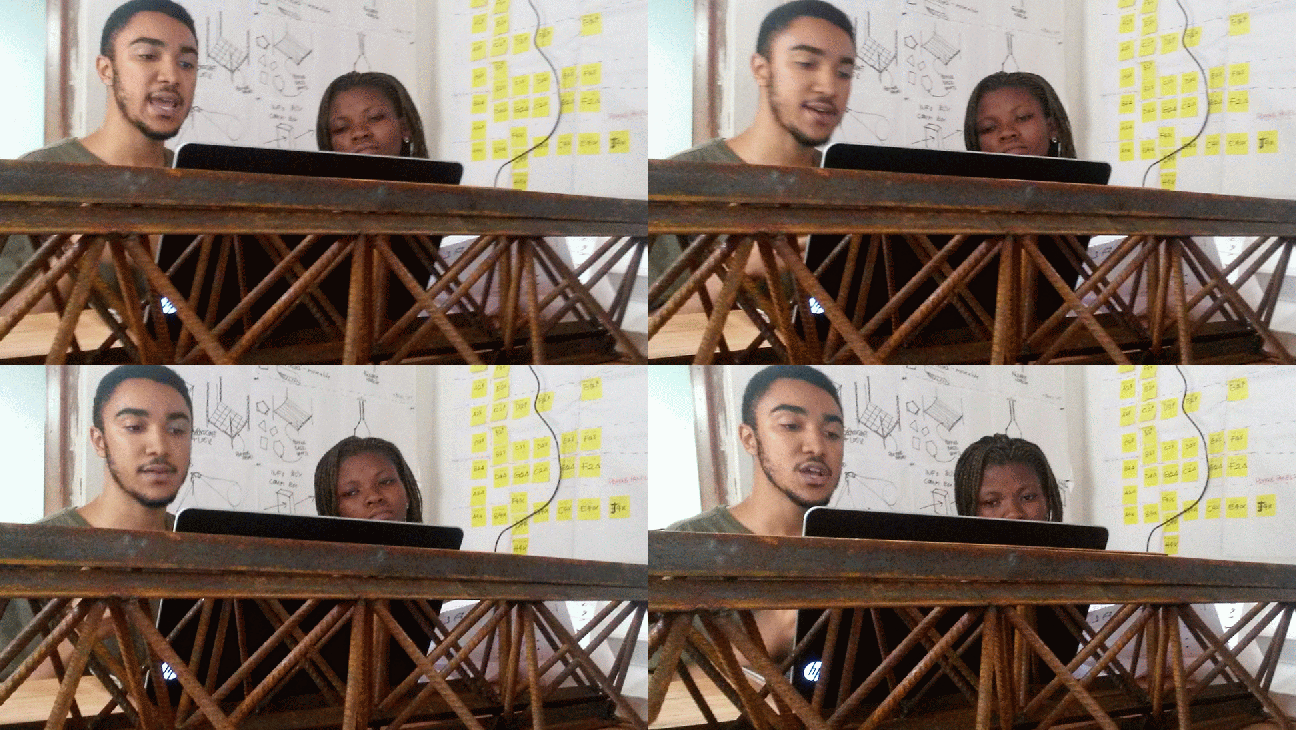
Planning “critical path” for spacecraft during #ampqamp14
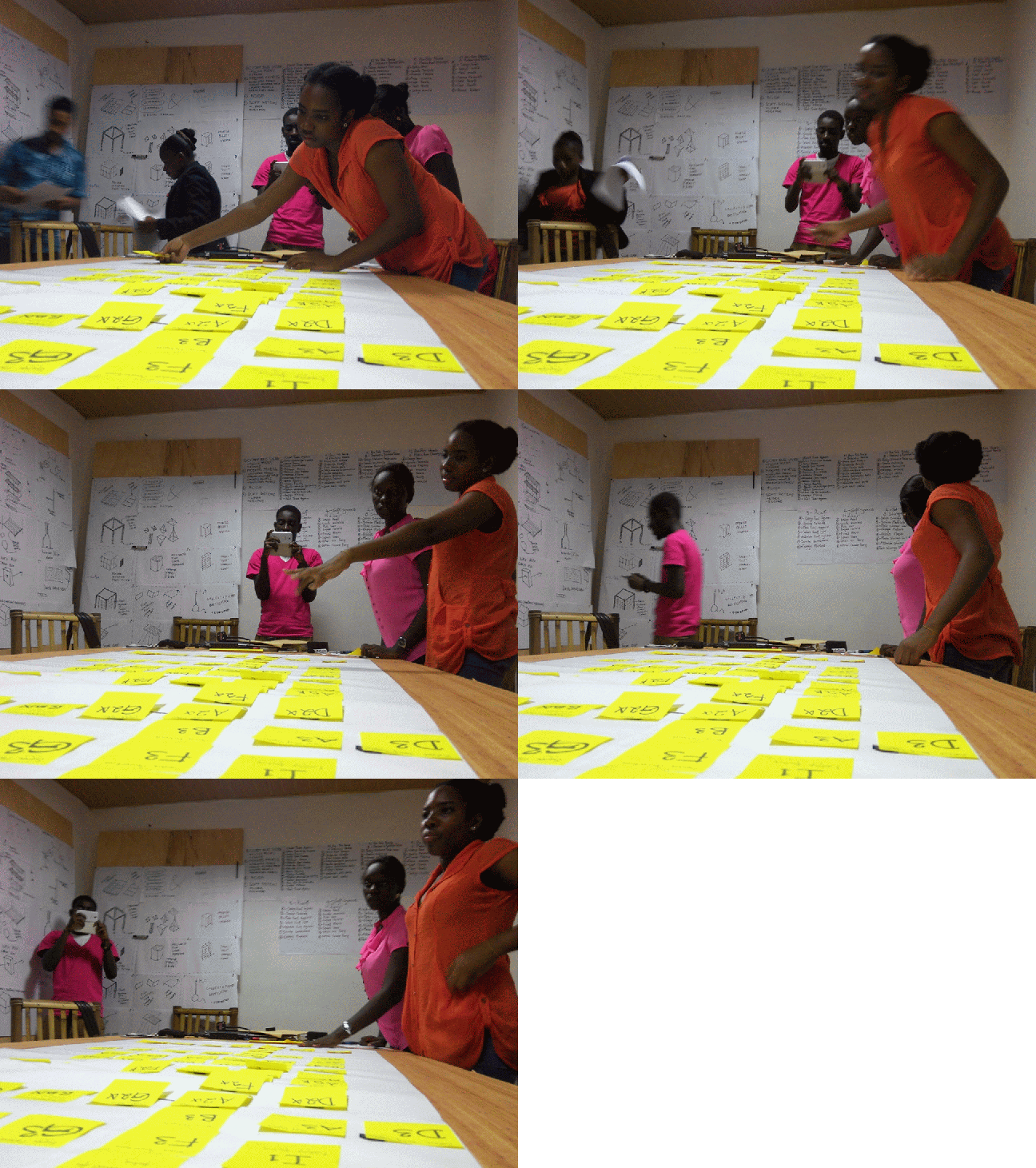
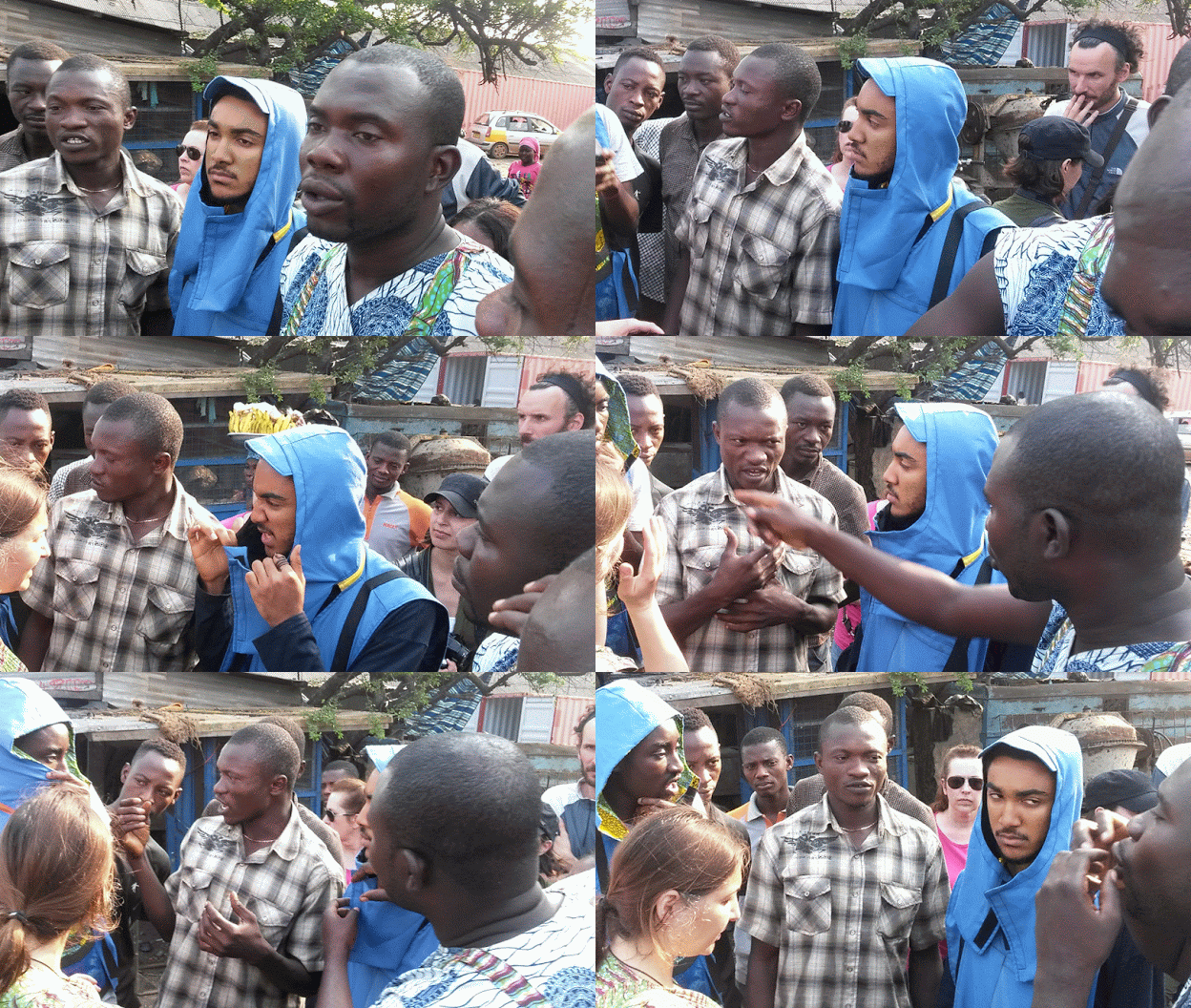
First weeek =) of#ampqamp14 started at Hub Accra by a discussion of AMP’s objectives for the three coming weeeks: to co-design and build with AMP makers (comprising of STEAM students and graduates and eventually e-waste workers) a module of the spacecraft–AMP’s makerspace–and share its progress with the community in Agbogbloshie.
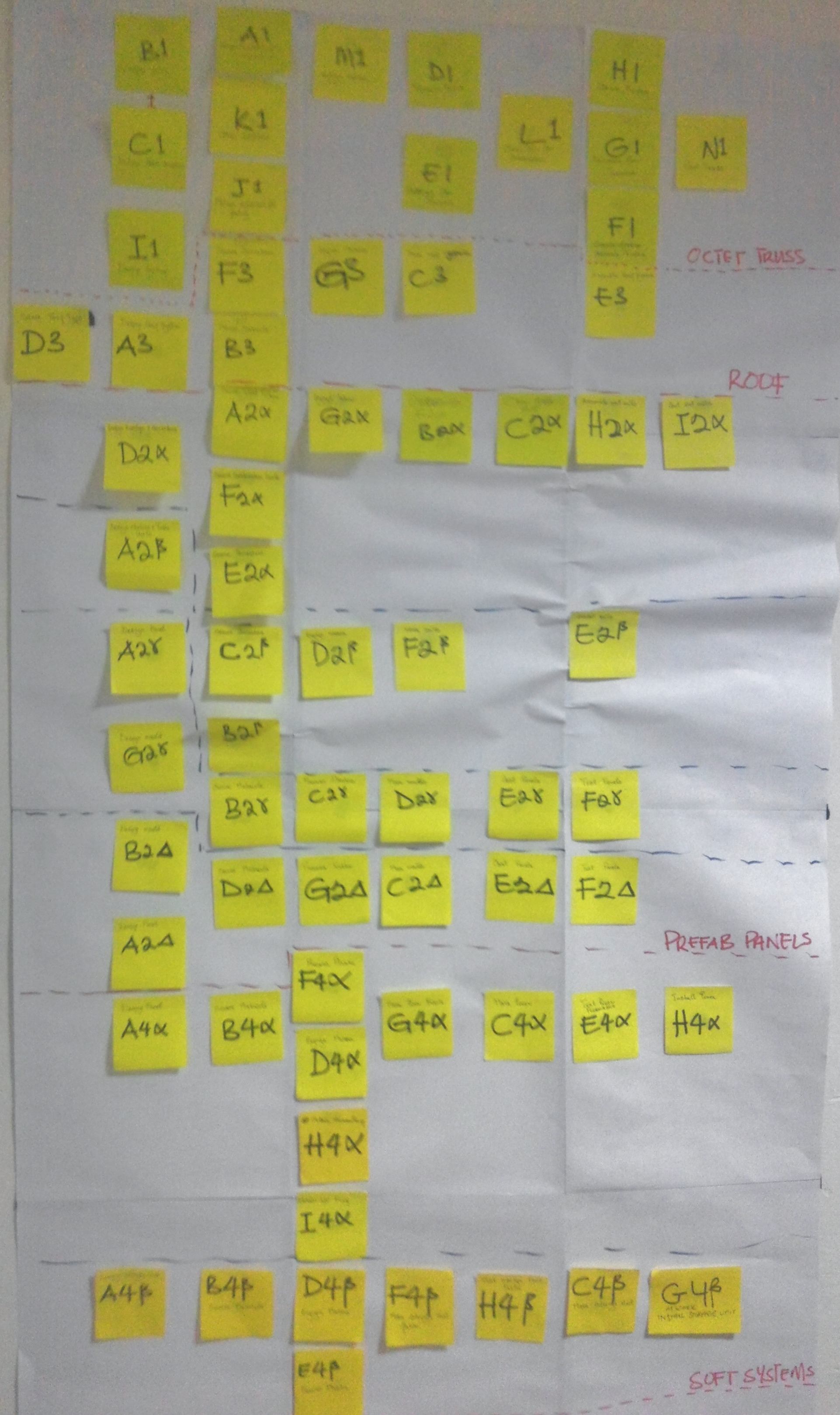
Participants started discussing the design of the spacecraft, its frame and interior frame comprising of an octet truss system, prefab panels, soft and roof systems. We then developed a critical path for each system so to know what to do at each step of the way until we build the spacecraft. The brainstorming sessions were very intensive, with some of the participants sketching/drawing the various concepts related to the spacecraft.
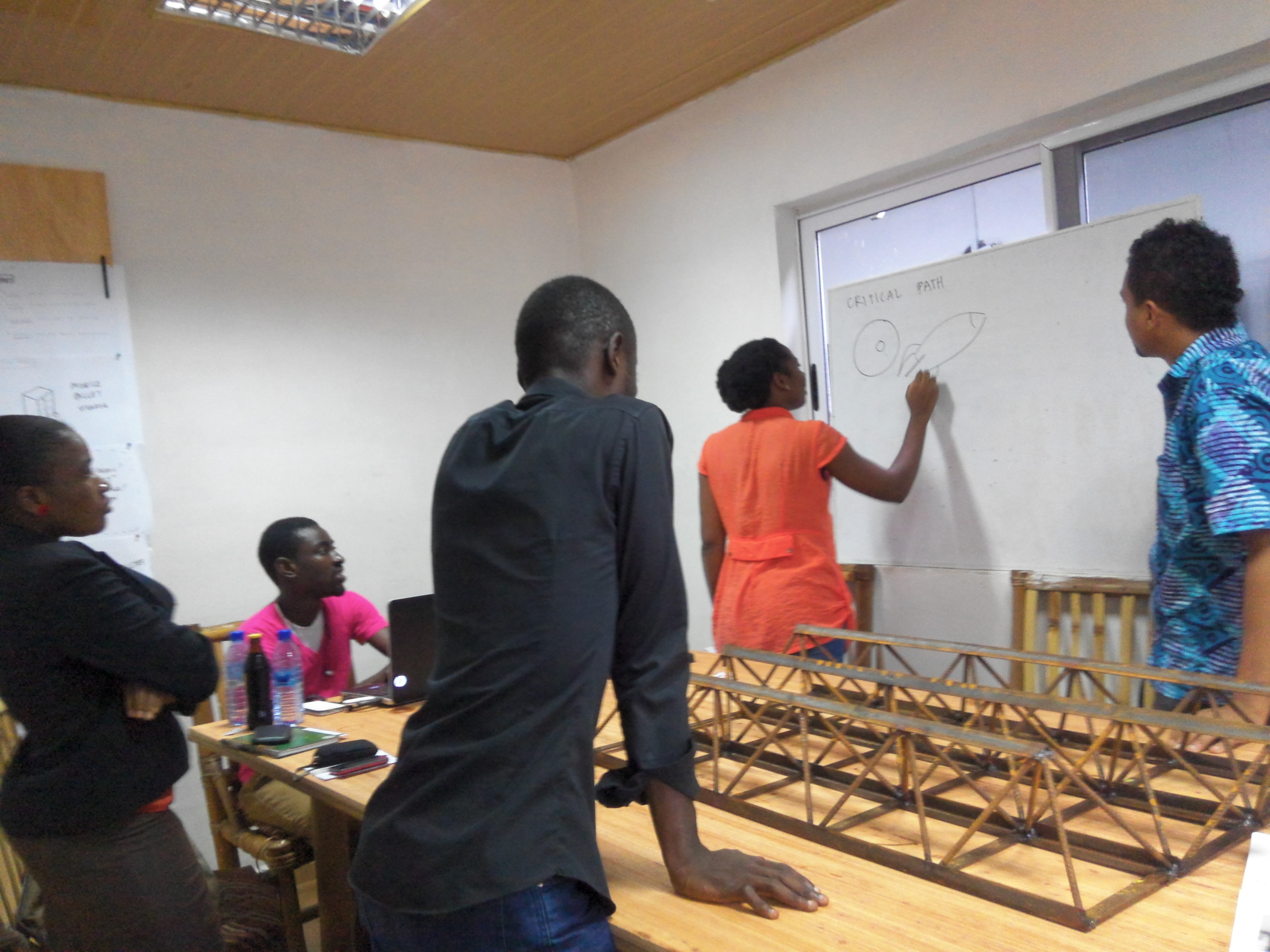
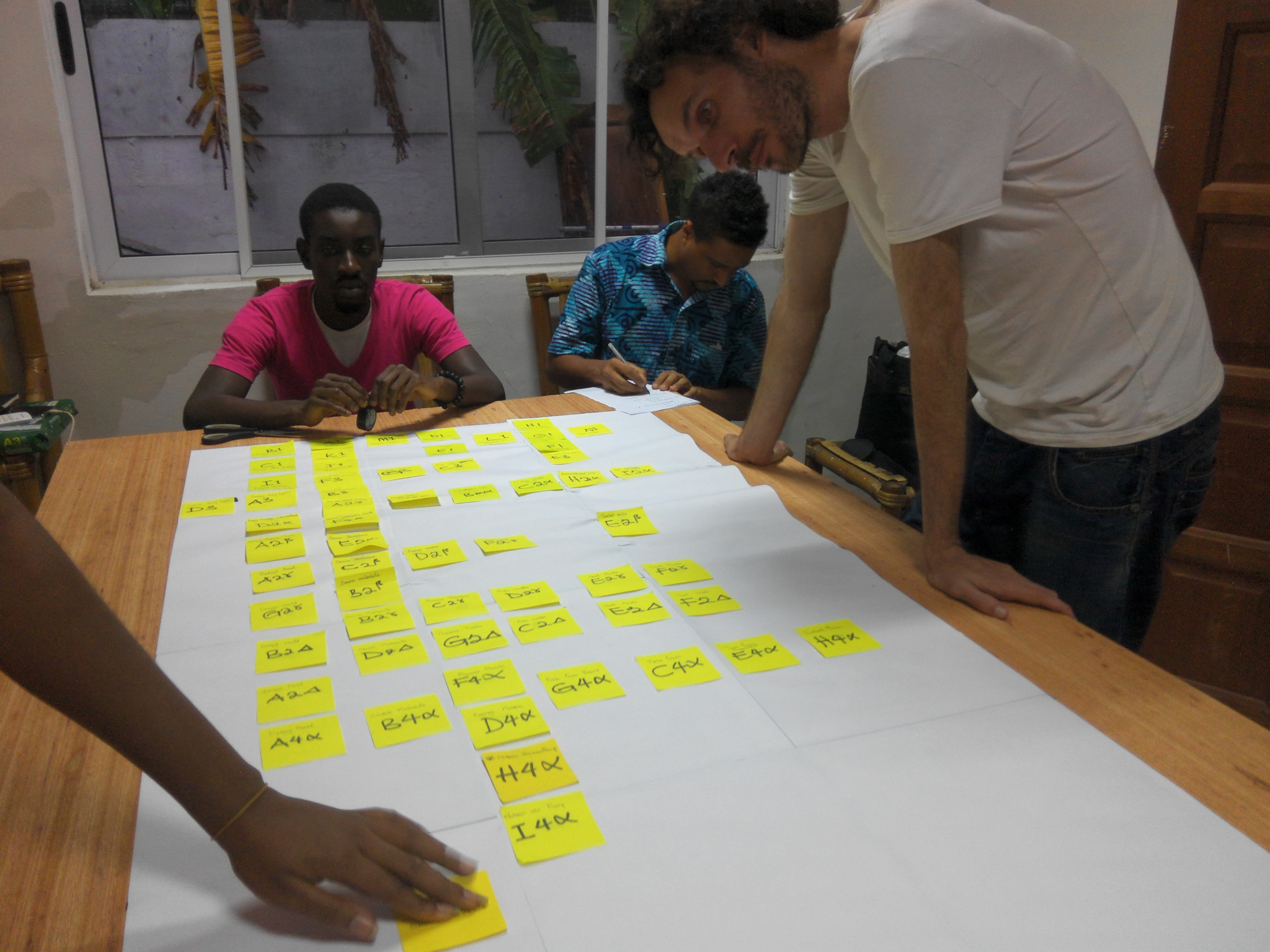
By the second day we enthusiastically produced fully developed critical paths, identified and quantified in terms of duration and dependency of the various tasks
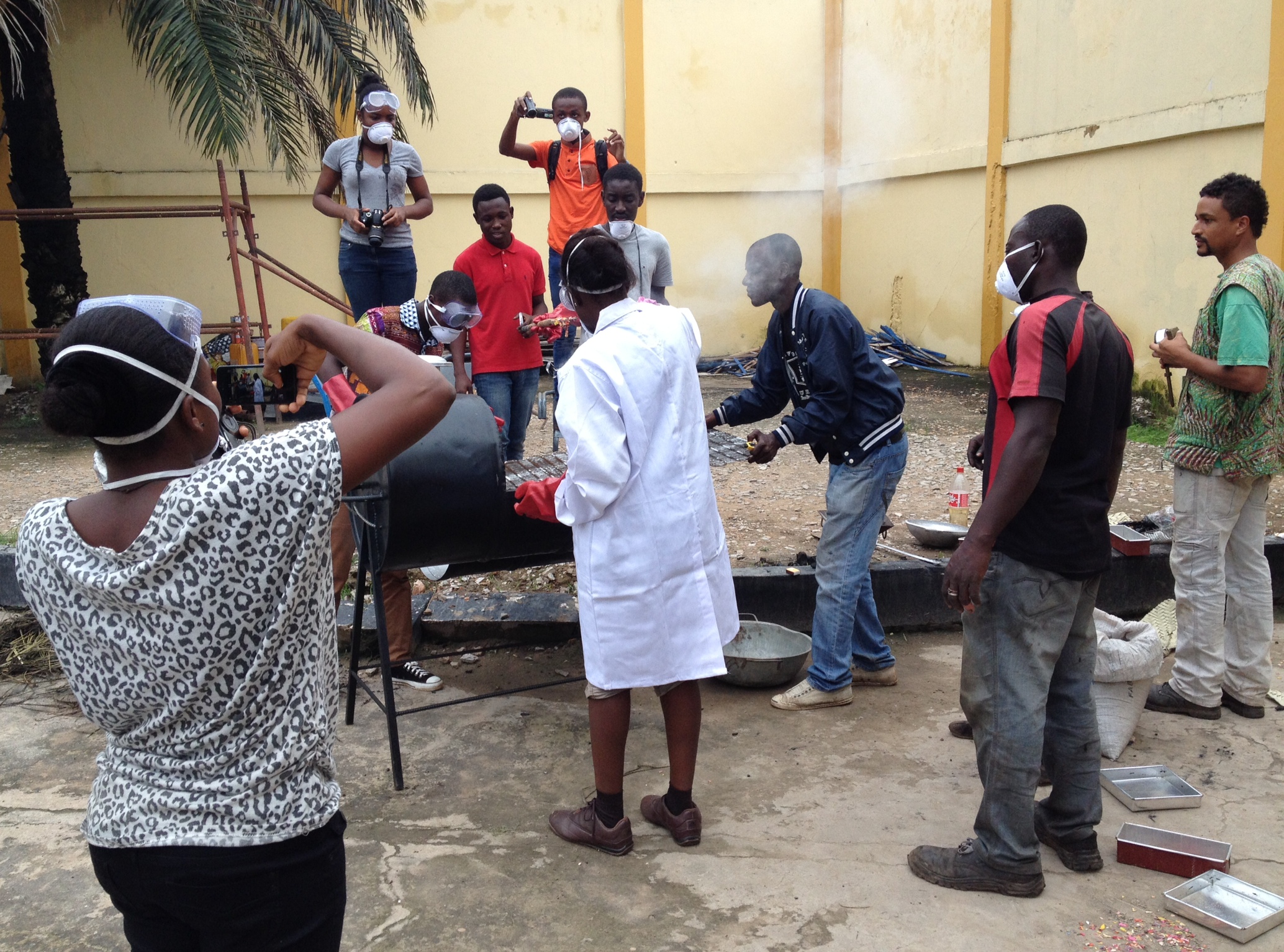
We also prepared for the first workshop ahead, the plastic workshop to be carried out at the Rex Cinema in collaboration with Brad Marley and Efya from the POLY Bank GH organization. In preparation for the workshop, we conducted background research on the physical properties, melting methods and stewing methods. We sourced the plastic–shredded-PET (polyethylene therephatlate) old plastic bottles and stewed shredded-PP (polypropylene)–and a number of molds from Agbogbloshie. This was also a good occasion to share our process with the Agbogbloshie community. This is a picture of the tools we brought to the Rex Cinema to conduct our experiments.

The Rex is an open-air cinema, a wonderful space to experiment within. There, young Ghana makers were busy melting, stewing and molding different types of plastics and exploring the production of architectural parts, panels, brick or tiles, made of recycled plastic. Sam and Idrissou, Agbogbloshie community agents, helped with burning the charcoal.. They were far more skilled than us!

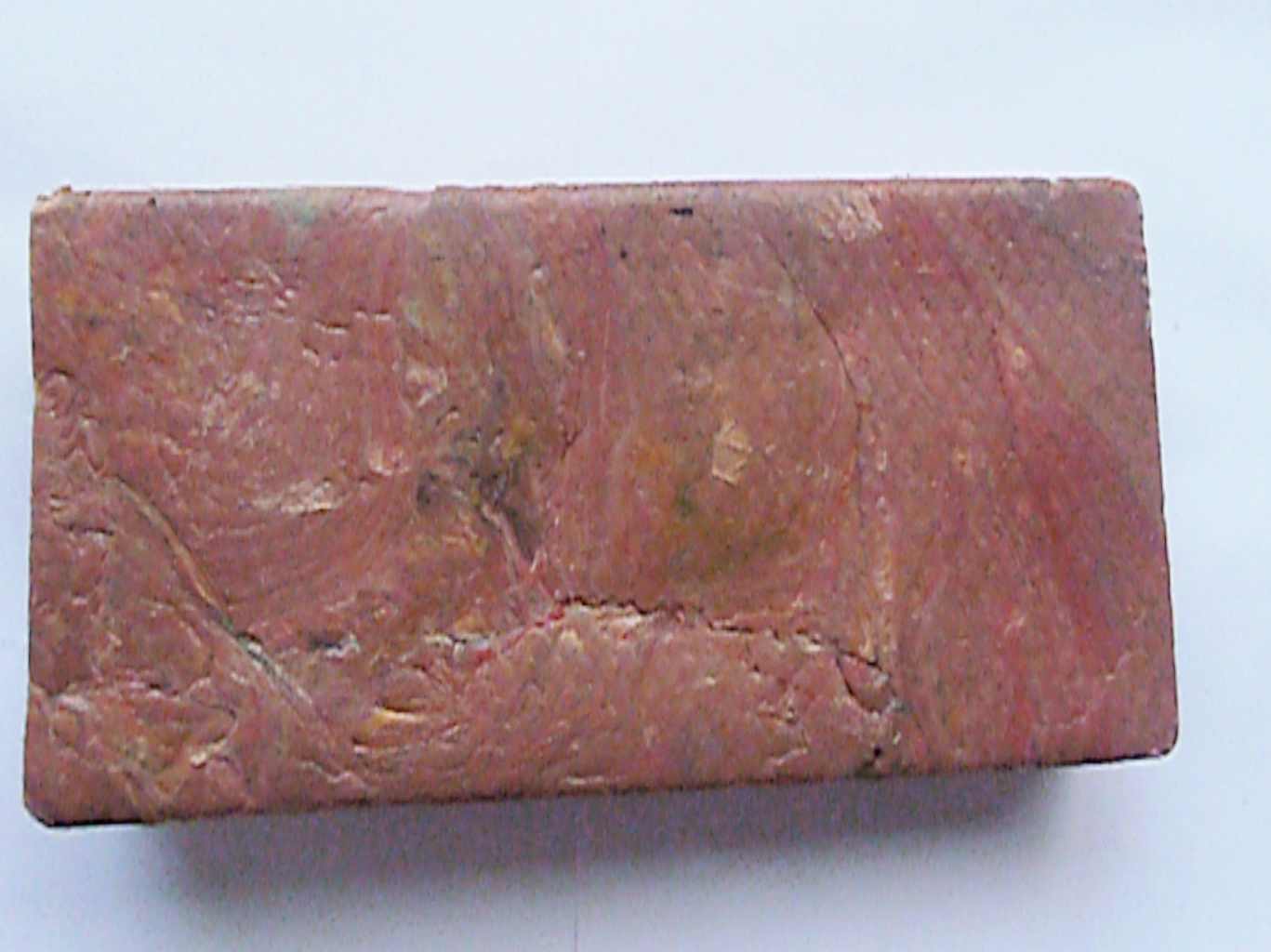
Below are some of the observations from the experiment:


Find here the Lab report.
We were honored to host Prof. Kwadjo Osseo-Asare (AMP co-PI) and Dr. Victor Oteng-Atiemo (retired from MD of DOW chemical Ghana) who gave us advices on how to proceed and continue our experiments.


Here is the link to Flickr photo set.

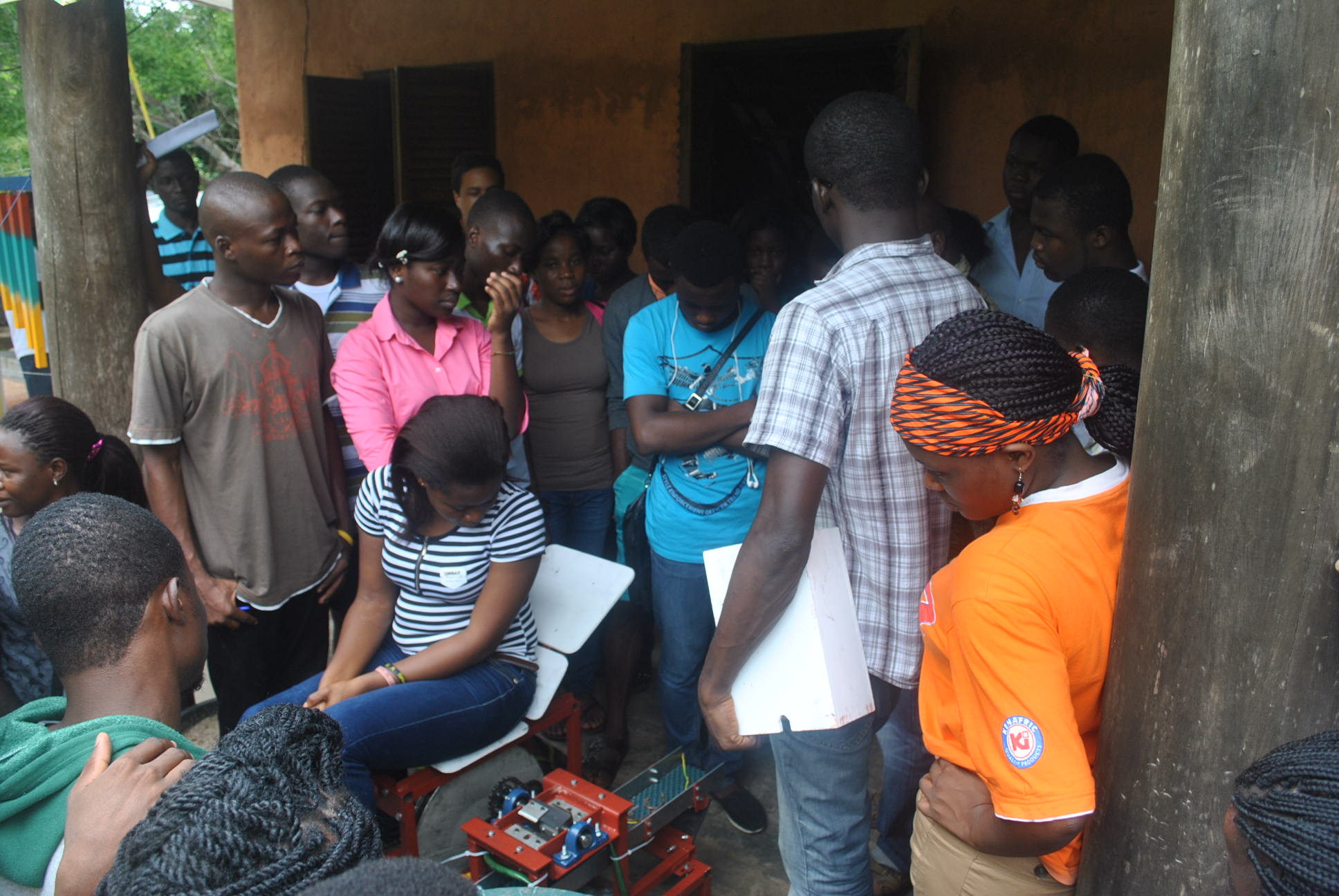
In line with the intention to make tools for the remaking of the Agbogbloshie electronic landscape, the AMP team, in collaboration with Rafa Font of Recyhub, met at the Kokrobite institute to assemble the Hal Watts’ E-source– a man- powered copper cable shredder. The two day session commenced in high spirits with each person, contributing to the assembly. Slowly but surely, all the parts came together and the basic functions tested. At the end, a few observations were made about its applicability to Agbogbloshie, and these were recorded as notes for the designers to consider.

First developed as a bicycle with cable shredding capabilities, this new prototype, still maintains the idea of pedaling as a means to power the machine. It however deviates from the initial literality of a bicycle. The design was inspired by the problem of burning copper cables in Agbogbloshie, which Hal visited, to gain firsthand experience of the situation. The AMP and Recyhub teams were joined by students from the college of engineering KNUSTs creativity group. These are engineering students with an interest in e-waste processing.
The AMP team started by unpacking and positioning the frame, and then the tubes for water were appropriately placed. The next in line was the turning wheel, which we placed in the part of the frame allocated for it. We then proceeded to hang the chains on the cassettes and connected it to the main shredder blades which sits at the centre of the frame. This was followed by the pedals which we bolted in place. After testing to see that the pedal functions as it should, we proceeded to install the processing trough and then tested once again to ensure that it moved when pedaled. We then adjusted the seat until it was in the right position and then bolted it. Following this, we placed the receptacle for the cables over the blades, filled a barrel with water and then proceeded to fill it with cables and began testing the entire set up.

On the second day of the workshop, the function and assembly process were explained and tested further in collaboration with students from the Ashesi University, who were in Kokroite to engage in various forms of maker workshops. They found the experience thrilling and enthusiastically asked a lot of questions. Among the questions that came up were:
In terms of future steps, the AMP team hopes that, further studies in collaboration with stakeholders such as Recyhub, the creativity group and Hal & Watt (inventors of the e-source) will help to advance this initiative until such a time that, all e-waste workers in Agbogbloshie have a version installed and the burning of cables no longer occurs.
See more pictures on Flickr
Are you interested in technology? Do you like making things? Does environmental pollution bother you? Have you ever imagined the future as something awesome?
Are you a student or recent graduate in the fields of science, technology, engineering, art, mathematics, planning, architecture and design, or environment and natural resources?
Apply today to be a part of this year’s AMP QAMP, a three-week camp for young makers in Accra.

Agbogbloshie Makerspace Platform (AMP) is a collaborative project to upgrade the quality of life and environment at Agbogbloshie, the largest e-waste ecosystem in Ghana. AMP is an experiment in design innovation and youth-led M&D (makers & development). The short-term goal is to design and build a makerspace for the hyper-local context of Agbogbloshie, together with an open-source technology platform to support its operation. The long-term goal is to rehabilitate the environment of Agbogbloshie and to help green the community’s current recycling practices. We believe this can happen through the site’s transformation into a network for more advanced materials processing and small-scale distributed manufacturing. AMP as a open-source project seeks to create an alternate convention that partners e-waste, scrap and recycling industry with the technical know-how and social entrepreneurial framework to remake the landscape themselves, over time.
AMP contends that (domains of) architecture and electronics have converged. At such a moment—if we capitalize on this opportunity to make open, democratic and collective the capability of manipulating materials from the level of chemistry up, by means of digital technology, we can move beyond the notion of “e-waste”. Electrical and electronic equipment (EEE or 3E)—old or new—constitute a vital stream of raw material for the global production chain. Not only are such 3E-materials in reality the physical building blocks of electronic landscapes and digital space, but many are also recyclable, i.e. plastics, steel, aluminium, copper, glass or other valuable materials. If successful, AMP will amplify the economic potential of Agbogbloshie and Ghana’s makers.
AMP QAMP is a series of informal maker “camps” to build the future of Agbogbloshie. The primary session of QAMP for 2014 runs from the 1st to the 20th of July in Accra, Ghana.
Participants will work collaboratively as part the AMP makers collective to address key aspects of building an ecology of makers in and around the Agbogbloshie e-waste stream, from the ground up. We are interested in young people who are proactive, intellectually curious, open-minded, imaginative, detail-oriented and able to work in teams.
If interested, please submit a cover letter to qampnet@gmail.com by June 30th including the following information: Area of Specialization / Course of Study (year of graduation); Digital Media and Graphics Software (with level of proficiency); CAD/CAM and 3D Modeling Software (with level of proficiency); Programming Languages (with level of proficiency); and Fabrication Experience (sewing, cabinetry, furniture-making, jewellery, glass-blowing, welding, circuit board etching, breadboarding, etc.) Short-listed candidates will be scheduled for in-person interviews starting the week of June 23, 2014.
The first session of the Archibots workshop came off as scheduled on the May 30th 2014. The event was well attended by people from various disciplinary backgrounds. There were engineers, architects, CAD technicians, business men & women and lecturers as well as from various nationalities, such as Spain and the Netherlands. This was the introductory session for Archibots, a design workshop to prototype architecture robots for Agbogbloshie. As part of the event, all three collaborating organizations (tap, AMP and MESH) made presentations on what they do. AMP co-lead DK Osseo-Asare, introduced participants to Agbogbloshie E-waste circuitry, which is the context for the architecture robots to be designed and the key design concepts as far as AMP is concerned. Some of the videos that were selected to provide inspiration for participants can be found here . The team is eagerly awaiting the next phase which is the design session scheduled for June 7th 2014 at Hub Accra. This promises to be just as exciting as the May 30th event. Thanks to our friend and ally, media partners MESH Ghana for compiling footage of the event, which can be found at Archibots: Remaking Agbogbloshie.

Re-making Agbogbloshie is a tap:Build design workshop conducted as part of the Agbogbloshie Makerspace Platform QAMP series of maker workshops. MESH Ghana is the media partner.
AMP approach contends that (domains of) architecture and electronics have converged. At such a moment — if we can make open, democratic and collective the capability of manipulating materials from the level of chemistry up, by means of digital technology, we can move beyond the notion of “e-waste”. Electrical and electronic equipment (EEE or 3E), old or new, constitute a vital stream of raw material for the global production chain. In particular, while there is fundamental overlap with the elemental “stuff” of digital space, it is equally important to note that the majority of EEE materials* are generally recyclable such as plastics, steel, aluminium, copper, or other specialized or high-value materials.
Re-making Agbogbloshie is a collaboration between Agbogbloshie Makerspace Platform (AMP) and The Architects’ Project (tap:). The workshop seeks to design and prototype practicable architectural interventions — at the level of equipment — that can inform the discourse of industrial landscapes like Agbogbloshie scaled through kiosk-size 3E materials processing machines, i.e. micro-industrial digital fabrication bots.
Re-making Agbogbloshie design workshop is an exploration of small-scale architectural interventions that operate more than as kinetic micro- shelters — they additionally include “robotic” or electronic systems and tool/equipment functions. The workshop seeks to design “architecture robots” that could assist humans in processing 3E materials, phytoremediation of the contaminated landscape and actively supporting the Agbogbloshie lifecycle.
Agbobloshie: Every year, tons of electronic waste arrives on the shores of Ghana. A huge proportion of this deluge of e-waste flows through Agbogbloshie, where a vibrant community of e-waste workers and makers reuse, recycle and upcycle end-of-life electrical and electronic equipment. However, some of the crude methods used for dismantling e-waste and processing scrap (such as burning wires and cords to recover the copper) are highly polluting: they negatively impact the health of e-waste workers and have led to Agbogbloshie’s notorious position as “the most polluted place on Earth” for 2013, according to Green Cross Switzerland and the nonprofit Blacksmith Institute (USA).
E-waste: E-waste or Waste Electrical and Electronic Equipment (WEEE) is typically portrayed as highly toxic old computers, televisions, etc. that are “dumped” in poor countries by rich countries, in violation of the Basel Convention (an international treaty which expressly prohibits such forms of international transhipment of WEEE). While it is true that e-waste contains hazardous materials, and that improper handling and disposal of these materials can greatly pollute the environment and compromise public health, it does not negate the fact that the materials embedded within e-waste are incredibly valuable. In fact, e-waste — considered pound-for-pound as a “raw material” of the global production chain — is among the most valuable on the planet: one ton of old mobile phones has 100X the concentration of precious metals like gold and silver than does an equivalent amount of ore mined from the earth.
Architecture: Usually when most people think about (the practice of) “architecture”, they think about high-end residences or large-scale projects. In Africa, these are typically the only kind of construction projects (along with smaller interventions by the government and NGOs) that have large enough budgets to pay the professional service fees of architects. This leaves the majority of workers and construction works on the continent, which occur in what social scientists call the “informal sector”, outside the design domain of architects, or the scope of formal architecture. The point of departure for this workshop is to propose that this default strategy for Africa’s built environment misses the point. If to date architecture has had limited success in re-configuring the African terrain, perhaps it is time to invert the approach: try to introduce innovation at the bottom, and let it spread.
* EEE- or 3E-materials: Consider electrical and electronic equipment, at all condition levels, as a raw material for global production chain. 3-E materials are a broader and more inclusive range of materials compared to e-materials, e.g. electronics materials based on silicon or other semiconducting materials, and such materials in aggregate, i.e. a circuit board.
Video highlights:
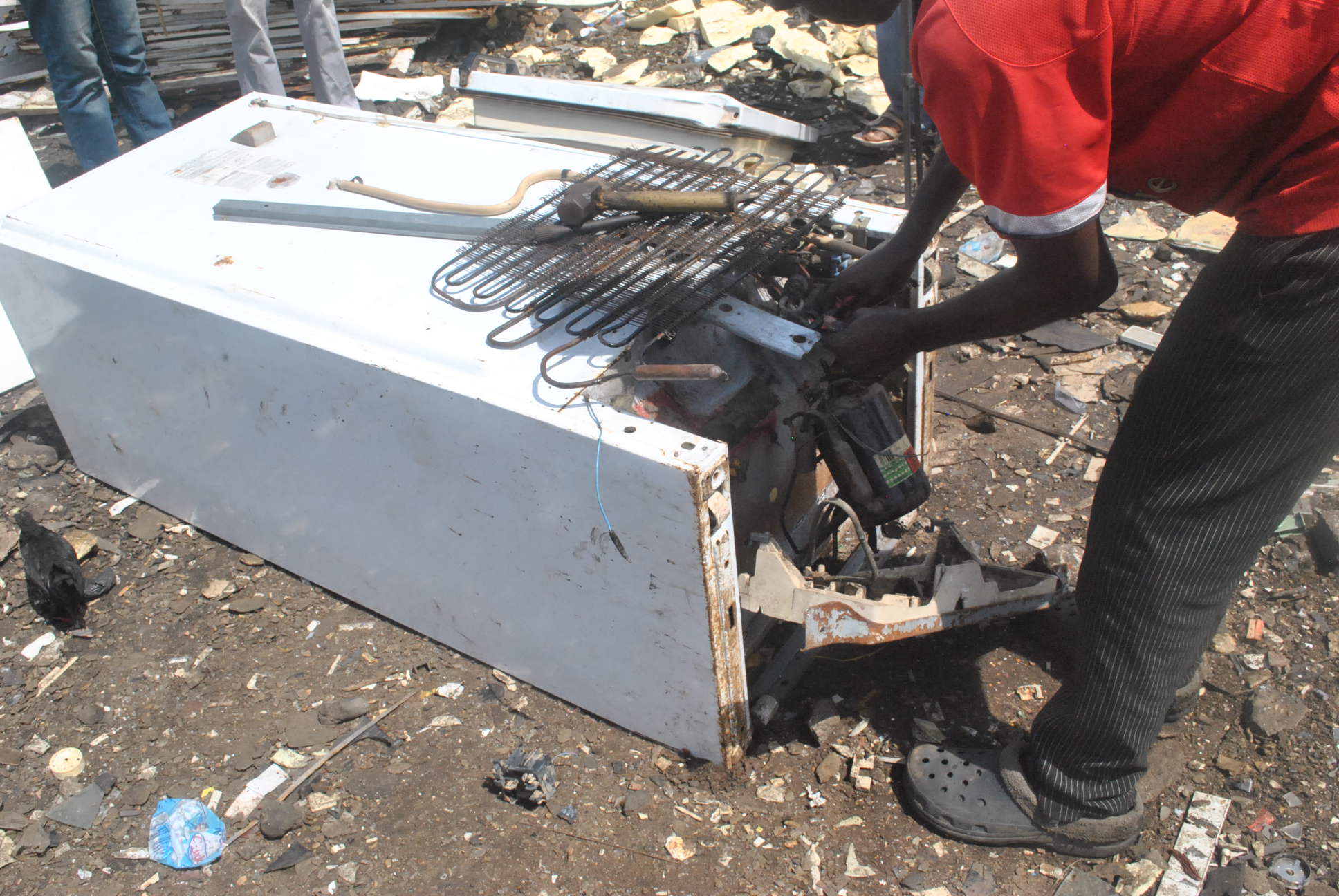
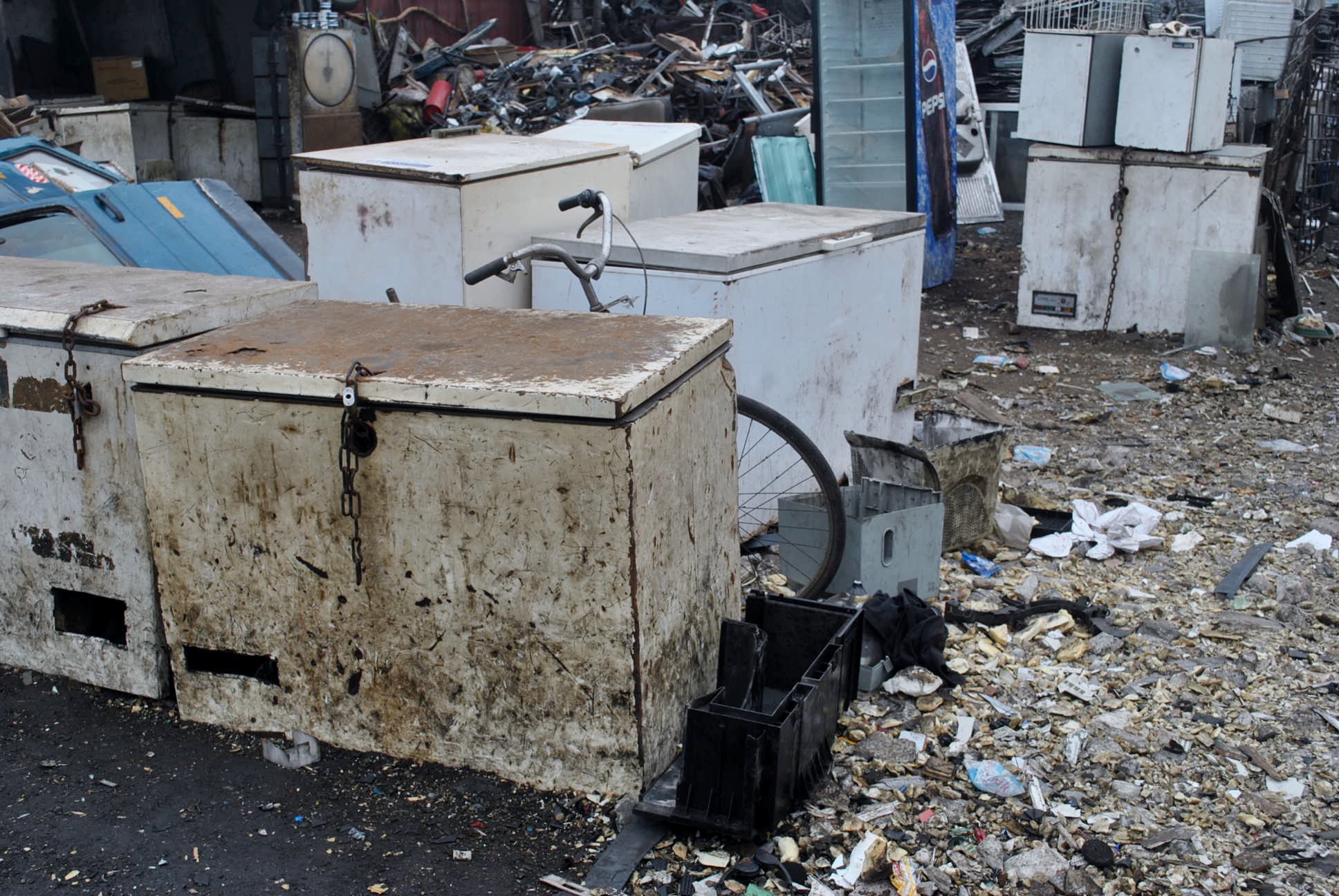
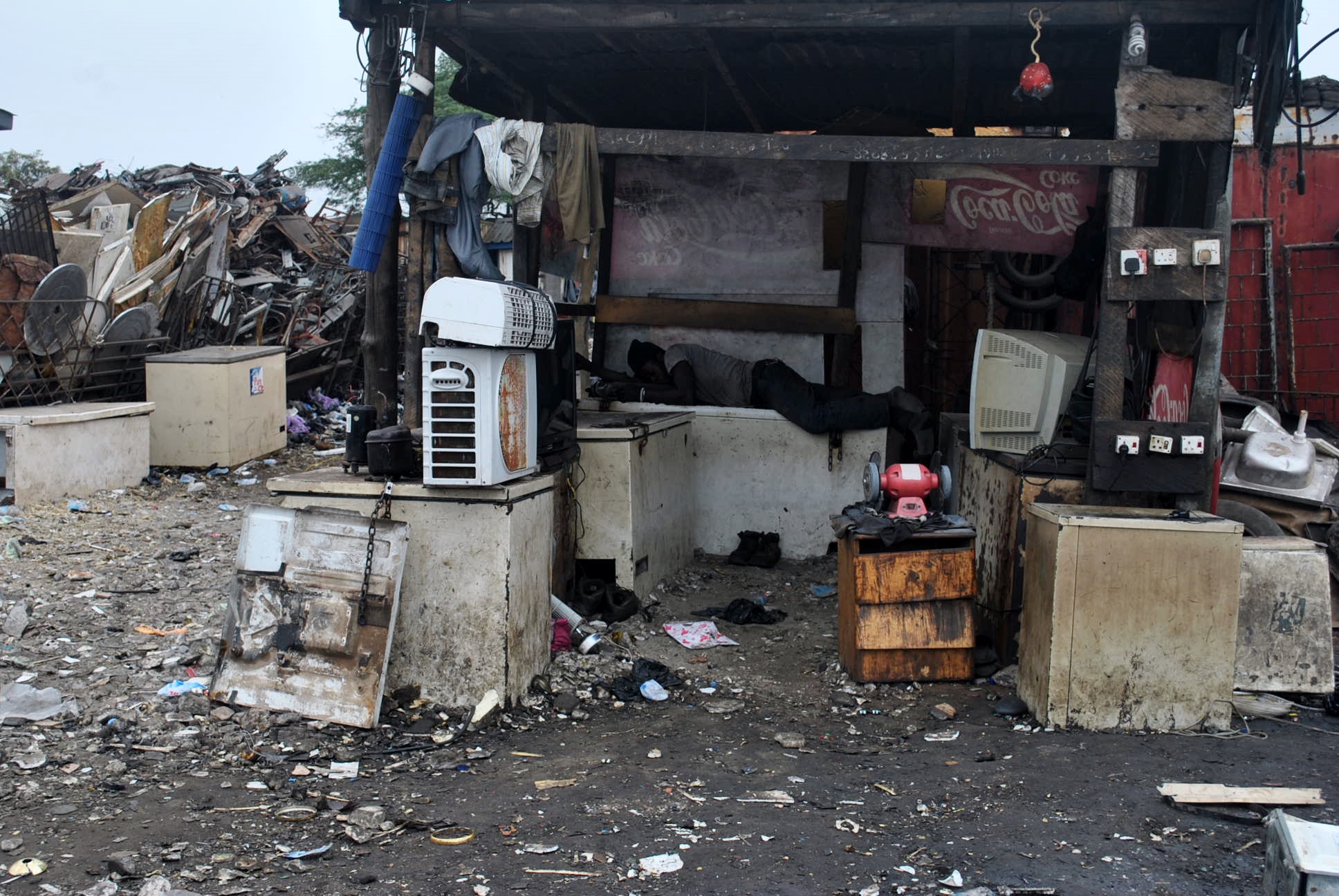
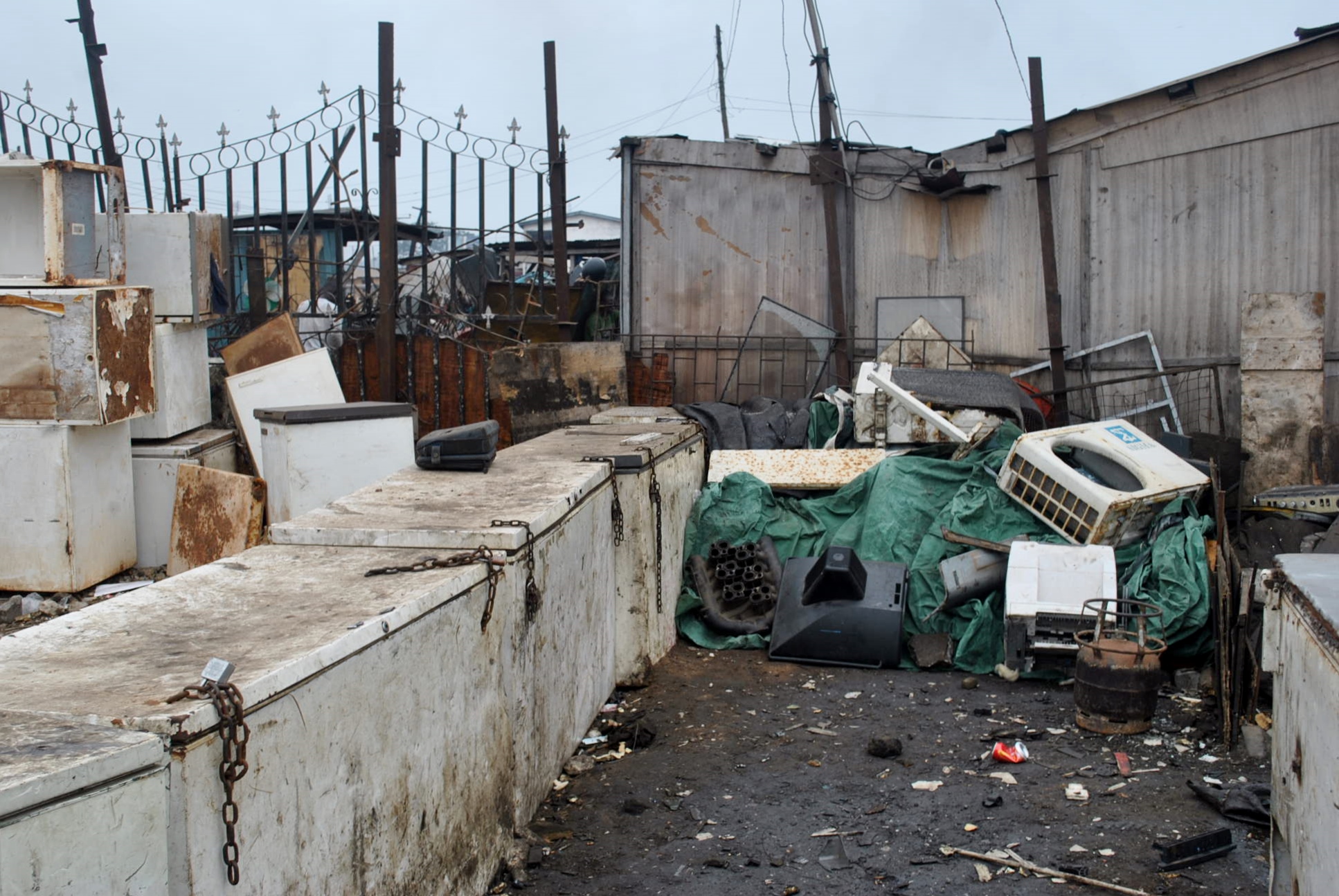
Refrigerators are among the most dismantled electronic equipment in Agbogbloshie if not the most dismantled. This is evidenced by the large numbers of the post-dis-assembly debris found all over the Agbogbloshie landscape. Data from Customs, Excise and Preventive Services (CEPS), Government of Ghana, on the import of EEE (all products) was obtained for the period 2006 to 2009. The records indicate that for the 4-year period, a total of 3,763,100 units of EEE were imported and refrigerators recorded the highest in 2009. They are used especially for the purposes of storing personal belongings and tools (see photos).
On the 5th of April 2014, the AMP team was onsite at Agbogbloshie for a refrigerator dismantling workshop. This workshop was a critical first, in a series of e-waste worker centered workshops that would be held in Agbogbloshie. The main purpose of these is to gain a deeper understanding of the process involved in the dis-assembly at Agbogbloshie, the tools involved, material components of equipment, and their prices at Agbogbloshie. Quite apart from this, they would enable us tailor the EEE manual, to suit the information needs of the e-waste workers and maker community in Agbogbloshie as well as interested STEAM workers.
The day before the workshop, Emmanuel, our design associate, aided by Mohammed, an e-waste worker, purchased a refrigerator.
The workshop was held in a space owned by Rauf. This was because, the team realized, it was going to be a more efficient use of its time to have it here, where there is already some degree of shelter, rather that erect a new one on the AMP site. In Agbogbloshie, the harsh noon day solar conditions, can make the high levels of pollution feel considerably worse. Hence the initial decision to build a new temporary shelter.
Zack (an e-waste worker) started by taking apart the doors, then the compressor, fan and all other components in the lower recesses of the fridge. Following this, he detached the outermost body, which is made out of steel. After these, he proceeded to remove the evaporator fan, evaporator coils and other components in the freezer section (See image Workshop photos). Now all that was left was a large open chest, comprised essentially of polyurethane foam (which he proceeded to remove next) and the plastic inner lining of the refrigerator. In the final stage, the doors were dismantled, by unscrewing and detaching their inner plastic components from the steel outer casing. All the dismantled parts were then photographed (see Parts of a refrigerator).
Subsequently, Andrew (from Afrimakers) made a video, in which Zack shared his knowledge in the local dialect (Dagomba) and English, on the dismantling process. This would be the first of many such local dialect explanatory videos.
Here a few discoveries that were made
The day ended with a barbeque on the AMP site (see AMP barbecue). In line with the dictates of Islam, the goat was prayed over and slaughtered by an Imam at the market and transported to the site, where some e-waste workers (2 in number, supported by several others-about 6 others) aided in its preparation. When it was all done, a number of the e-waste workers came over for the feast and this helped the team bond with a number of them.

Design for (Dis)assembly – D4D – The phoneblok seems very promising. Check the video!
Here are a few pictures from the first qamp, held yesterday under an “abrofo nkatie” (tropical almond) tree in Community 18, Tema. We discussed several projects that relate to teaching and learning about the environment in informal contexts.
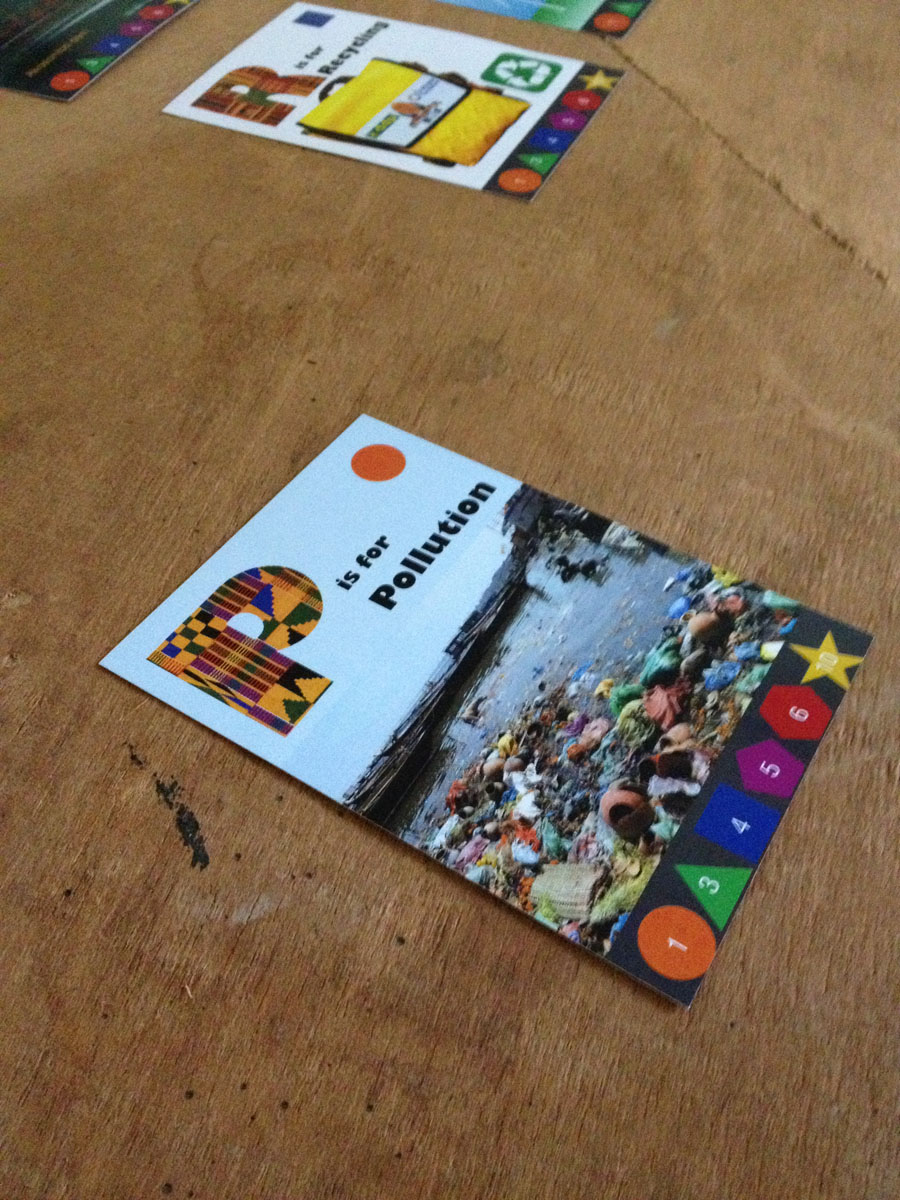
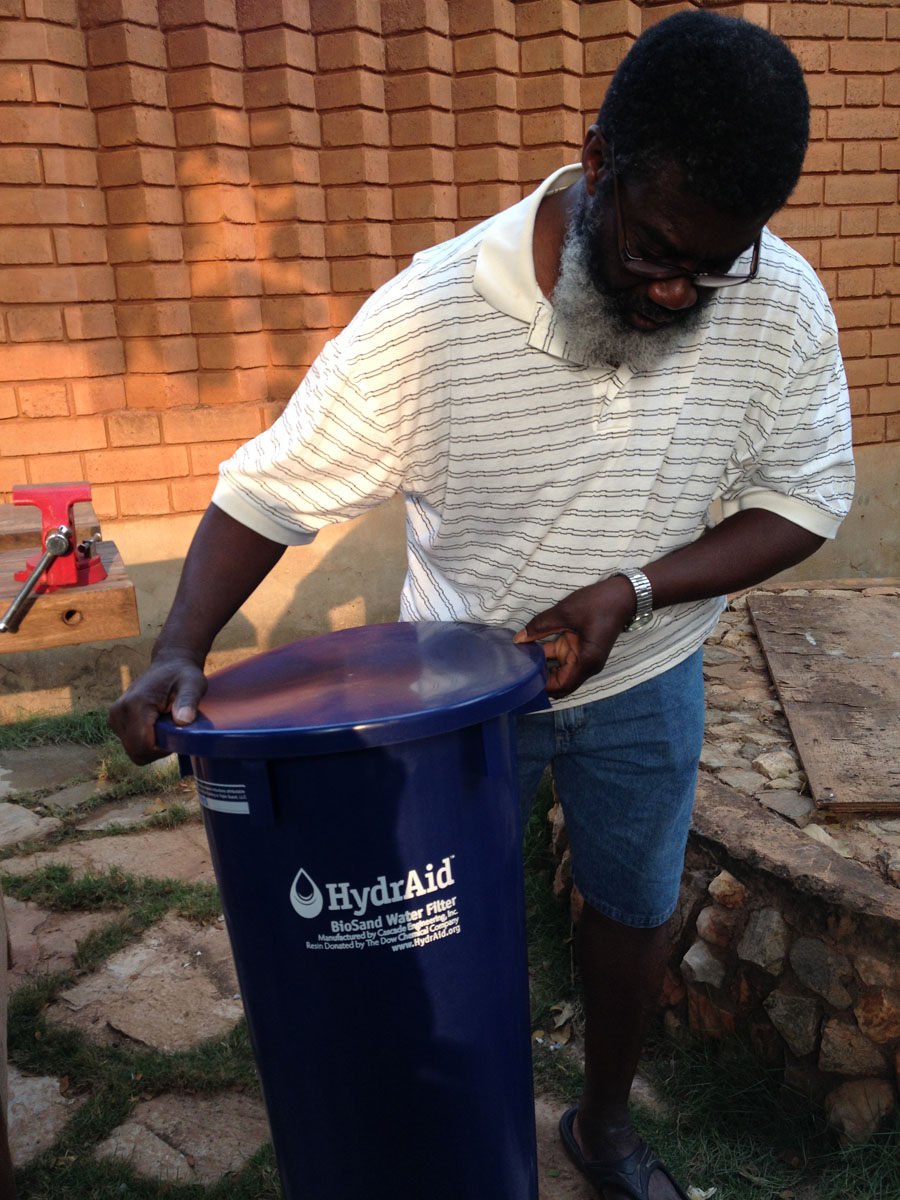
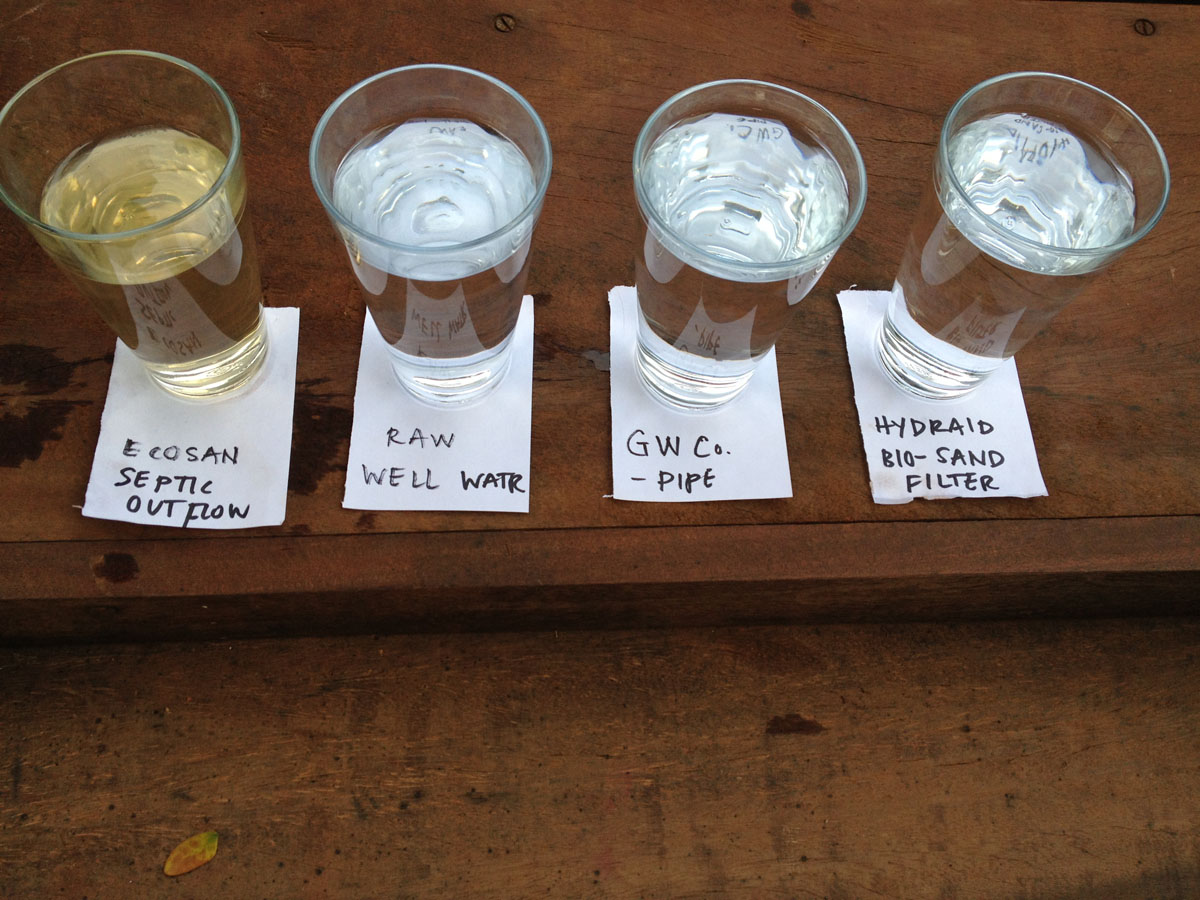
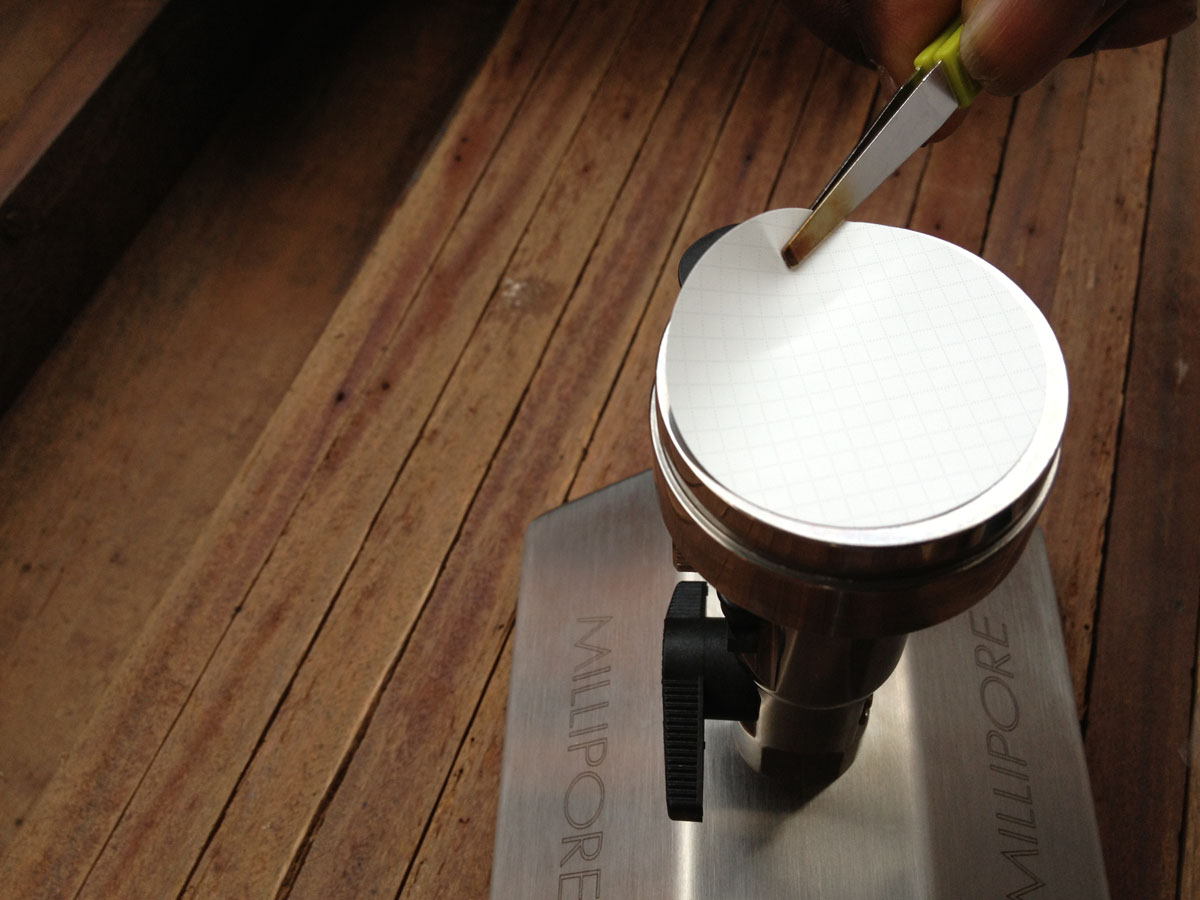
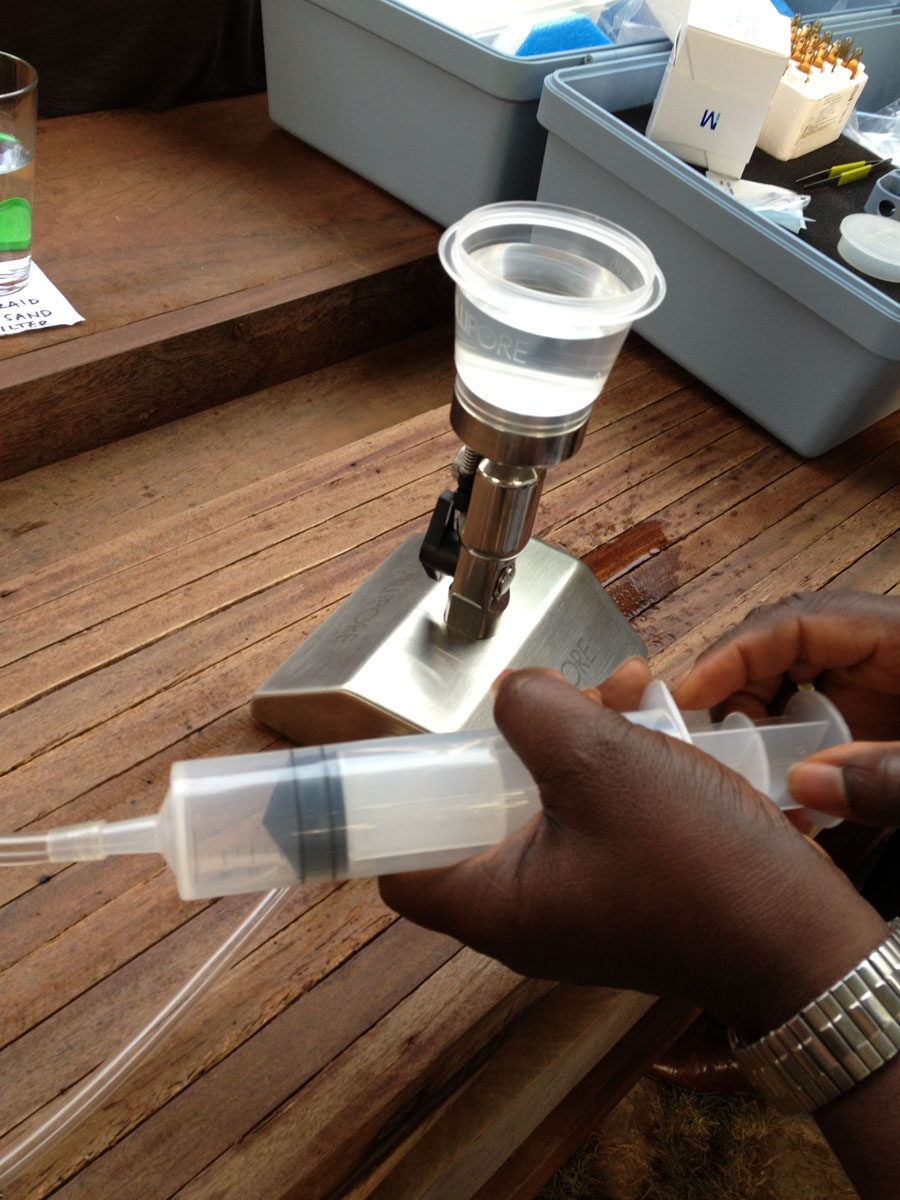
Rene Neblett, Founding Director of the Kokrobitey Institute presented the flash card-based curriculum on environmental education that she has developed as supplement to her initiative Ghana School Bags, which recycles billboards and other waste plastic materials into locally-made backpacks for school children in Ghana. “P is for pollution…..”
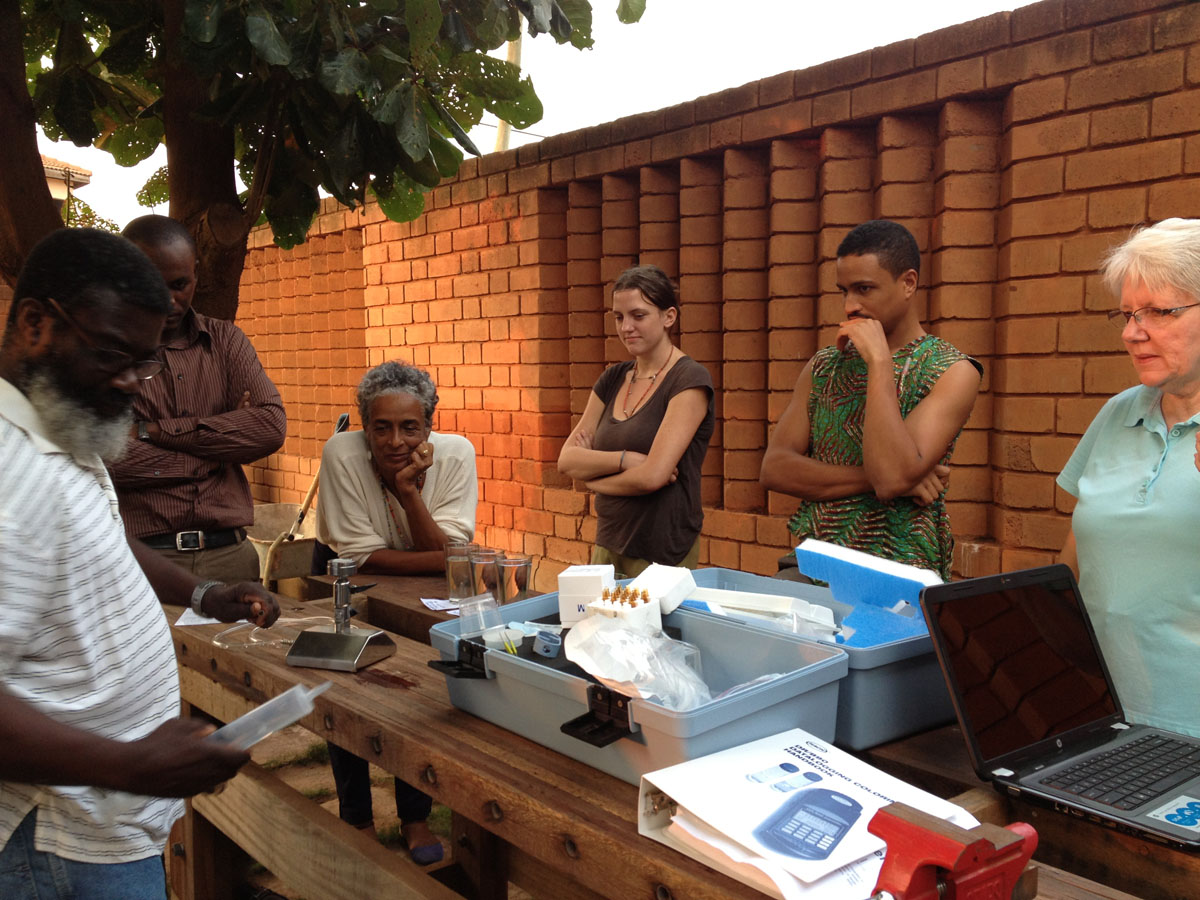
Dr. Victor Atiemo-Obeng, a chemical engineer who recently opened the Ghana office of Dow Chemical Company, where until recently he served at the rank of Dow Fellow, gave an introduction to the concept of turbidity – a measure of the number of particles suspended in a given fluid, an important aspect of water quality – and how to measure it. We took samples of water from various sources – but have to wait 48 hours to observe the results. He also explained the science behind bio-sand filters such as Hydraid, a low-cost water filter available locally in Ghana.
The science behind water quality is critical to understanding the e-waste ecosystem. Bio-sand water filters can eliminate pathogens such as bacteria, viruses and spores but not contaminates like heavy metals which can be found in e-waste dump sites like Agbogbloshie.
Hassan Salih gave an update on Accratopia (also a Facebook group), a collaboration of architects, artists, illustrators, photographers, poets and other creatives to explore the potentials of Accra’s urban future as utopia. What can a remade Agbogbloshie look like after its post-apocalyptic present?
 AMP
AMP 