KNUST Creativity Group information session

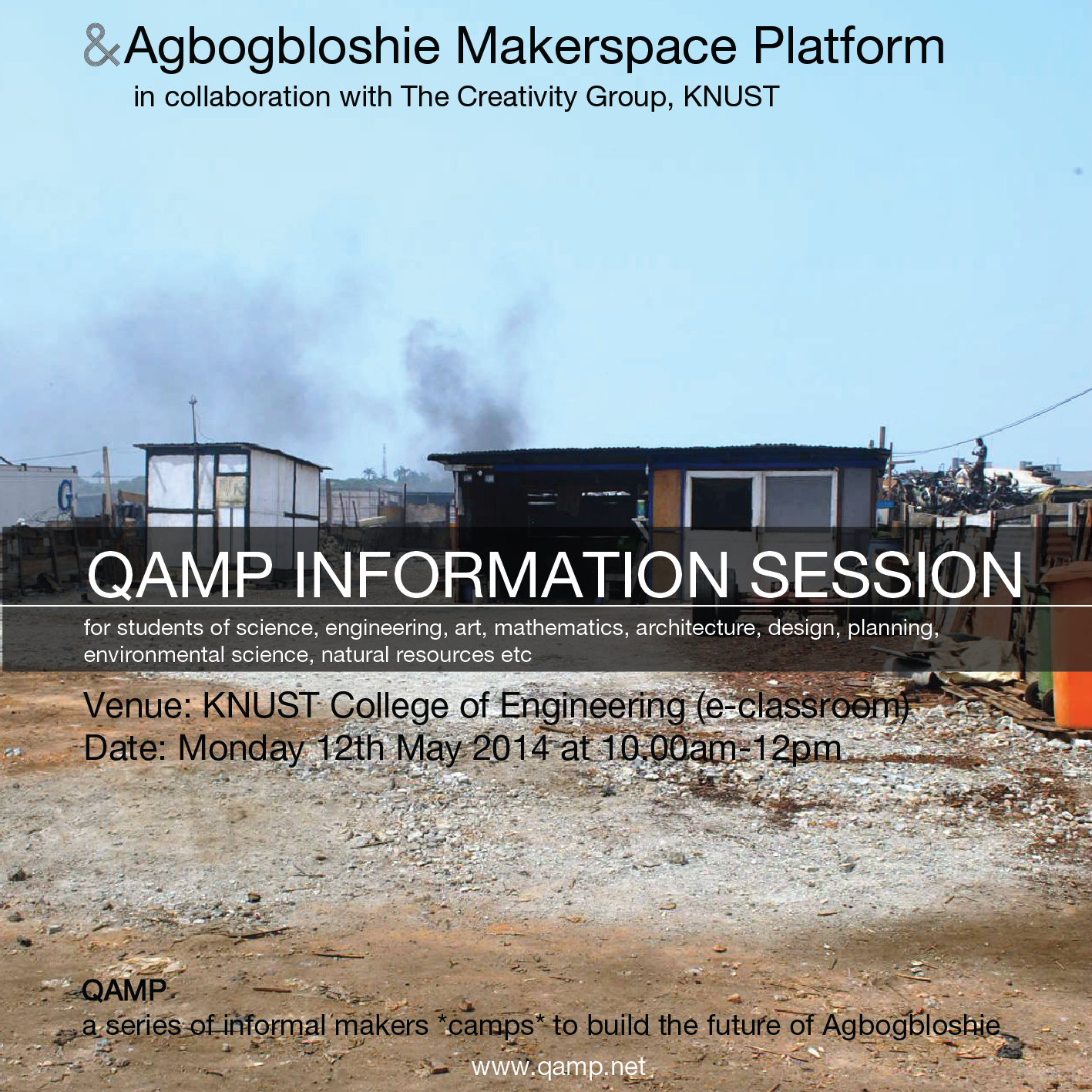
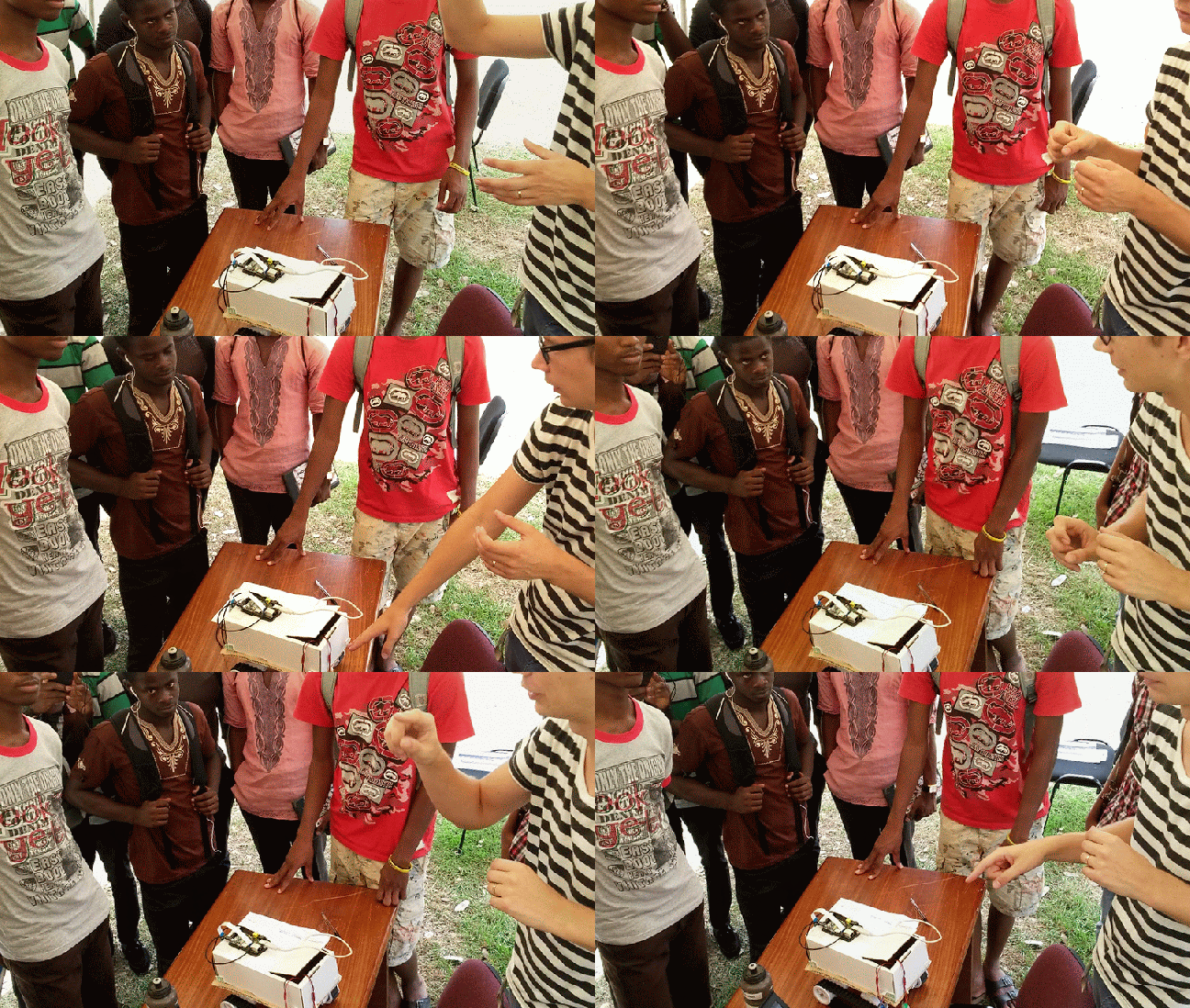
On Monday, the 12th of May 2014, the AMP team was at the college of engineering KNUST, meeting up with the Creativity Group of the college and students from around the university, for an AMP information session. The session provided attendants with information about the QAMP summer program and invited them to be a part of the AMP maker collective. In addition to this, the team will also provided information about AMP workshops, such as the impending Archibots: Remaking Agbogblodshie workshop, future workshops and encouraged them to apply to attend these. The team learned a lot from the interaction. Some of the projects that the students of the creativity group, expressed interest in were the bicycle with a pedal-powered grinding wheel (for pulverizing electronic waste), the EEE manual and research into material flows. The team had a wonderful time at KNUST and looks forward to an exciting summer full of fresh ideas.

QAMP Information Session-02-01


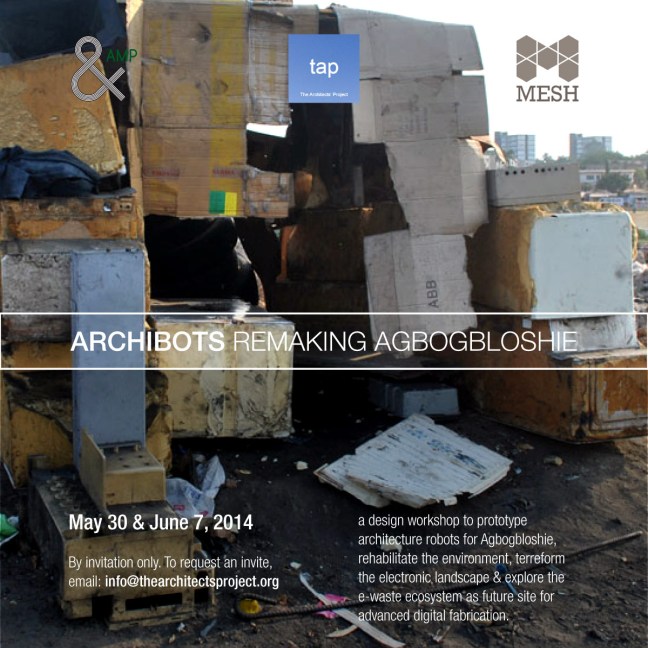
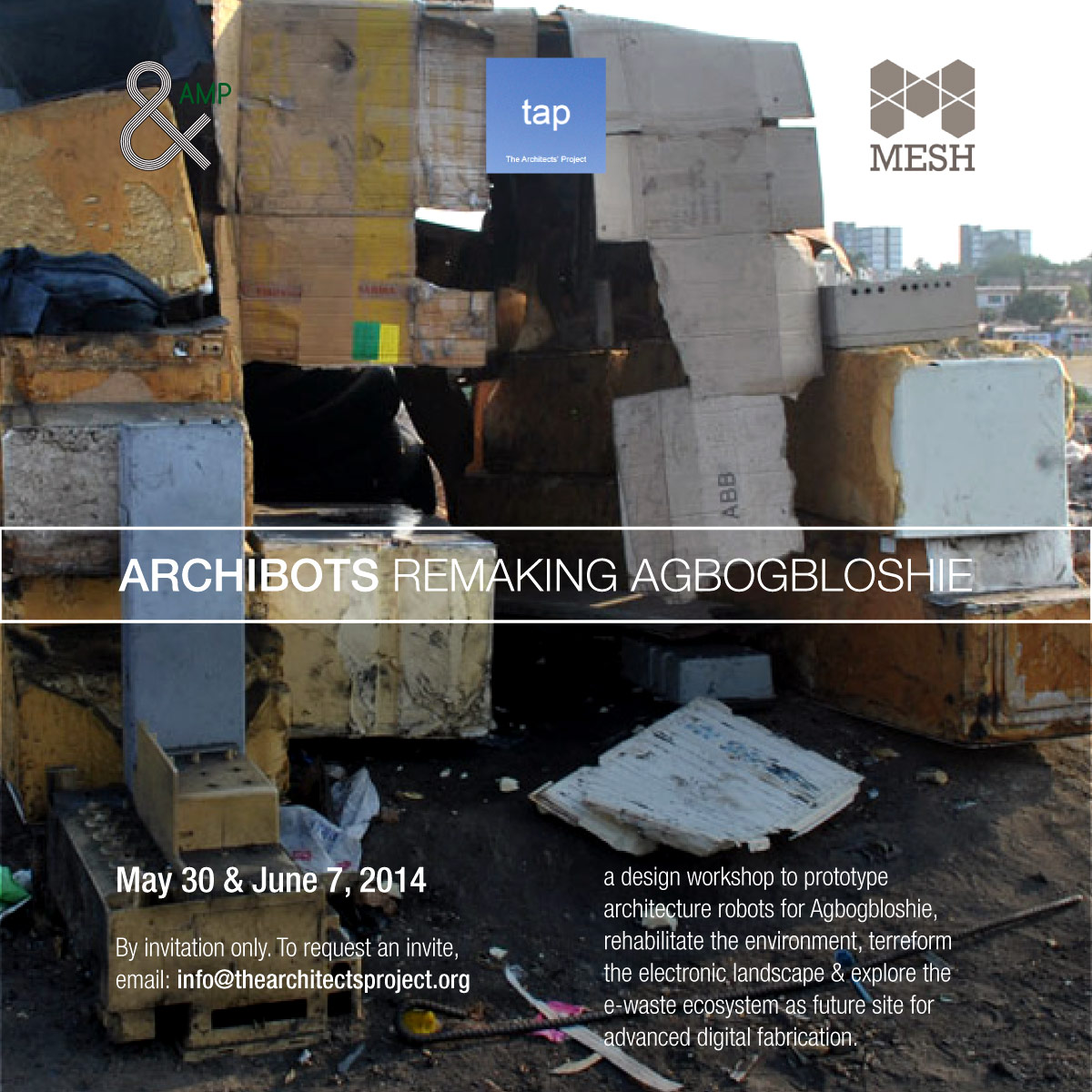
Archibots: Re-making Agbogbloshie

Re-making Agbogbloshie is a tap:Build design workshop conducted as part of the Agbogbloshie Makerspace Platform QAMP series of maker workshops. MESH Ghana is the media partner.

AMP approach contends that (domains of) architecture and electronics have converged. At such a moment — if we can make open, democratic and collective the capability of manipulating materials from the level of chemistry up, by means of digital technology, we can move beyond the notion of “e-waste”. Electrical and electronic equipment (EEE or 3E), old or new, constitute a vital stream of raw material for the global production chain. In particular, while there is fundamental overlap with the elemental “stuff” of digital space, it is equally important to note that the majority of EEE materials* are generally recyclable such as plastics, steel, aluminium, copper, or other specialized or high-value materials.

Re-making Agbogbloshie is a collaboration between Agbogbloshie Makerspace Platform (AMP) and The Architects’ Project (tap:). The workshop seeks to design and prototype practicable architectural interventions — at the level of equipment — that can inform the discourse of industrial landscapes like Agbogbloshie scaled through kiosk-size 3E materials processing machines, i.e. micro-industrial digital fabrication bots.

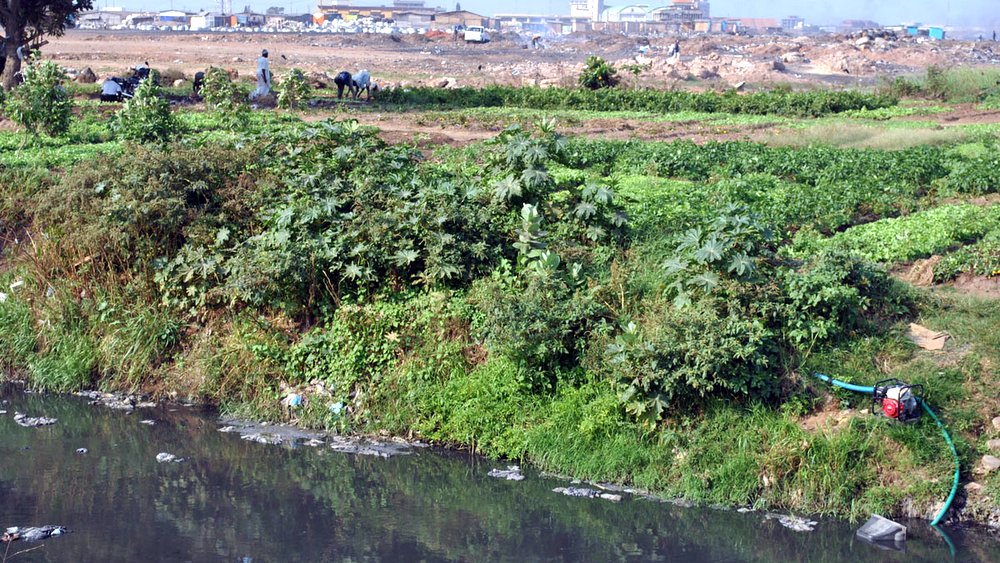
Re-making Agbogbloshie design workshop is an exploration of small-scale architectural interventions that operate more than as kinetic micro- shelters — they additionally include “robotic” or electronic systems and tool/equipment functions. The workshop seeks to design “architecture robots” that could assist humans in processing 3E materials, phytoremediation of the contaminated landscape and actively supporting the Agbogbloshie lifecycle.

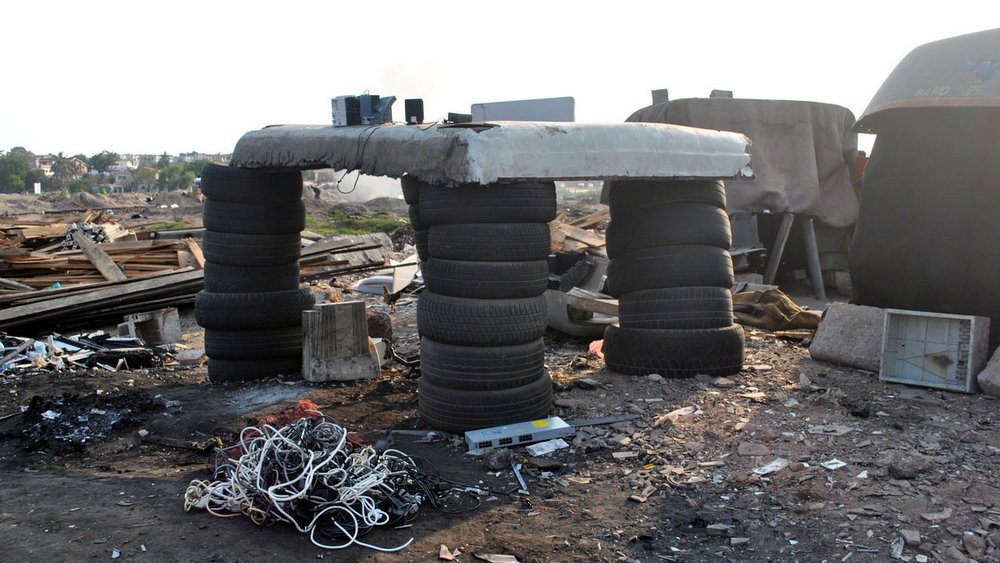
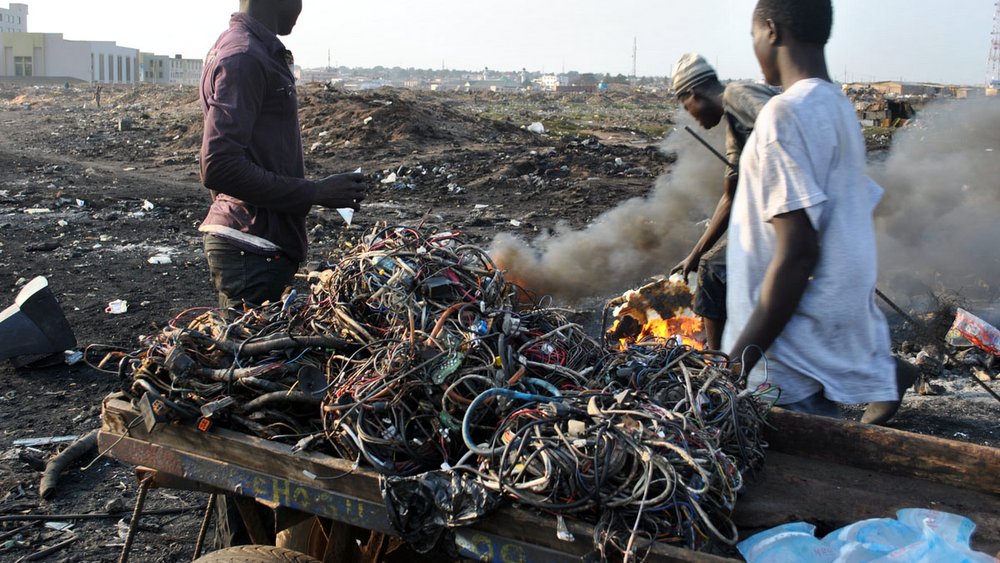
Agbobloshie: Every year, tons of electronic waste arrives on the shores of Ghana. A huge proportion of this deluge of e-waste flows through Agbogbloshie, where a vibrant community of e-waste workers and makers reuse, recycle and upcycle end-of-life electrical and electronic equipment. However, some of the crude methods used for dismantling e-waste and processing scrap (such as burning wires and cords to recover the copper) are highly polluting: they negatively impact the health of e-waste workers and have led to Agbogbloshie’s notorious position as “the most polluted place on Earth” for 2013, according to Green Cross Switzerland and the nonprofit Blacksmith Institute (USA).

E-waste: E-waste or Waste Electrical and Electronic Equipment (WEEE) is typically portrayed as highly toxic old computers, televisions, etc. that are “dumped” in poor countries by rich countries, in violation of the Basel Convention (an international treaty which expressly prohibits such forms of international transhipment of WEEE). While it is true that e-waste contains hazardous materials, and that improper handling and disposal of these materials can greatly pollute the environment and compromise public health, it does not negate the fact that the materials embedded within e-waste are incredibly valuable. In fact, e-waste — considered pound-for-pound as a “raw material” of the global production chain — is among the most valuable on the planet: one ton of old mobile phones has 100X the concentration of precious metals like gold and silver than does an equivalent amount of ore mined from the earth.

Architecture: Usually when most people think about (the practice of) “architecture”, they think about high-end residences or large-scale projects. In Africa, these are typically the only kind of construction projects (along with smaller interventions by the government and NGOs) that have large enough budgets to pay the professional service fees of architects. This leaves the majority of workers and construction works on the continent, which occur in what social scientists call the “informal sector”, outside the design domain of architects, or the scope of formal architecture. The point of departure for this workshop is to propose that this default strategy for Africa’s built environment misses the point. If to date architecture has had limited success in re-configuring the African terrain, perhaps it is time to invert the approach: try to introduce innovation at the bottom, and let it spread.

* EEE- or 3E-materials: Consider electrical and electronic equipment, at all condition levels, as a raw material for global production chain. 3-E materials are a broader and more inclusive range of materials compared to e-materials, e.g. electronics materials based on silicon or other semiconducting materials, and such materials in aggregate, i.e. a circuit board.

Video highlights:

AMP workshop – dis-assembly of a refrigerator

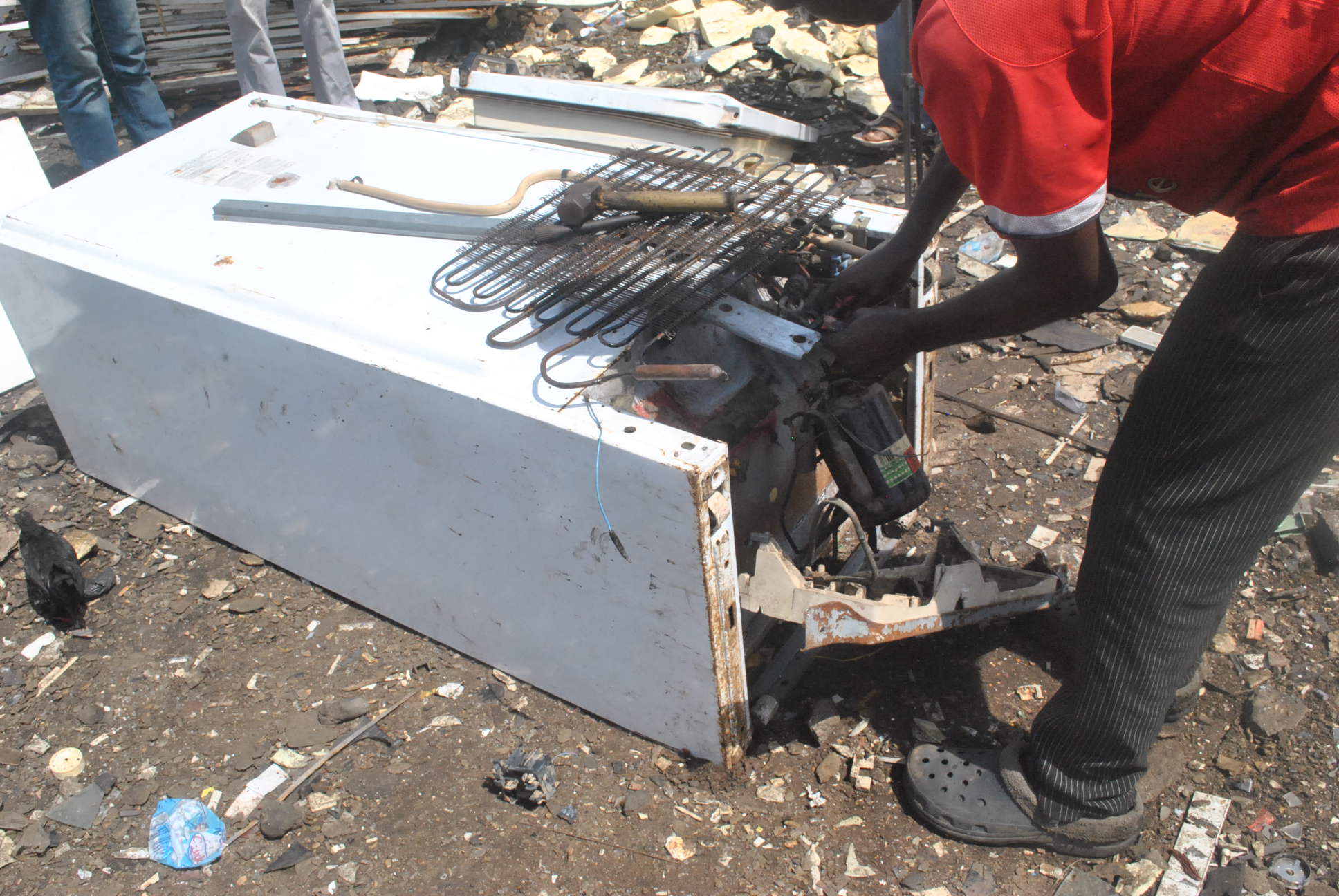
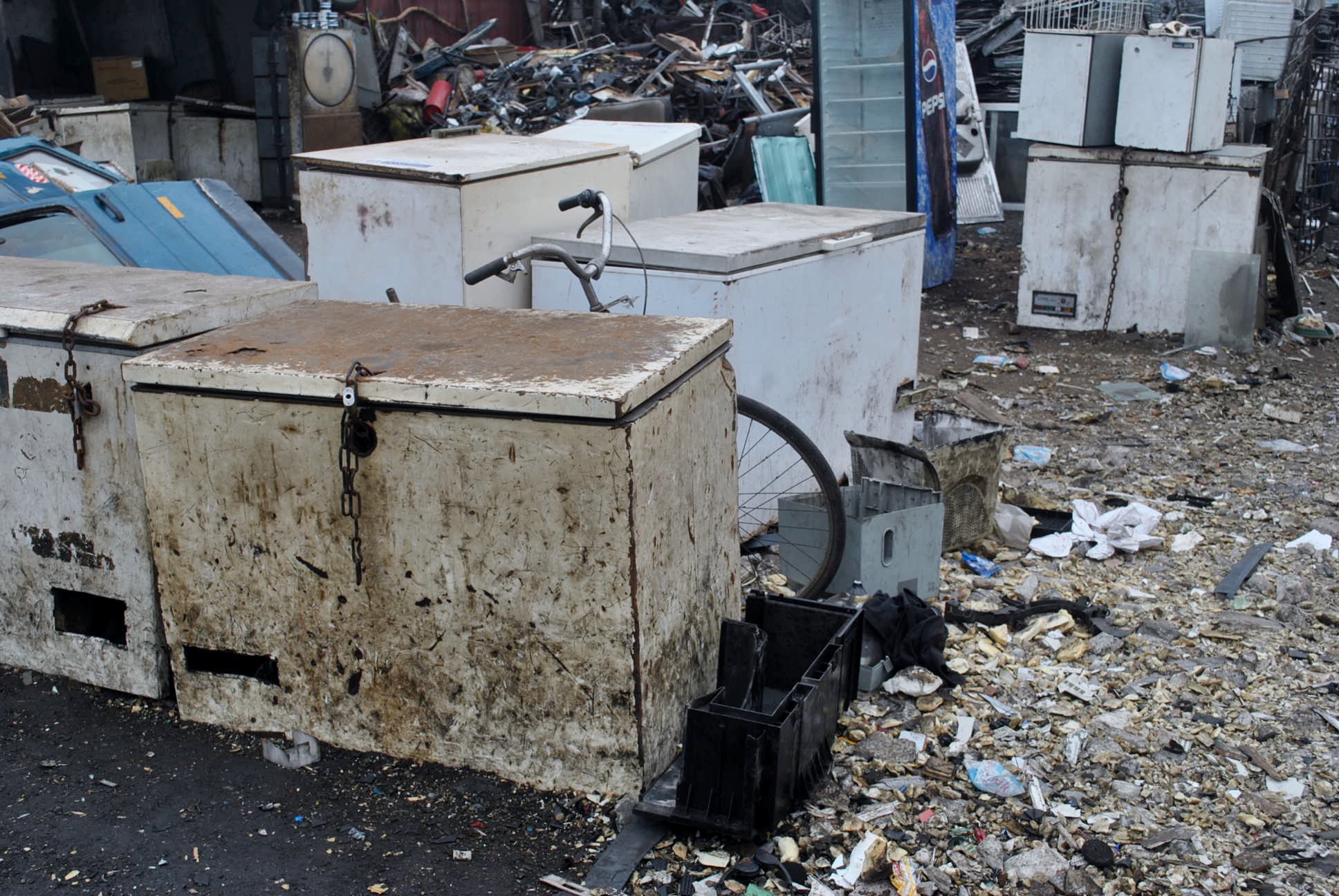
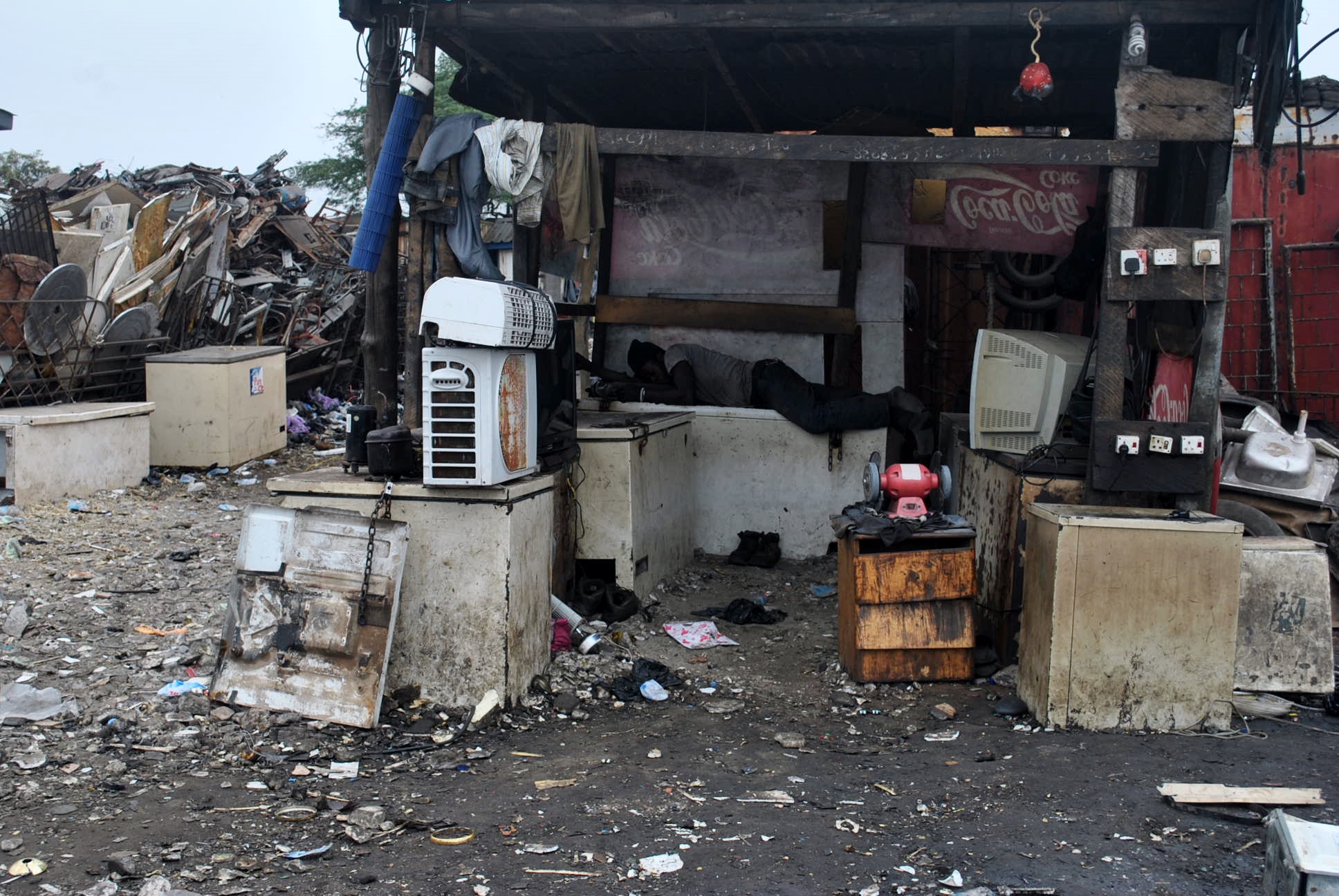
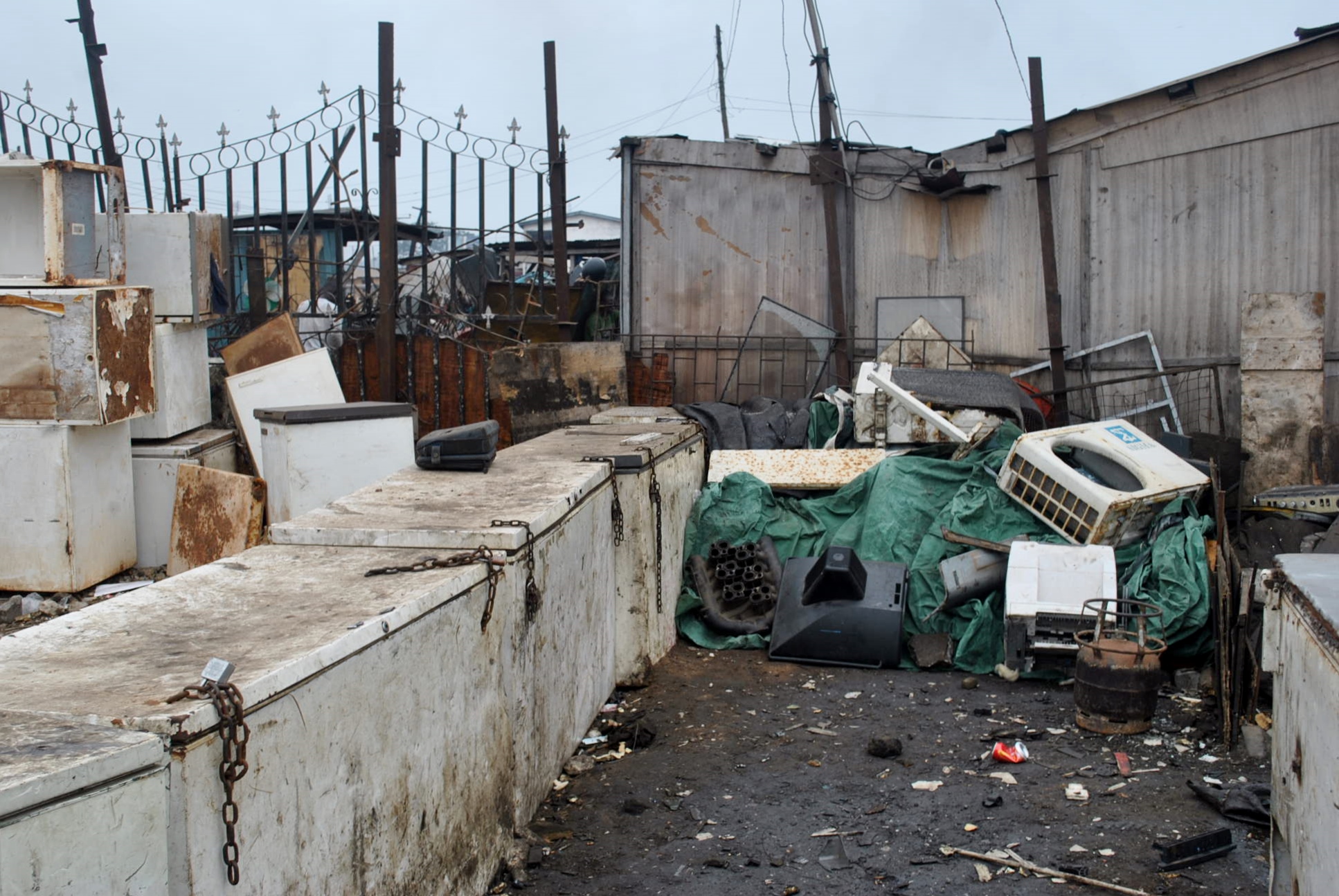
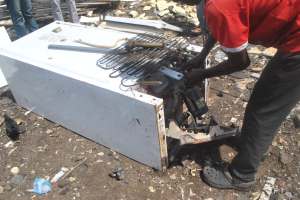
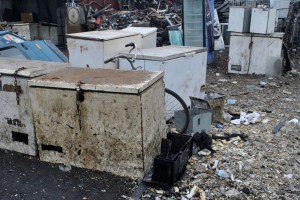
Refrigerators are among the most dismantled electronic equipment in Agbogbloshie if not the most dismantled. This is evidenced by the large numbers of the post-dis-assembly debris found all over the Agbogbloshie landscape. Data from Customs, Excise and Preventive Services (CEPS), Government of Ghana, on the import of EEE (all products) was obtained for the period 2006 to 2009. The records indicate that for the 4-year period, a total of 3,763,100 units of EEE were imported and refrigerators recorded the highest in 2009. They are used especially for the purposes of storing personal belongings and tools (see photos).

On the 5th of April 2014, the AMP team was onsite at Agbogbloshie for a refrigerator dismantling workshop. This workshop was a critical first, in a series of e-waste worker centered workshops that would be held in Agbogbloshie. The main purpose of these is to gain a deeper understanding of the process involved in the dis-assembly at Agbogbloshie, the tools involved, material components of equipment, and their prices at Agbogbloshie. Quite apart from this, they would enable us tailor the EEE manual, to suit the information needs of the e-waste workers and maker community in Agbogbloshie as well as interested STEAM workers.

The day before the workshop, Emmanuel, our design associate, aided by Mohammed, an e-waste worker, purchased a refrigerator.

The workshop was held in a space owned by Rauf. This was because, the team realized, it was going to be a more efficient use of its time to have it here, where there is already some degree of shelter, rather that erect a new one on the AMP site. In Agbogbloshie, the harsh noon day solar conditions, can make the high levels of pollution feel considerably worse. Hence the initial decision to build a new temporary shelter.

Zack (an e-waste worker) started by taking apart the doors, then the compressor, fan and all other components in the lower recesses of the fridge. Following this, he detached the outermost body, which is made out of steel. After these, he proceeded to remove the evaporator fan, evaporator coils and other components in the freezer section (See image Workshop photos). Now all that was left was a large open chest, comprised essentially of polyurethane foam (which he proceeded to remove next) and the plastic inner lining of the refrigerator. In the final stage, the doors were dismantled, by unscrewing and detaching their inner plastic components from the steel outer casing. All the dismantled parts were then photographed (see Parts of a refrigerator).

Subsequently, Andrew (from Afrimakers) made a video, in which Zack shared his knowledge in the local dialect (Dagomba) and English, on the dismantling process. This would be the first of many such local dialect explanatory videos.

Here a few discoveries that were made

  1. The  process of dismantling refrigerators in Agbogbloshie is not directed towards potential reuse of parts. Thus far, the orientation is towards breaking it all down to its basic material for smelting. Hence very little care is taken in the process:
  2. The items were weighed and the prices were as follows
  • Steel: 61 kilograms (Equivalent to 18 GHC)
  • Copper: 4 pounds  (Equivalent to 24 GHC)
  • Aluminium : 5 pounds (Equivalent to 5 GHC)
  • Timer: 3-5 GHC
  1. The fridge was bought for 100GH cedis, twice more than the price of its dismantled parts.
  2. During the opening/dismantling of the compressor, Zack inhaled without bother, the freezer gas that was emitted. This gas is non-toxic to human beings however inhaling directly could be dangerous and could settle in the lungs and cause adverse effects.

The day ended with a barbeque on the AMP site (see AMP barbecue). In line with the dictates of Islam, the goat was prayed over and slaughtered by an Imam at the market and transported to the site, where some e-waste workers (2 in number, supported by several others-about 6 others) aided in its preparation. When it was all done, a number of the e-waste workers came over for the feast and this helped the team bond with a number of them.
 

DSC_0022DSC_0204DSC_0179DSC_0168

Afrimakers tour Agbogbloshie

DSC_0245

The AMP team proudly hosted Afrimakers-Ghana at their Agbogbloshie site on the 13th of March 2014. The guided tour of the e-waste dump and maker community turned out to be highly informative for both groups, as it occurred amidst casual conversation and exchange of ideas. Among the Afrimakers group were, Stefania Druga (founder of HacKIDmedia, a global network, that gives kids hands-on problem solving skill through play centered workshops and tools), Victor Ofoegbu (organiser of Afrimakers-Ghana workshop – pics on qampnet), Ahmed Bastawy (entrepreneur, facilitator, and engineer).

The AMP team is excited about the visit and the prospects of future collaboration that it promises.

20140321_123552-MOTION
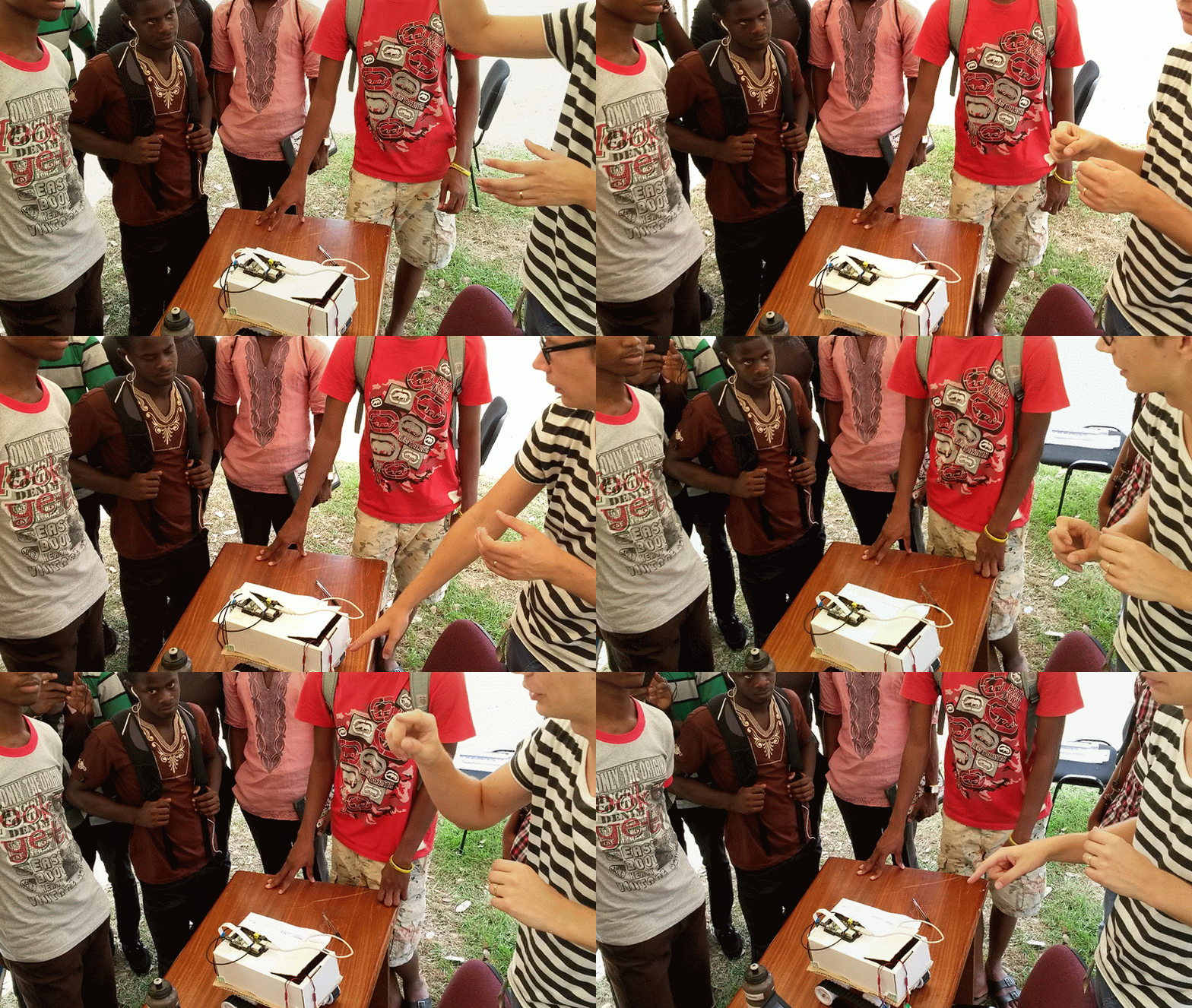
Arduino bot Afrimakers Ghana Maker Faire at Ghana Technology College

Mapping Agbogbloshie

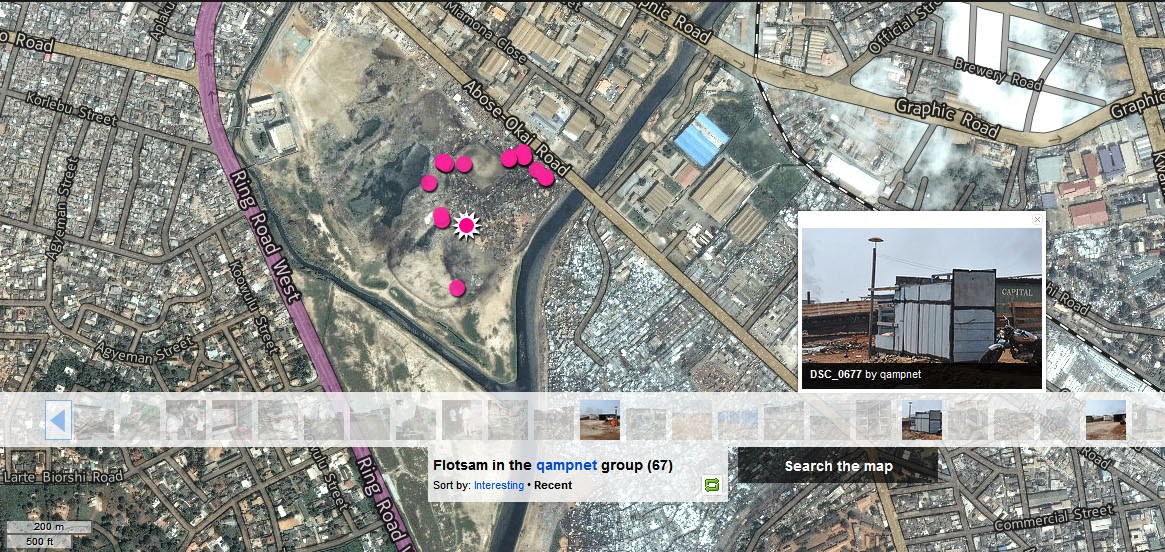
The past few weeks have been full of amazing new discoveries as the Agbogbloshie Makerspace Platform (AMP) team continues to learn from and with the e-waste recycling and scrap dealers community, on site. Check out our Flickr map which will serve as a tool for documenting and better understanding this ecosystem within Accra’s urban ecology.

Looking for a good option for sorting and sharing image pool on maps with better zoom and options for aerial imagery overlay, either on OpenStreetMap or another platform. Please let us know if you have any thoughts/advice


FLICKR map