Call for Summer Internships

Are you interested in technology? Do you like making things? Does environmental pollution bother you? Have you ever imagined the future as something awesome?

Are you a student or recent graduate in the fields of science, technology, engineering, art, mathematics, planning, architecture and design, or environment and natural resources?

Apply today to be a part of this year’s AMP QAMP, a three-week camp for young makers in Accra.

qamp-poster

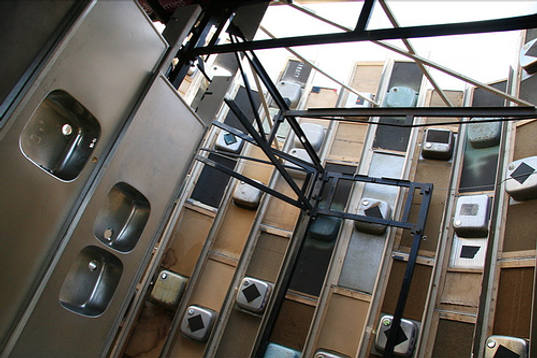
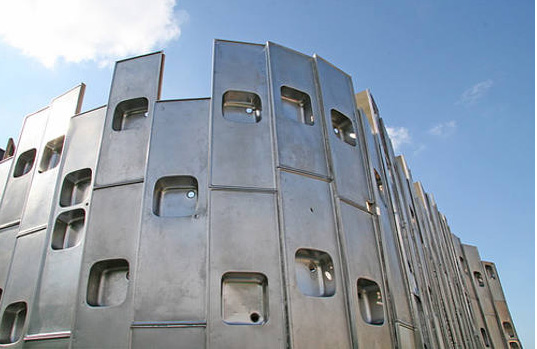
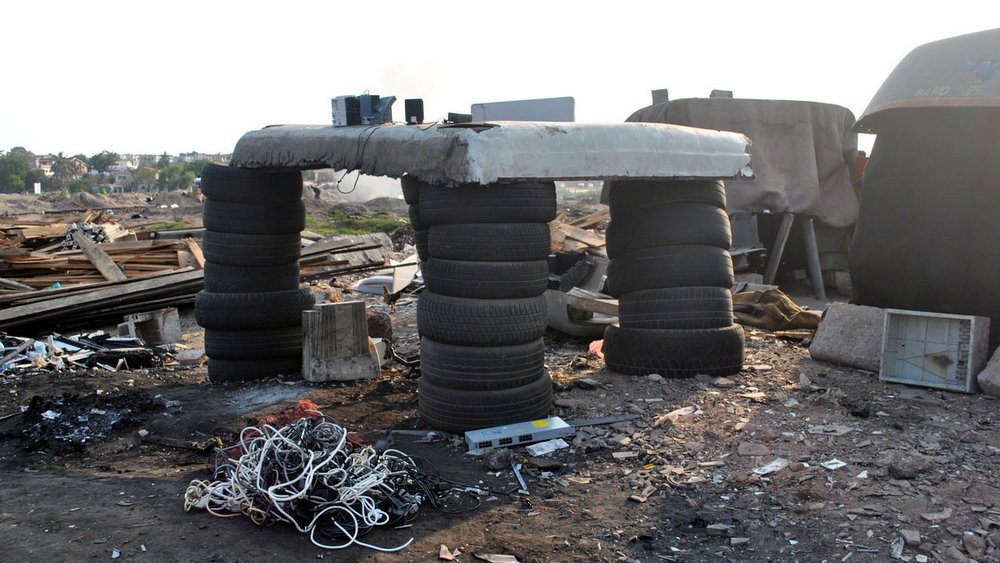
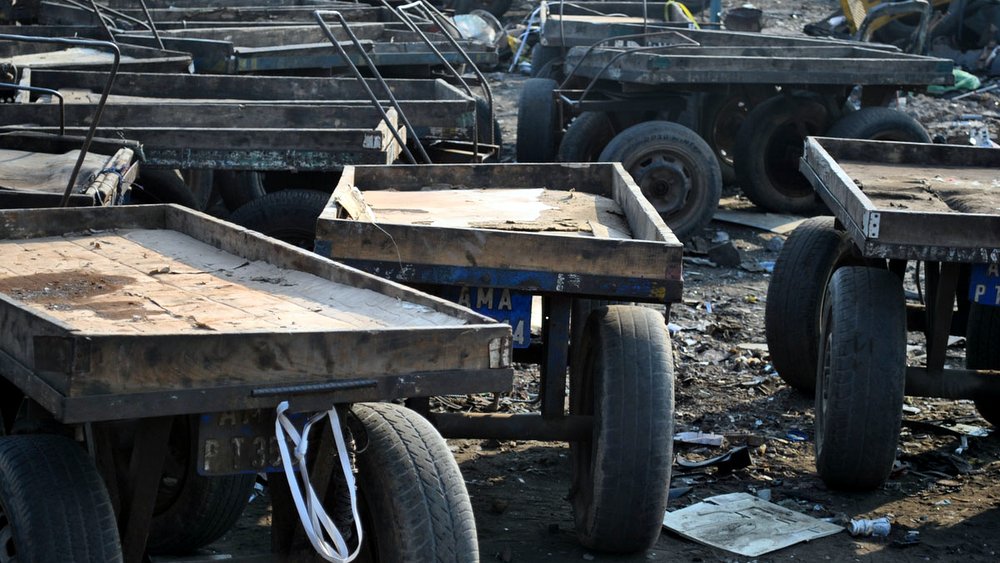
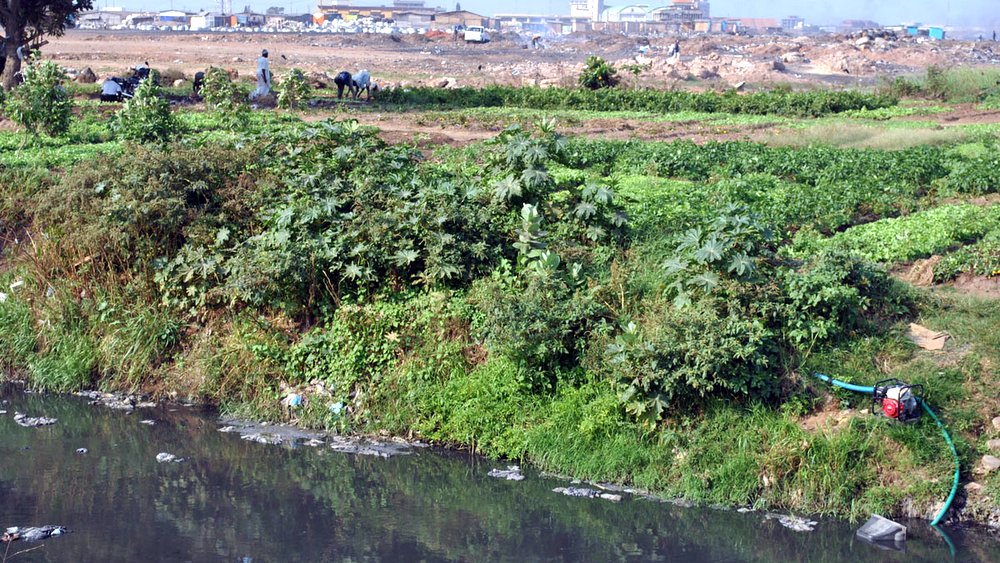
Agbogbloshie Makerspace Platform (AMP) is a collaborative project to upgrade the quality of life and environment at Agbogbloshie, the largest e-waste ecosystem in Ghana. AMP is an experiment in design innovation and youth-led M&D (makers & development). The short-term goal is to design and build a makerspace for the hyper-local context of Agbogbloshie, together with an open-source technology platform to support its operation. The long-term goal is to rehabilitate the environment of Agbogbloshie and to help green the community’s current recycling practices. We believe this can happen through the site’s transformation into a network for more advanced materials processing and small-scale distributed manufacturing. AMP as a open-source project seeks to create an alternate convention that partners e-waste, scrap and recycling industry with the technical know-how and social entrepreneurial framework to remake the landscape themselves, over time.

AMP contends that (domains of) architecture and electronics have converged. At such a moment—if we capitalize on this opportunity to make open, democratic and collective the capability of manipulating materials from the level of chemistry up, by means of digital technology, we can move beyond the notion of “e-waste”. Electrical and electronic equipment (EEE or 3E)—old or new—constitute a vital stream of raw material for the global production chain. Not only are such 3E-materials in reality the physical building blocks of electronic landscapes and digital space, but many are also recyclable, i.e. plastics, steel, aluminium, copper, glass or other valuable materials. If successful, AMP will amplify the economic potential of Agbogbloshie and Ghana’s makers.

AMP QAMP is a series of informal maker “camps” to build the future of Agbogbloshie. The primary session of QAMP for 2014 runs from the 1st to the 20th of July in Accra, Ghana.

Participants will work collaboratively as part the AMP makers collective to address key aspects of building an ecology of makers in and around the Agbogbloshie e-waste stream, from the ground up. We are interested in young people who are proactive, intellectually curious, open-minded, imaginative, detail-oriented and able to work in teams.

If interested, please submit a cover letter to qampnet@gmail.com by June 30th including the following information: Area of Specialization / Course of Study (year of graduation); Digital Media and Graphics Software (with level of proficiency); CAD/CAM and 3D Modeling Software (with level of proficiency); Programming Languages (with level of proficiency); and Fabrication Experience (sewing, cabinetry, furniture-making, jewellery, glass-blowing, welding, circuit board etching, breadboarding, etc.) Short-listed candidates will be scheduled for in-person interviews starting the week of June 23, 2014.
The value of un-making

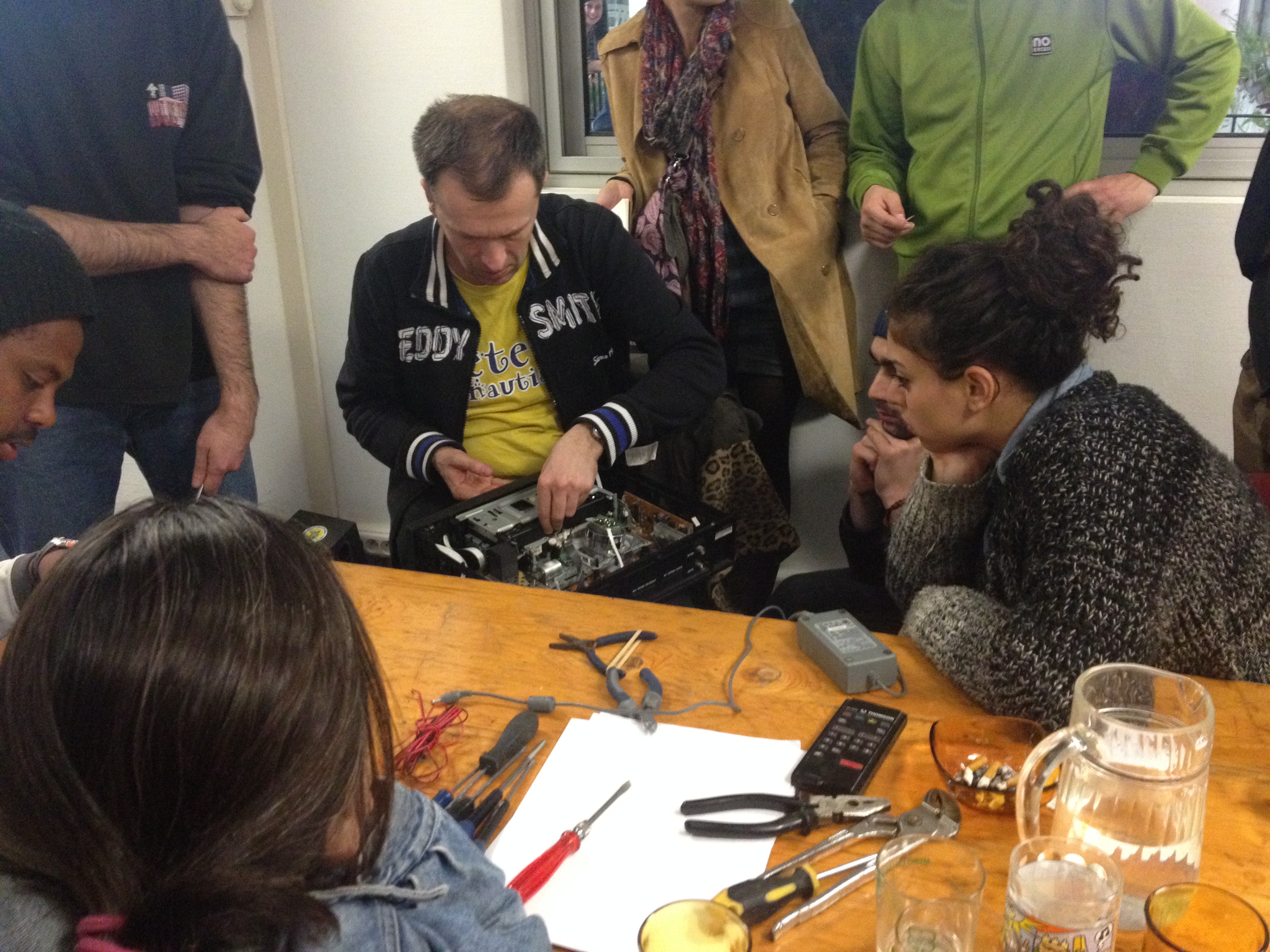
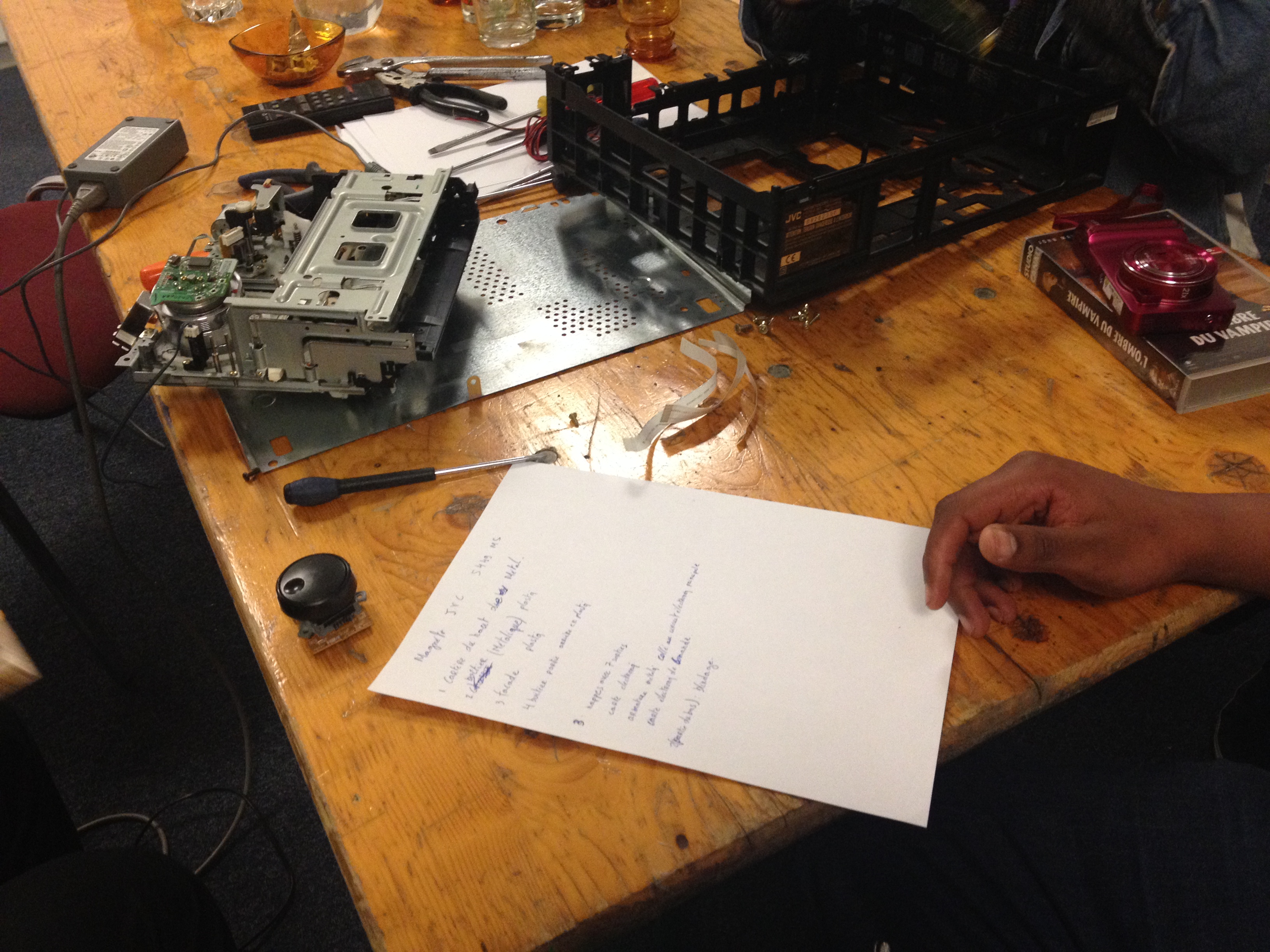
Friday March 14, 2014, the M&D class went to an e-waste dis-assembly workshop at La Rockette Libre, a collective comprising of open-source associations. Thank you to Cyril, co-founder of Electrocycle, the association which organized the event. Find the list of items that Cyril and his friends have already catalogued and don’t hesitate to join them every second Friday of the month to contribute!

This workshop was pedagogical for various reasons:

  • It de-emphasized the high level know-how needed to dis-assembly
  • It made participants realize that as the electrical and electronic equipment becomes obsolete, few parts could be reused for electronic mash-up, some could be kept to repair similar equipments (for example keeping a special connection that could be faulty in another device)
  • Participants realized that while sorting appeared essential, it did require a thorough record of process and organization (number or weight of the pieces collected, step-by-step dis-assembly manual)
  • It became clear that given the wide range of brands and models, keeping parts for future use necessitates storage facilities – screws could be sorted out by type and size (size number to be found by comparing them to these found in stores)
  • Un-making or “reverse engineering” is a valuable learning process, which can also be a fun activity
  • It taught us about the importance of saving resources and doing so in the safest manners as possible–thanks to the experts who came along

Following the session, a team of students comprised of Nicolas Benmussa, Charles Clément and Oscar Aguila produced a short video entitled “In E-waste We Trust” and describing how the dis-assembly process went.

This video is not yet a step by step tutorial but it makes us think that it could be. In the context of Agbogbloshie, where not everyone speaks the same language or where many are illiterate, video tutorials could be a medium for delivering basic understanding of e-waste handling much like the videos of the Khan Academy which deliver knowledge to students around the globe.

unmake 3 unmake 5

Q&A session with the AMP team in Ghana!

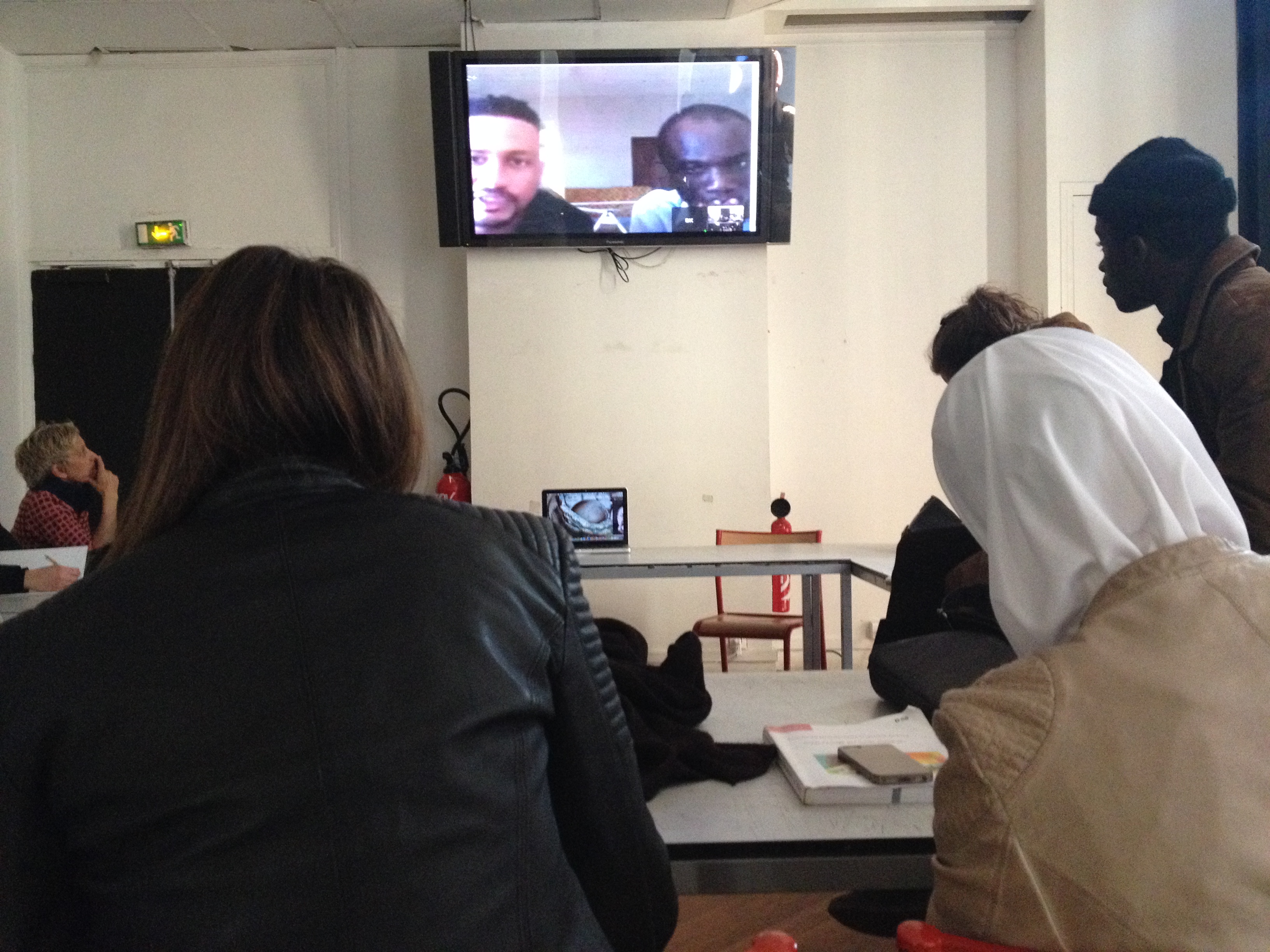
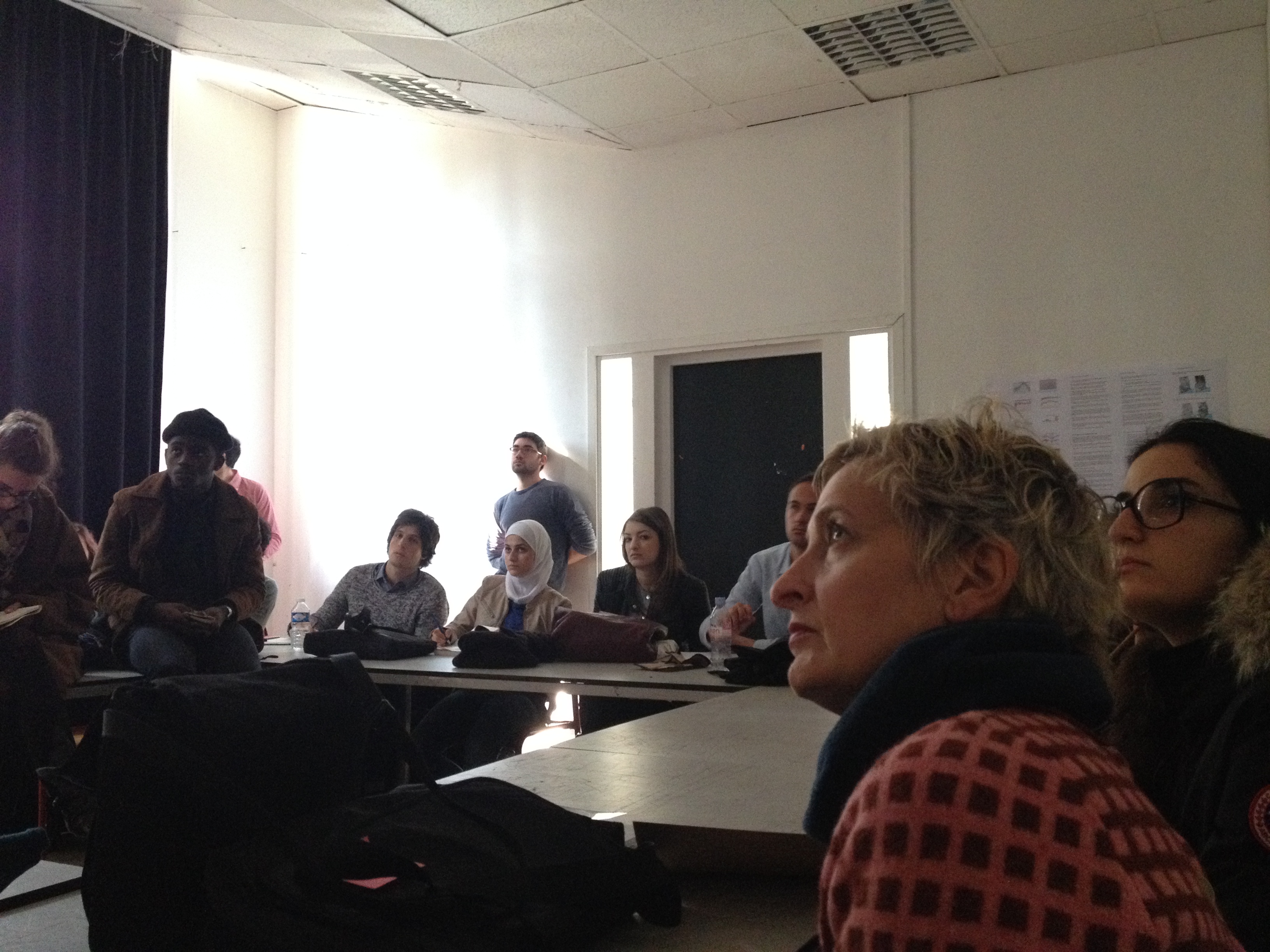
Find below a couple of pictures of the Q&A session organized for the Makers & Development (M&D, aka QAMP) seminar at l’ESA this past Wednesday. Marie Aquilino’s seminar Make joined the session. Thank you for making this collaboration happen !!! The conversation that took place revealed the many dimensions of the AMP project, social, environmental and economic, how for example e-waste was brought to site and how did we map the ecosystem of e-waste and deeper insights into current e-waste handling practices as observed during these months of fieldwork. Thank you Dk Osseo-Asare and Emmanuel Kusi Ofori-Sarpong for taking the time to answer the many questions that students had. We look forward to share with you the progress of the class !

photo 1 photo 2 photo 3 photo 4

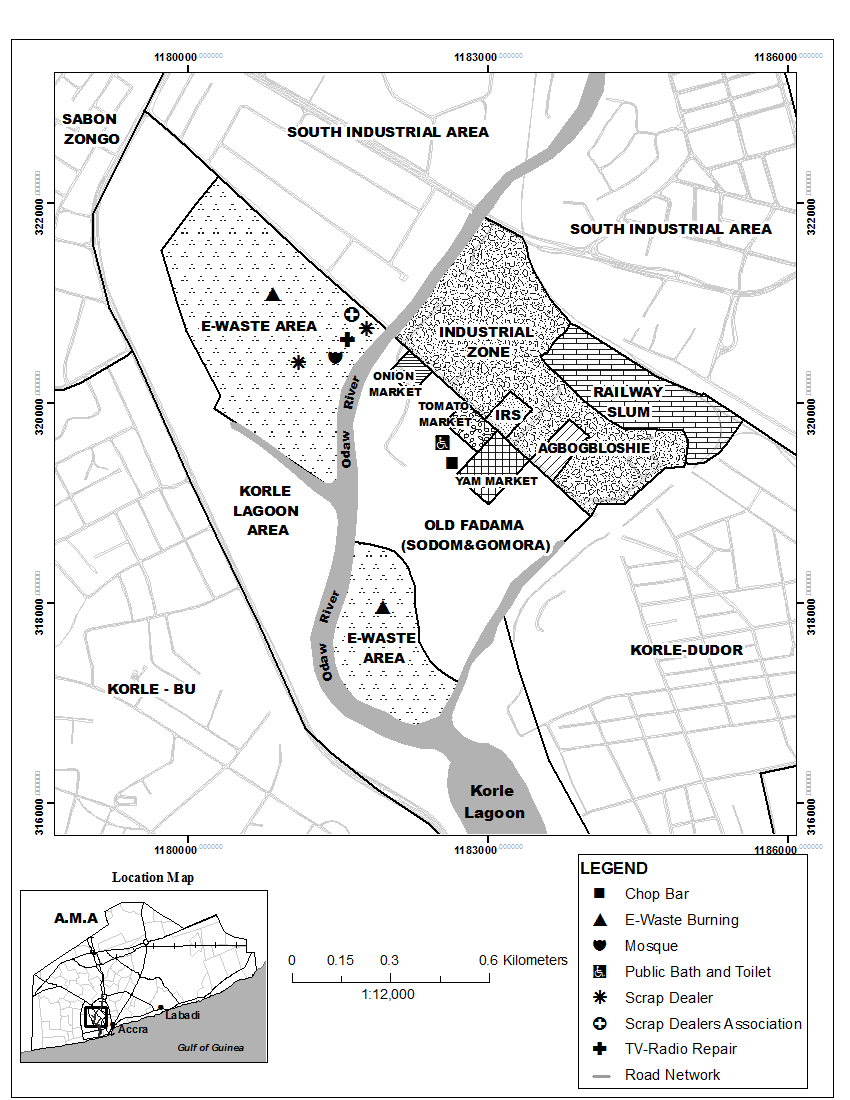
Map of Agbogbloshie

“Map showing the study area.” in Martin Oteng-Ababio, Electronic Waste Management Ghana – Issues and Practices (.pdf)
Agbo_e-waste

A conundrum is created as to whether e-waste recycling is an “economic boom or an
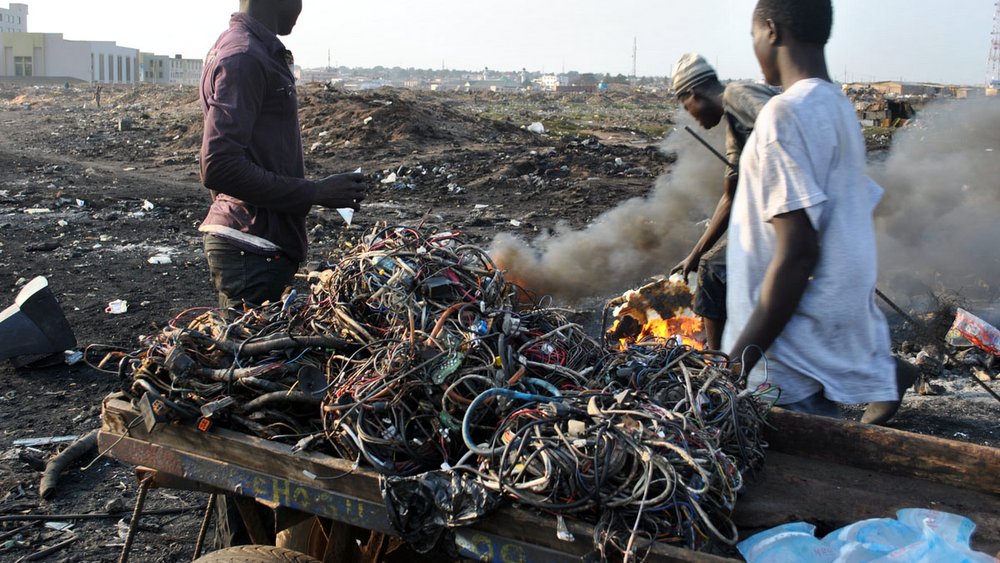
environmental doom”. The nexus becomes more complex particularly at Agbogbloshie, the hub of e-waste activities in Ghana, where there is nothing like “waste”; where every object, component, and material has “value”. On the daily basis, computers and televisions are regularly bought and sold, assembled, disassembled, and reassembled. They disintegrate into their constituent materials-plastics, glass,
and metals. Plastic printer cases are smashed with rudimentary tools including hammer, spanner, chisel and even the bare hands.

(p. 153)