Engineering 4 Society

Presented the paper entitled: Investigated 3E Materials at Agbogbloshie in Accra, Ghana at the Raising Awareness for the Societal and Environmental Role of Engineering and (Re)Training Engineers for Participatory Design (Engineering 4 Society) conference that was held in Leuven, Belgium, June 18-19, 2015.

The product life cycles of electrical appliances and electronic devices impact society and the environment, given the hazardous portion present in their materials flow. Scrapping as an industry serves to decommission end-of-life (EOL) equipment, linking materials processing and recovery activities with recycling, but must be controlled against adverse environmental and human health safety factors. This work tracks an on-going effort-the Agbogbloshie Makerspace Platform (AMP)-to use participatory design methods to upgrade capabilities of the scrap, recycling and maker community located at Agbogbloshie in Accra, Ghana through co-creation of technology. The authors explain AMP’s aim to reconceptualize Waste Electrical and Electronic Equipment (WEEE or e-waste) as Electrical and Electronic Equipment (EEE or 3E): not as waste, but as inter-manipulable assemblages of 3E-materials. AMP seeks to employ a hands-on Makers and Development approach (M&D) as a collaborative process to drive interclass innovation by co-designing and fabricating a makerspace, or open community workshop and lab, and networking e-waste and scrap recyclers starting at Agbogbloshie with students and recent graduates in Science, Technology, Engineering, Arts and Mathematics or STEAM fields. The investigation at Agbogbloshie over a period of 24 months suggests opportunities for utilizing participatory design to leverage waste management and 3E-materials processing across informal sector recycling ecosystems as inputs for popular prototyping, i.e. peer-to-peer digital fabrication and distributed manufacturing.
Capture d'écran 2015-11-28 13.50.27

The Sounds of Agbogbloshie

We have a huge blog posts backlog, but here is at least one regarding sound recording conducted in Agbogbloshie on the 22/7/2014 (a while back!), the day Ellen Foster, PhD candidate at Rensselaer Polytechnic Institute, Troy, NY visited AMP (Thank you for recording a major part of it). So much has been said about Agbogbloshie but not often the right story! Agbogbloshie is a busy recycling/making center and you can hear the rhythm of the hammers, dismantling or making…

Sounds of Agbogbloshie‘ playlist on Soundcloud:


Agbogbloshie Mobile phone surgery

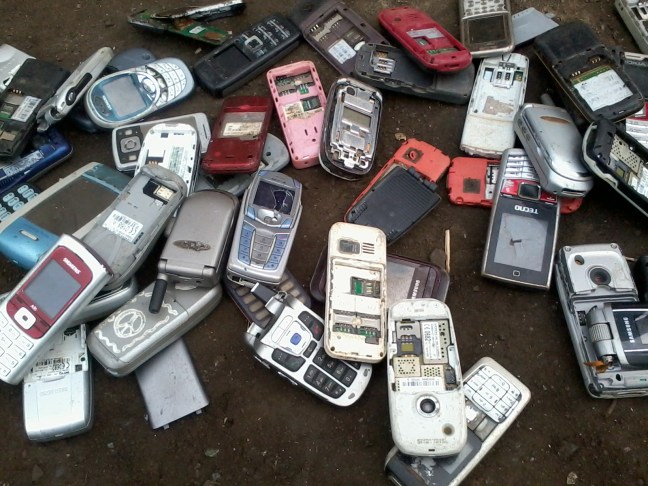
Dis-assembly of mobile phones constitute an increasingly significant facet of the e-waste industry here in Agbogbloshie. Metals from these phones form part of the urban mined resource of the city, albeit not as ubiquitous as other equipment such as refrigerators, and microwaves.

IMG_20141110_122218
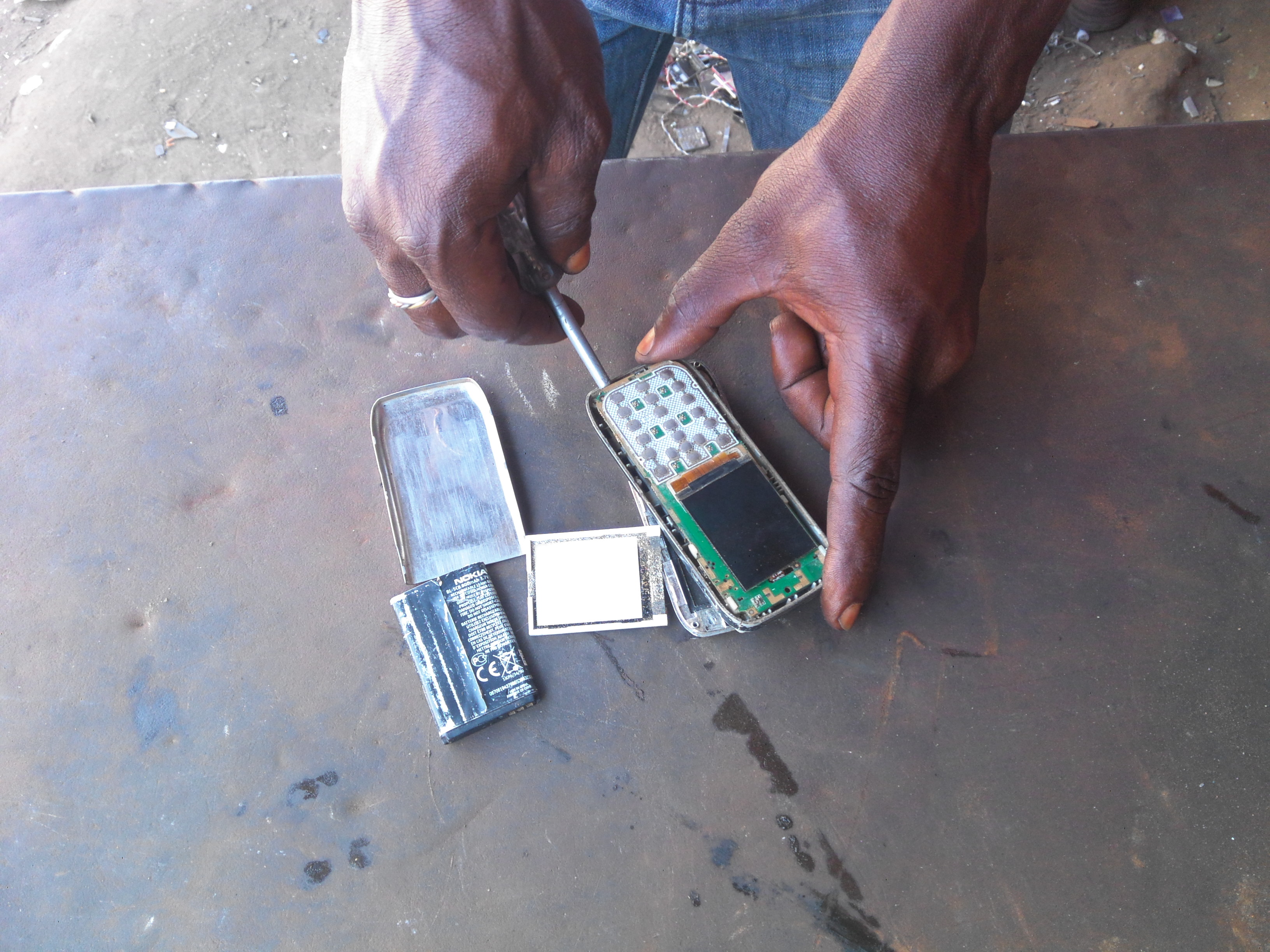
Dis-assembly of mobile phone by an e-waste worker in Agbogbloshie

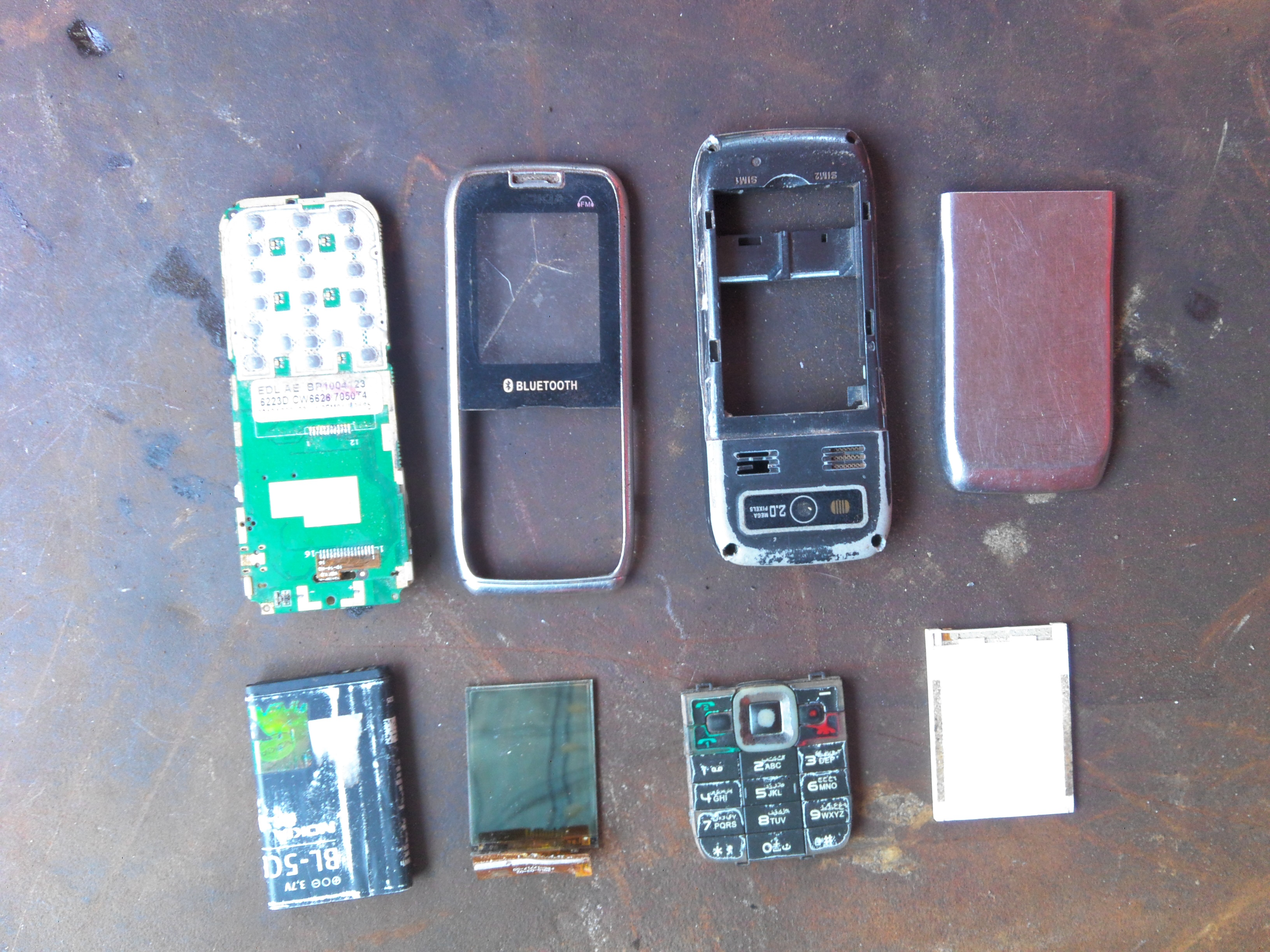
As part of the process of making the AMP’s E-manuals, the team with its Agbogbloshie field agents and members of the AMP makers collective (Sam and Iddrisu), disassembled a mobile phone at Agbogbloshie. We made use of the most available tools, (mainly screw drivers owned by the e-waste workers themselves), and carefully took apart the phone, in a manner that preserved each component. We then identified and documented via photographs, each of these. Such hands-on dis-assembly activities enables the team (with diverse backgrounds), to understand better, the nature of the electronics that are in Agbogbloshie.

IMG_20141110_122829
Documented phone parts

As it is with other equipment in Agbogbloshie, mobile phones that arrive here are usually in a wide range of conditions. Those in fairly good condition are resold altogether or have their working parts sold to phone repairers(who troop in, in search of such working parts). Those that are in totally bad shape are scraped for constituent metals. It is common to find that, phones arriving here for dis-assembly already have missing parts and/or components such as batteries. According to the e-waste workers, these are sometimes removed by collectors before they reach Agbogbloshie. Some of the most valuable parts of the mobile phones inside Agbogbloshie are the screen and circuit boards. Once these and other parts are removed, they follow the same process as other e-waste and are either sold locally to phone repairers for re-use or to middle-men.


Jerry outreach

Could Agbogbloshie begin to supply low-cost upcycled computers to children in Old Fadama? Could this scope expand beyond this territory to other parts of Accra and to the under-privileged in Ghana? Could this net expand to cover the entire African continent? Imagine upcycled computers, supplied to all parts of the world from Agbogbloshie. There is a promising  future for this and needs to start somewhere.

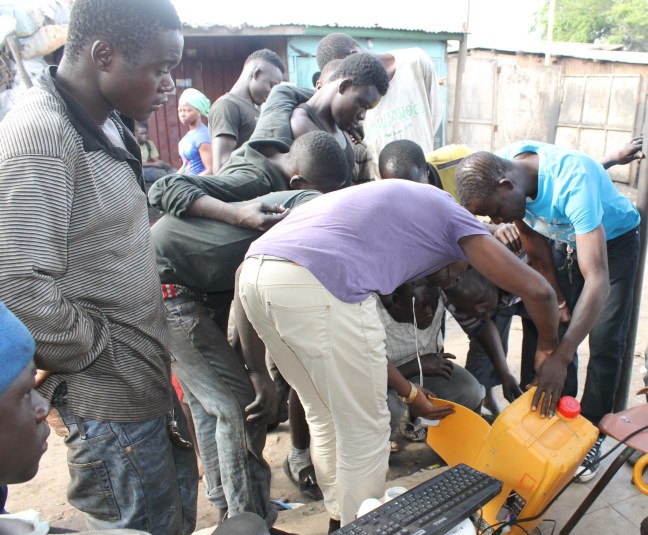
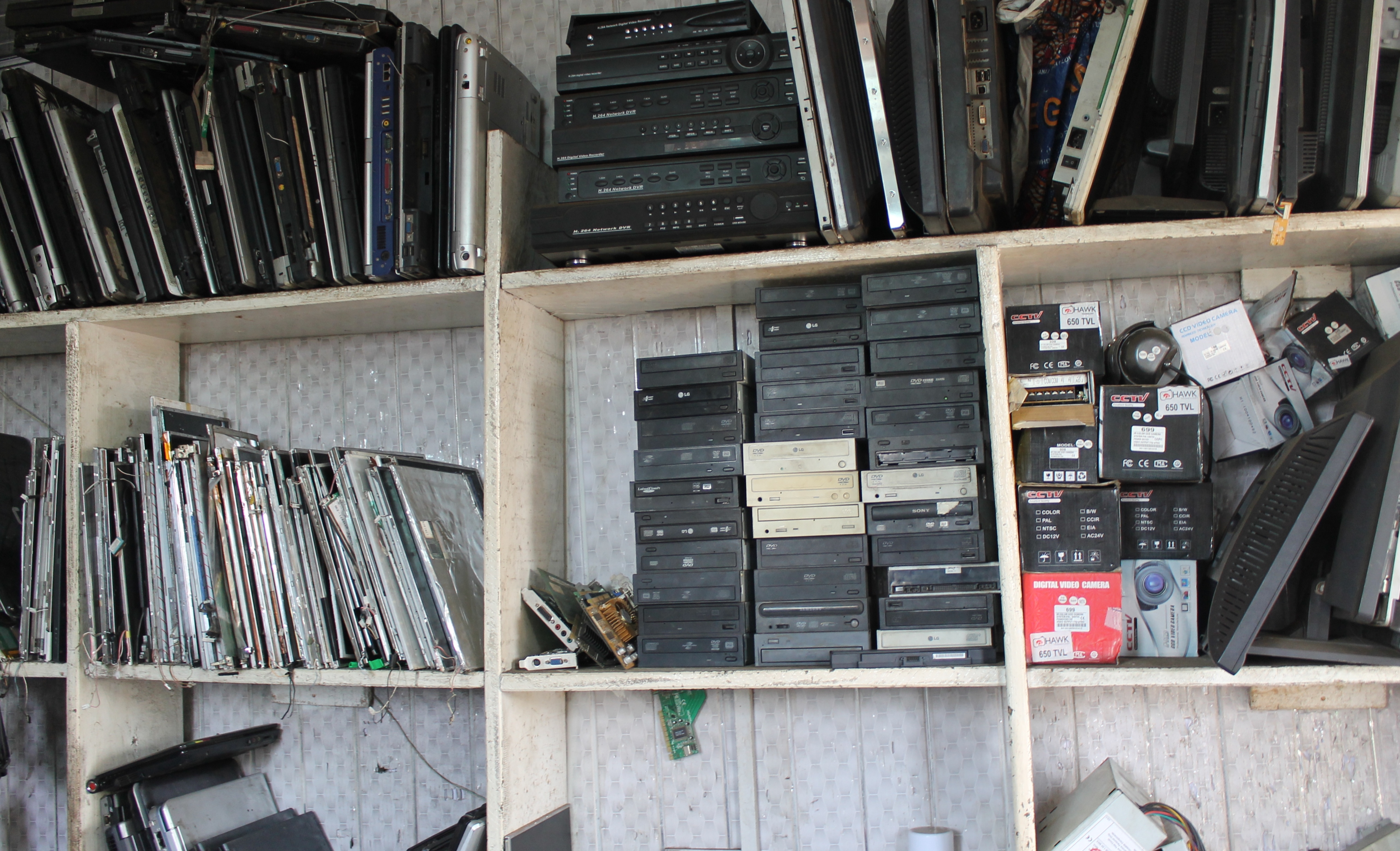
As part of engaging the Agbogbloshie community and STEAM professionals, AMP organized a ‘maker workshop’ to teach e-waste workers how to make a Jerry and install software on it. After a rainy morning, the AMP team arrived in Agbogbloshie in the afternoon. Most of the work-spaces in the scrap yard were partially flooded. Being Friday, and a majority of the e-waste workers being Muslims, they had just arrived from the Friday afternoon prayers. Since prior arrangements had been made with Sam Sandow (AMP agent in Agbogbloshie) and Zack (E-waste worker), the workshop started in one of the computer shops in Agbogbloshie located near the entertainment center.  It is owned and operated by the Nigerian called ”Emeka”. The very same person from which components were sourced for the Jerry workshop in Kokrobite. The shop has shelves on which one would find hard drives,  mother boards, circuit boards and many others.

Emeka's computer shop in Agbogbloshie
Emeka’s computer shop in Agbogbloshie

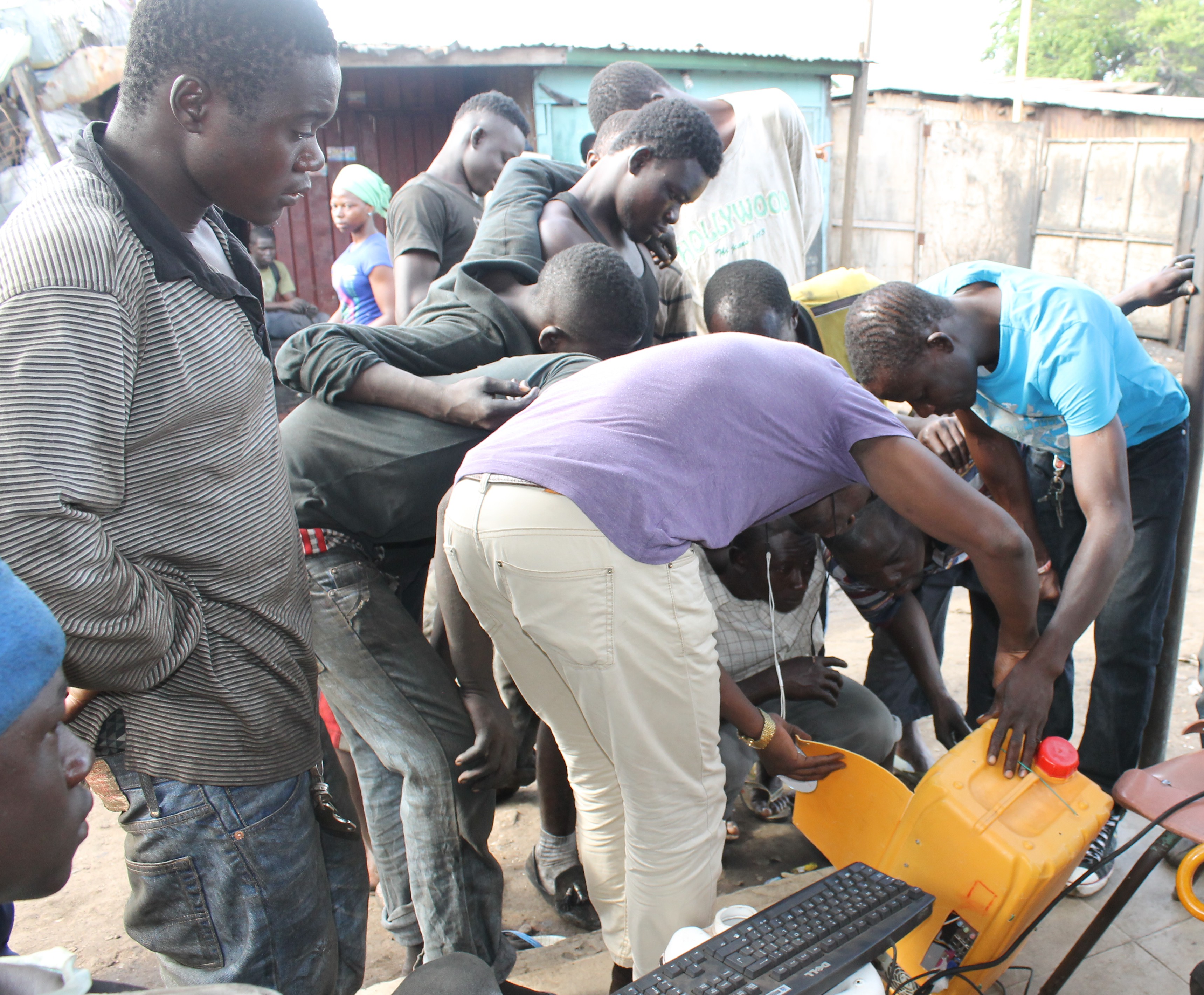
Upon arrival, the team pitched tent and Daniel (AMP intern from  creativity group KNUST) briefly introduced the Jerry concept to the community.  After we explained the concept to Emeka, a monitor, keyboard and mouse, were made available for us to use.  He also gave us a compact disc (CD) with an operating system. The team  installed it and  allowed the participants to familiarize themselves with the Jerry whilst interactively exchanging ideas with the AMP makers collective.

It’s highly informative and exciting to think that, these same e-waste workers who are among the most marginalized and least literate are actually computer literate- and that some of them are even self-thought. This reveals how much youthful potential is being lost to class stereotyping and the resultant marginalization.

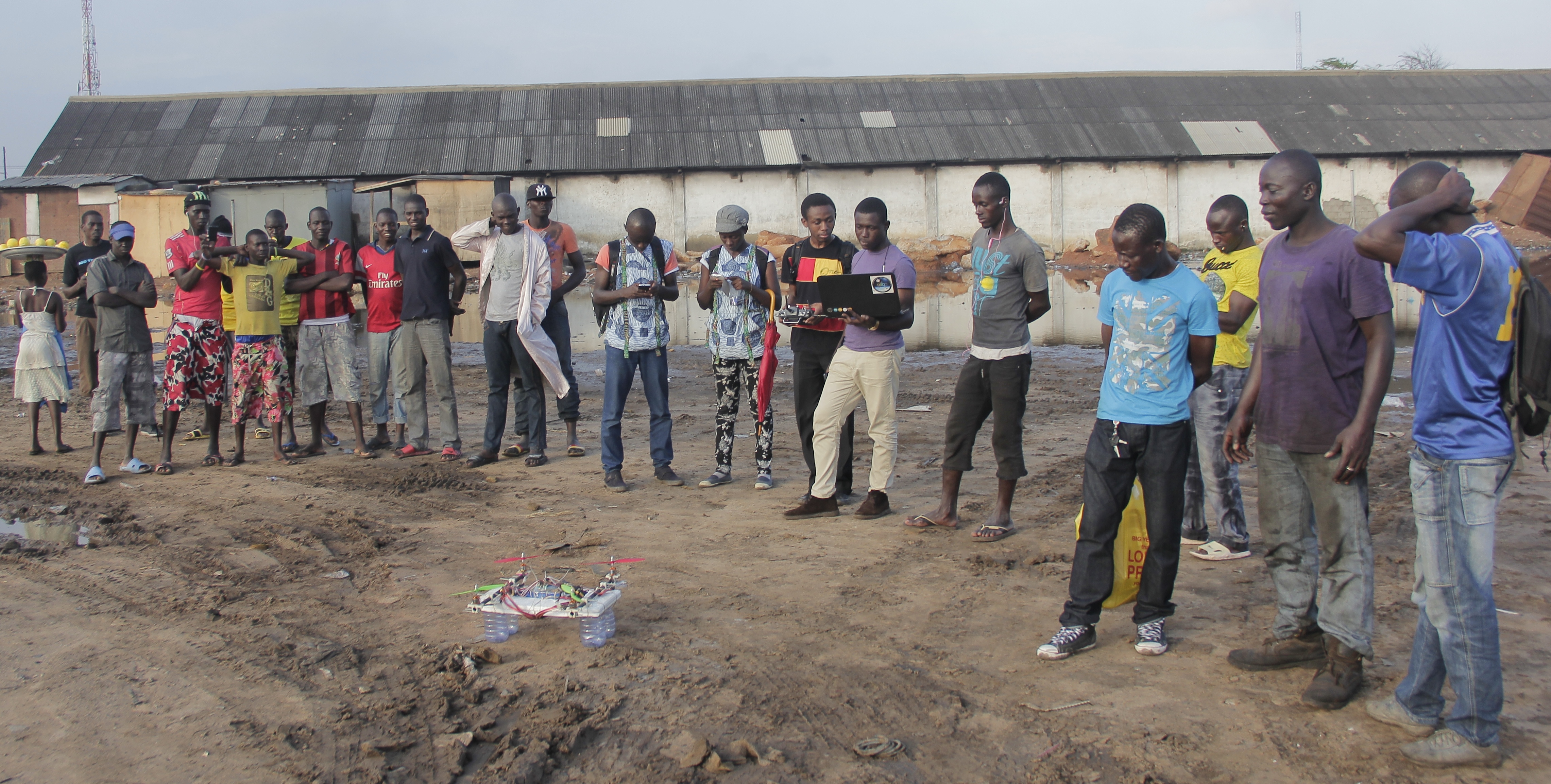
The team later presented the concept of the Quadcoper to the workers by Samuel Amoako (AMP intern and student from KNUST). It was then flown on the football field to demonstrate how it will help AMP map Agbogbloshie and also monitor air pollution levels.

_MG_8891
AMP collective on the football field in Agbogbloshie…About to fly the Quadcopter

All through history, some of the most fascinating discoveries have come about as a result of conversations between two unlikely parties or people from highly divergent backgrounds who would ordinarily not interact. The creation of a community space where such interaction can happen and spark new genius via the crafting of the  ground breaking ideas and objects is one of the central objectives of AMP.

As usual, the workers were busy with their activities: dismantling, loading trucks with scrap metals etc… but some were able to spend time with us and expressed their interest in making one themselves. One of the common questions asked was..whether the plastic will melt when the computer overheats? We answered them by discussing the physical properties of the type of plastic used, such as its melting temperature which is about 130oC and it’s combustion point which is between 340oC to 380oC. Another major concern was the market for the product and the price one should be sold. In effect they appreciated the fact that, parts of old computers can be sourced and used to make a server that works and are cheaper. The AMP team hopes to transfer the knowledge in assembling Jerry computer to making a Jerry Laptop (‘JerryTop’) in the near future.

IMG_5665


Listening to Agbogbloshie

OLYMPUS DIGITAL CAMERA
Sam interviewing e-waste workers in Agbogbloshie

Agbogbloshie has suffered incredibly from the single story syndrome, imposed on it by the media and those with the opportunity to tell its story. Beyond the e-waste, the burning and the hardship, that usually characterises the gruesome descriptions of this urban enclave and its surroundings, there are several industries and practices within this urban site that gives it the kind of rich urban flavour that the space has. One major way of way of dealing with this threat of the single story, is to engage directly with a people. To see through their eyes and to feel what they feel. At AMP, we have made it our lifetime goal, to change first, the story of Agbogbloshie, for “he wields power over you who tells your story”.

In the last few months, the AMP team have sought to hear the stories of e-waste workers in Agbogbloshie through the use of interviews. For us, these are the voices that should be heard. It is our primary aim, through these interviews, to give a voice to the voiceless, to inform the E-waste workers and invite them to be a part of the AMP makers collective. The team recruited and trained two of the e-waste workers (Sam & Iddrisou) to help with the process and they have been engaged in all AMPs activities for the past five months. They participated fully and performed tasks from translation to administering the questionnaires themselves as well as photographing the work spaces of the interviewees. As part of the interview process the team continued to map the e-waste landscape, this time, with specific reference to the interviewees and the location of their workspaces. From this data a detailed map of the Agbogbloshie ecosystem is being constructed. The process is helping the team better understand the working conditions of e-waste workers, the various relationships that exist between them, their future aspirations and the nature of the Agbogbloshie site itself. Hopefully, this will help the team better integrate their needs into the project. So far, over 500 workers have been interviewed. The interviews, which started in May 2014 and are still ongoing and have four main areas of interest:

  1. E-Waste Expertise 2. Training   3. Health Awareness and Practices  4. Aspirations

So far, certain patterns are beginning to emerge- majority of the population in Agbogbloshie are from the Northern part of Ghana especially towns and villages near Tamale, the lingua franca of Agbogbloshie is Dagbani, though some have good command of the English language, majority do not. Most of them dropped out of school at the Junior high school and primary (P5 & P6) levels.

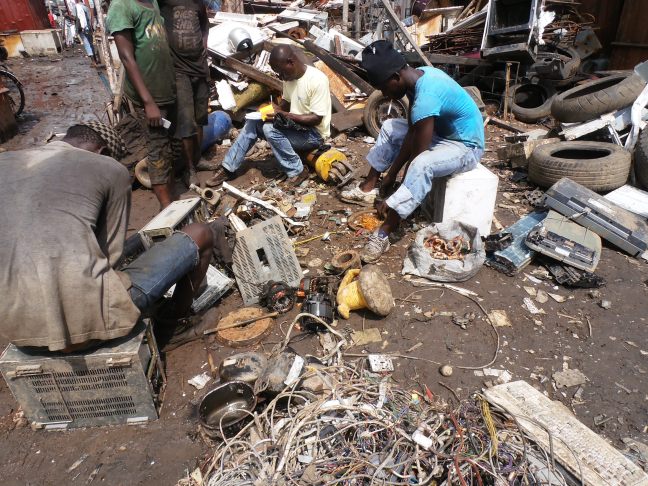
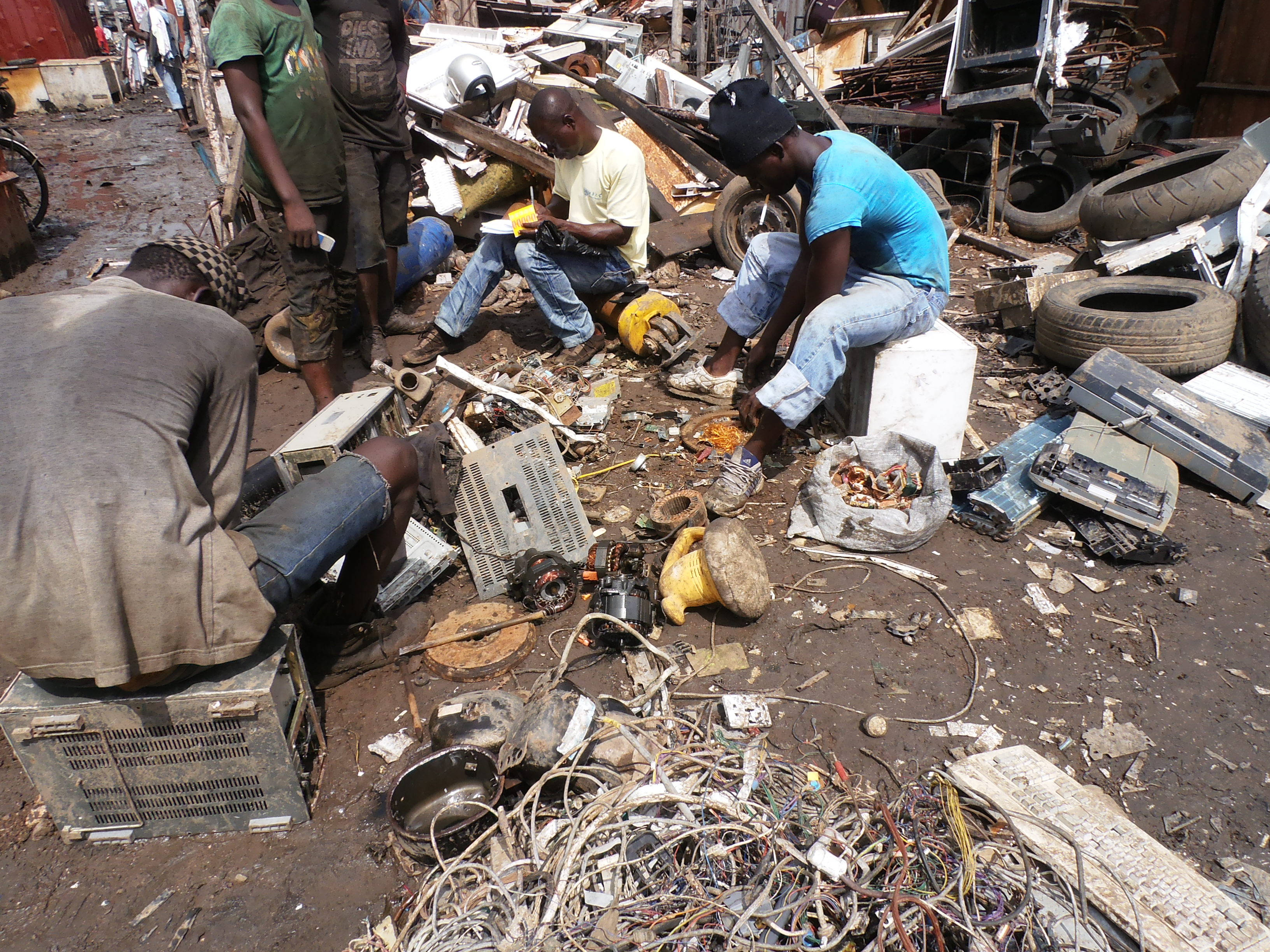
E-waste workers engage in various forms of purchasing of equipment, disassembly, weighing and sale, and provide several tons of urban mined materials like copper.  There are also many industrious and entrepreneurial individuals who make highly useful objects. Indeed, Agbogbloshie is more than just an e-waste dump. During the survey we took  photographs  of some of the activities that go on in the yard and here is a field note.

Despite all of these very positive aspects of Agbogbloshie, there still remains the blight of filth and cable burning which means the risk of contamination and disease are highly pervasive. In general, there is a fair level of awareness about health risks amongst the e-waste workers. Thanks to the ubiquitous media coverage of that specific issue, e-waste workers are at least vaguely aware of the adverse effects of burning on their health. They however said that since it was their job, they felt as if they had no option than to do it. In reaction to this discovery on health, the AMP team have designed a utility shirt for the workers. When the second prototype of the utility shirt (the spacesuit) was showed them, e-waste workers insisted on the face gear (with possible embedded gas mask). It was observed that, workers in Agbogbloshie start their day early with the cart pushers, moving out early in the morning to source electronic equipment. Our discoveries provide us with information about Agbogbloshie but this is helping us understand the workings of informal communities, and people who are surviving on the “peripheries” of our awareness and yet contribute significantly to our lives. More than just an e-waste dump, Agbogbloshie is a huge open air manu-factory.

Made in Agbogbloshie

Agbogbloshie is a challenging site. As a space, Agbogbloshie is sensory overload: soil and water darkened from pollution exude noxious vapours under the heat of the sun; toxic fumes emanate from burning sites; the clamour of slamming hammers and banging chisels fills the air… But that is only part of the Agbogbloshie story.

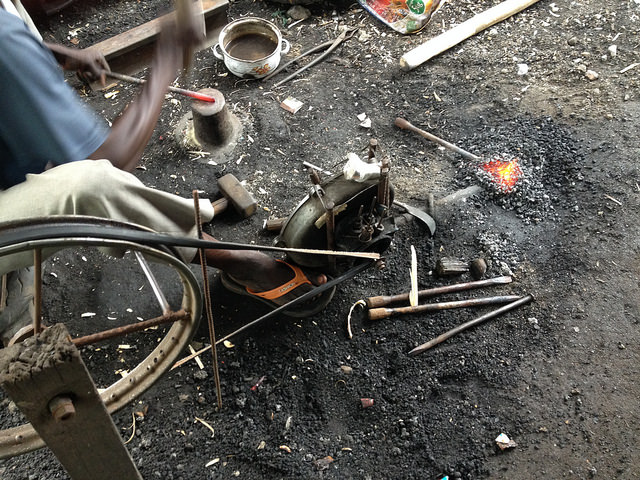
A closer look at the ecosystem of the giant self-organized open-air factory shows that Agbogbloshie is about more than destruction alone. A parallel set of activities support the livelihood of onsite workers: food and entertainment spaces — Agbogbloshie has both a cinema and foosball tables! Numerous mosques dot the landscape (we found a total of 14 mosques in the area surveyed) serving five times a day the faithful that are working nearby. Since believers must take ablution before praying, water circulates in plastic tea pots from water tanks, the few municipal water supplies and public toilets/showers that are sprinkled around the site. Workers also engage in making: making tools (such as chisels) to disassemble e-waste or other items into scrap that has a resalable value, making machines (such as a furnace blowing system using a bicycle wheel) to make these tools, and making items (aluminum pots and coal pots using metals harvested from refrigerators) to sell outside the boundaries of the site.

Agbo-maker-chisel
Furnace blower at a blacksmith workshop making chisels for e-waste disassembly

We love the hand-crafted bicycle tyre-powered blowers used to ventilate locally-fabricated furnaces for cottage industry smelters (seen in various places). They are a powerful example of the on-going knowledge transfer within Agbogbloshie and testament to the intertwined nature of making and technology development. Exactly what AMP seeks to further leverage in Agbogbloshie.

Here is the link to our Flickr album Made in Agbogbloshie. While (e-)waste processing is crude and hasty to maximize profit (informal e-waste workers earn a higher than average income compared to informal workers overall), we certainly see all the parts necessary to make the machine, the self-organized open-air factory, run smoothly. Making is just part of it.

AMP Spacecraft

For many designers across the globe, language (words) form the bedrock of design thinking: “Words are tools for architectural design; for the development of design intent or strategy, as well as construct the ideas that drive its creation” (Eckler, 2012) [1].

The Agbogbloshie makerspace, is essentially, a community “toolbox” for Agbogbloshie. It was conceived as a spacecraft. This choice of a word served both as a starting point and driver for the design. With AMP co-pi DK Osseo-Asare as the lead on the design team, the AMP spacecraft was designed with mobility in mind, as are other crafts like an air craft, or even space faring vehicles (spacecrafts). As a community kiosk with hand tools, the idea of crafting (making with ones hands) was pivotal in addition to the fact that, these tools enable the spacecraft to replicate itself. Hence it can be read as a place where space is crafted.

Beyond these, the influence of space travel is relevant to the Agbogbloshie makerspace. Here, the toxic electronic landscape which is unfavourable for human habitation is likened to an extra-terrestrial planetary body. Hence, the arrival of a spacecraft could imply the commencement of a process of terraforming–the hypothetical notion that, in order to be habitable and/or conducive for human habitation, atmospheres and ecology of other planets can be modified. From this point of view, the arrival of the AMP spacecraft in Agbogbloshie is the commencement of a process of spatial change or transformation, a notion which is itself deeply related to crafts (vehicles).

In summary, the spacecraft is:

  • Mobile and is like other crafts
  • A place for making (crafting)
  • A workshop for crafting space due to its self replicating ability
  • And a first step towards the spatial transformation of the Agbogbloshie landscape

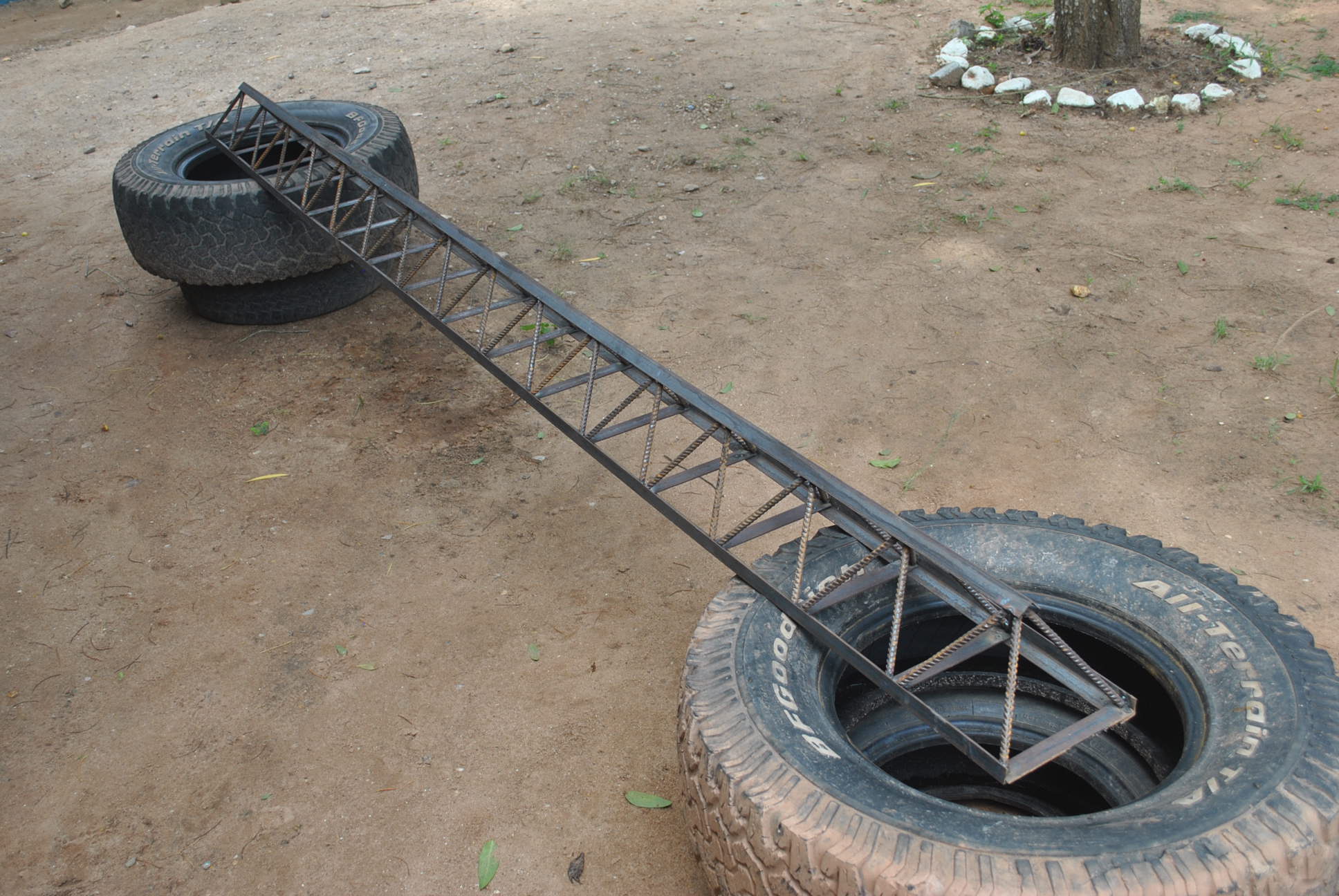
In terms of the structure, the AMP spacecraft is modular and has a frame consisting of 12 octet trusses per module. (See video here). Each octet truss is made up of steel angle bars, flat plates and rods, which form a series of half octahedra all welded together into a singular structural unit. The intention is to fill in the structural frame with materials sourced from within the Agbogbloshie landscape such as old refrigerator doors, which will constitute composite “precast” insulated panels.

photo(2)
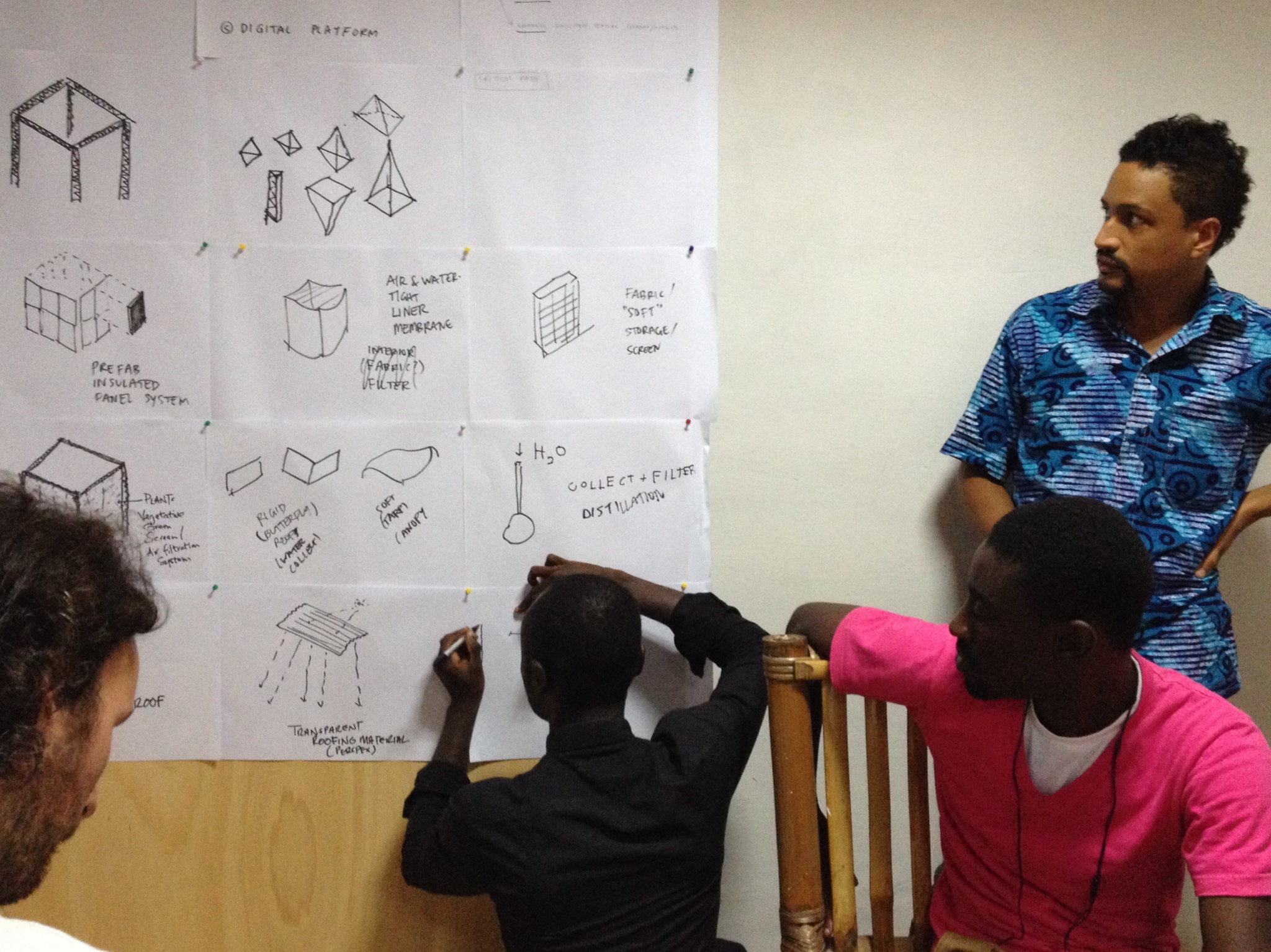
Spacecraft brainstorming session at Hub Accra during AMPQAMP

For the past three weeks week as part of AMPQAMP, the process of crafting the first module of the spacecraft continued starting in Hub Accra with theorizing and brainstorming about the spacecrafts systems and components, and ending in Kokrobite with the fabriacation of the first full scale octet truss, after several prototypes and mockups. It was a long tedious and yet highly exciting process where our desire for high level of precision and accuracy meant cutting and re-cutting, measuring and re-measuring, until we arrived at fairly satisfactory results.

welding image
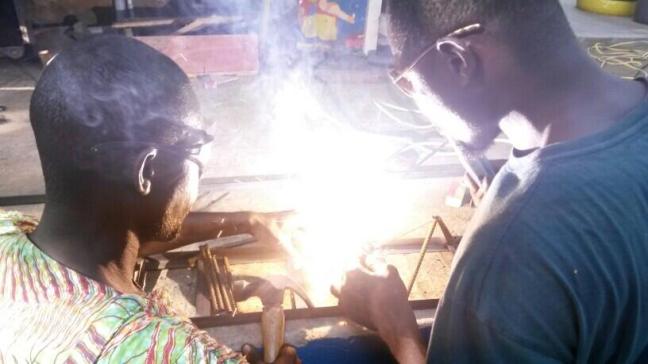
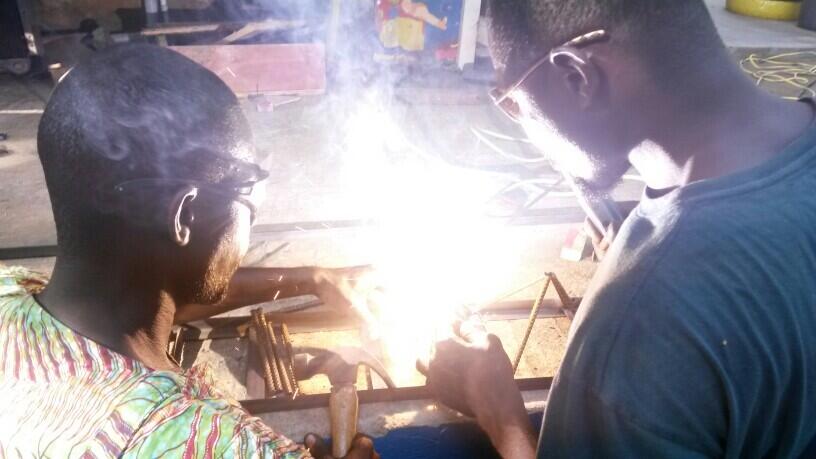
Welding of octet truss at Kokrobite Institute.

Thanks to master welder Badu and his assistant, we had a fruitful learning experience. Their process was particularly interesting to us because, they used a grinder that was itself “e-waste” sourced from Agbogbloshie. As a space of convergence, the spacecraft which is a place for interaction and sharing (and will exist both as a tangible place, and a fully functional virtual platform) will soon land in Agbogbloshie. Stay tuned!!!

DSC_0080 - Copy
Octet truss welded during AMPQAMP

1. Eckler, F.J 2012, “Language of Space and Form: Generative Terms for Architecture”, John Wiley and Sons, New Jersey, page 1.

***

See also:

WEEE basic understanding AMP Manuals

One of AMP’s core objectives is the compilation and design of a “waste” electronic and electrical equipment (WEEE) manual. The main purpose of this is the provision of vital information for the AMP maker collective comprising of STEAM students/graduates (Science, Technology, Engineering, Art and Mathematics) and Agbogbloshie e-waste workers.

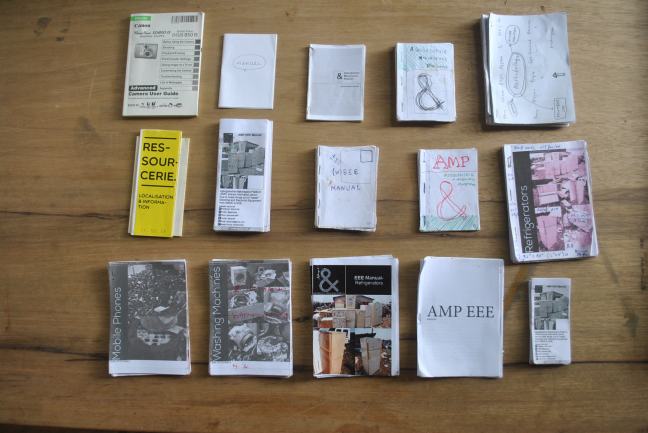
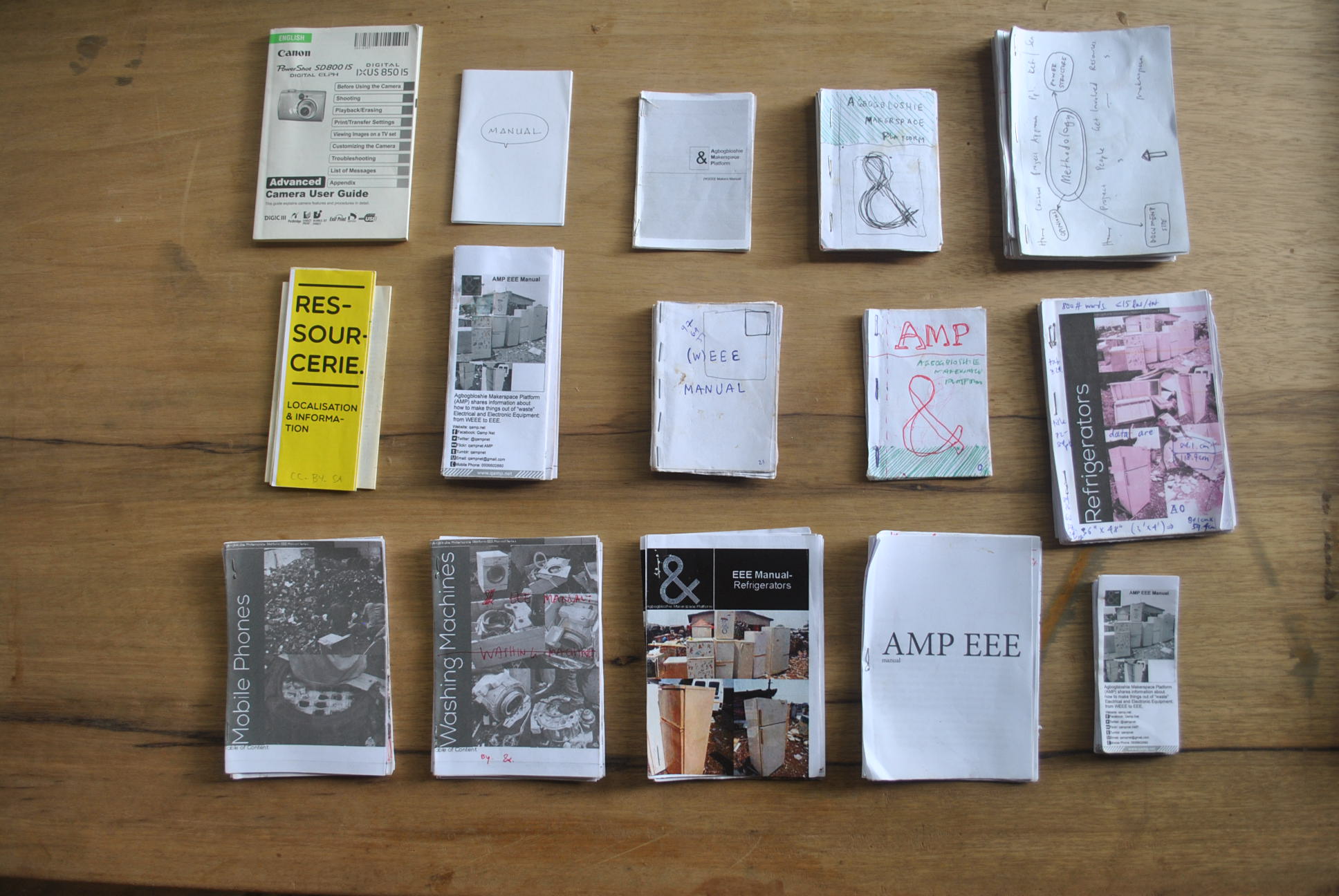
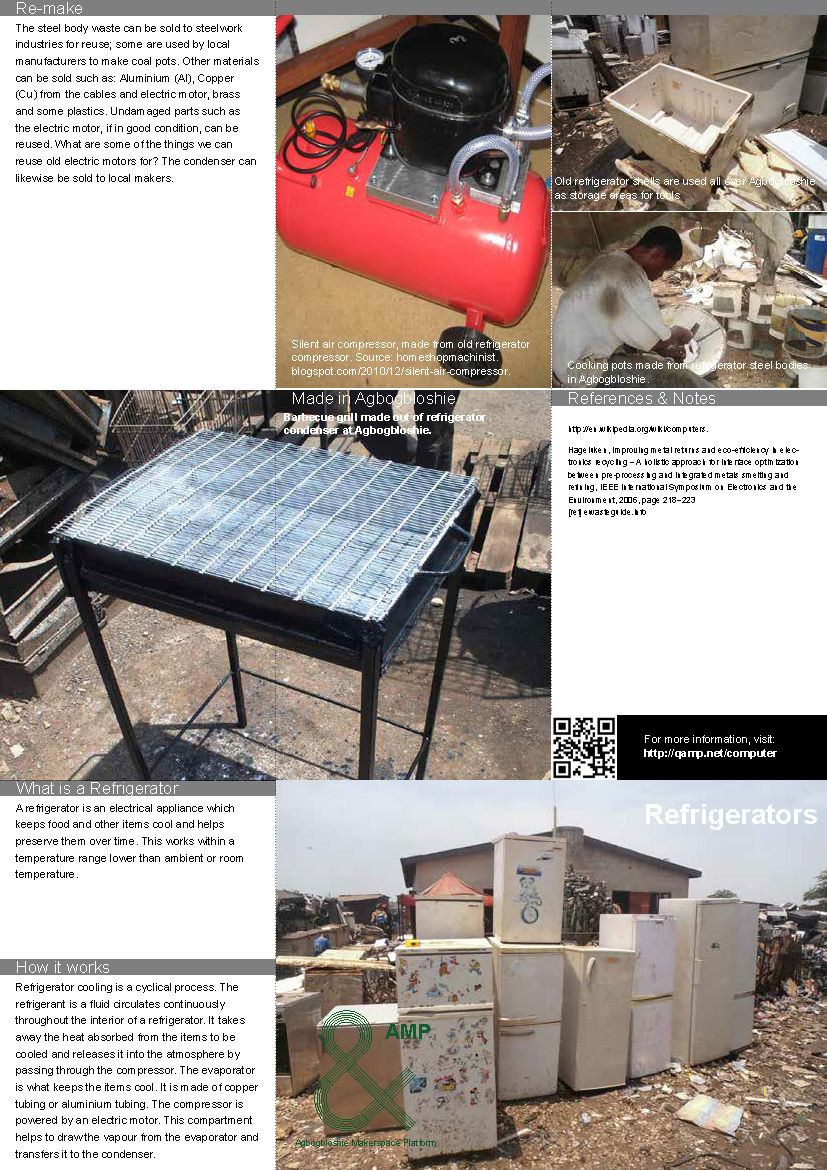
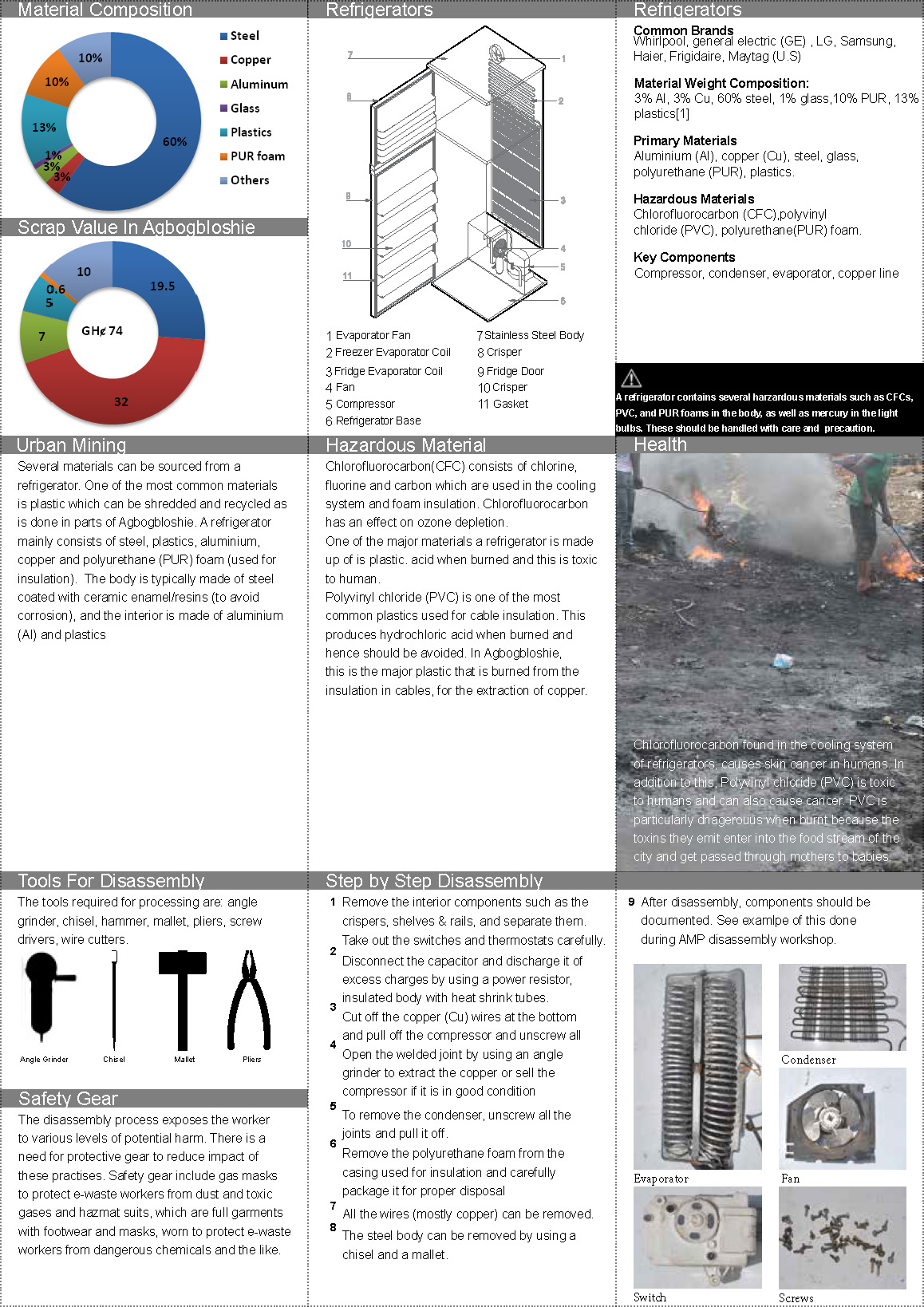
For several months, we worked on the print version of the manual–a series of individual manuals for each electrical and electrical equipment studied–which has undergone several design iterations (see image below). We collected data from a number of articles and our own fieldwork (to learn the value in Ghana Cedis of each item brought to and dismantled in Agbogbloshie). We designed a manual for each piece of equipment studied so it fits a single folded sheet of paper. This makes it simpler and more user friendly. In the coming days, these manuals as they are so far, will be hosted online so makers and people knowledgeable about electrical and electronic equipment could contribute to them.

The manual is organized so as to give information on material composition, parts and components, hazardous materials, urban mining opportunities, tools for dis-assembly, steps for dis-assembly, safety gear, and opportunities and ideas for remaking.

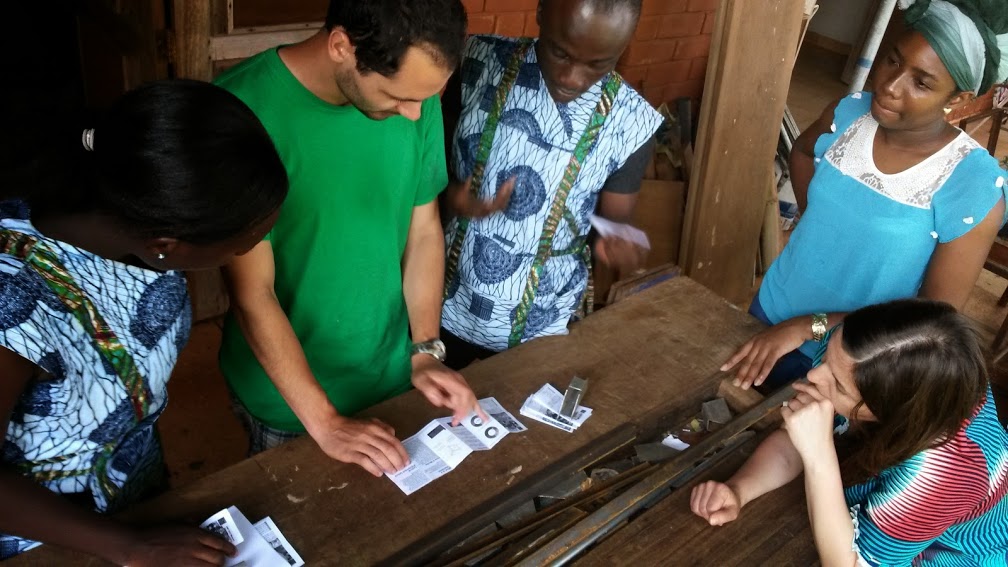
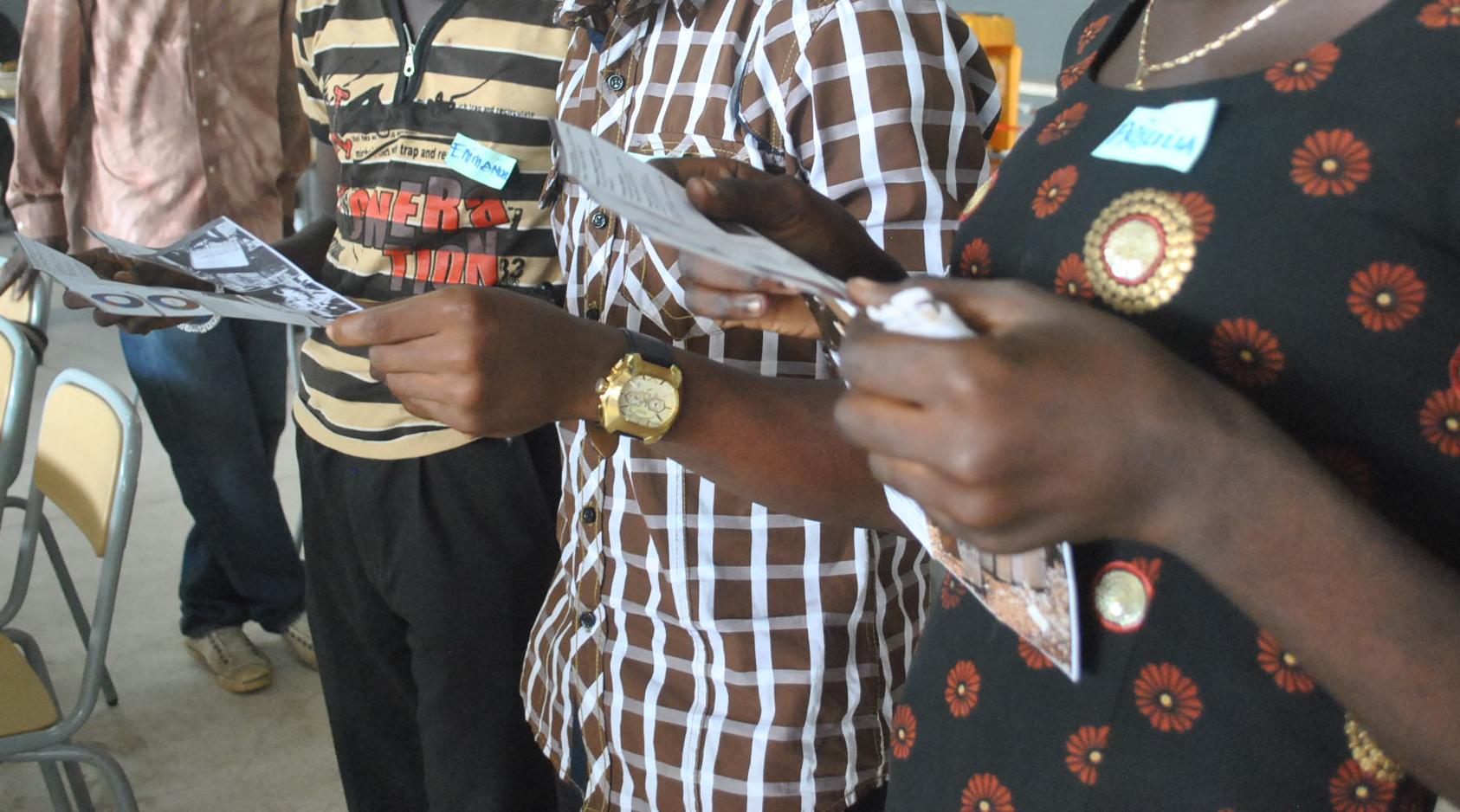
Svet Lightyear visitPicture of the AMP Team showing the manual to Svet from the Lightyear Foundation.

This task is a staggering one because it should cater to the needs of people pertaining to different social categories, each with different understanding and knowledge. On the one hand are the STEAM professionals, educated and used to reading guides and who may even love manuals and on the other hand, the e-waste workers, predominantly uneducated and having a general disinclination towards anything remotely related to guidebooks or for that matter, books. This means they would both relate differently to a typical guidebook. Although this may sound stereotypical, it is a truth with which the AMP team is confronted.

powershift Students at the recently ended PowerShift conference viewing the latest version of the manuals
Students at the recently ended PowerShift conference viewing the latest version of the manuals

To navigate these murky waters, the team decided to go beyond the traditional printed manual in a foreign language and to in addition to this make to video manuals which can be housed on servers and broadcast inside the spacecraft. These will be targeted specifically at the e-waste workers, and put together by some of them, in collaboration with their STEAM counterparts and will be done in Dagbani ( the Lingua franca as it were in Agbogbloshie). In addition to this, makers and/or hackers around the country and the world will have access in open source fashion to all the manuals online, as part of the AMP digital platform.

Image showing the various iterations of the AMP manual and some sources of inspiration

In the coming years, AMP hopes to see this manual evolve into a highly informative periodical, providing vital knowledge for a local and international network of young passionate makers and hackers. A thrilling thought indeed!!!

Manual-fridge sample_Page_2Manual-fridge sample_Page_1

Hazards of an Untamed Inferno

[By Louis, the medical student on the AMP team]

Any time there is a threat of biological or chemical attack, the first you think about is personal safety. Aside finding environmentally-friendly and efficient solutions to managing mountain-high piles of used plastic products, the AMP also discovered how extremely poisonous it is to work in spaces like Agbogbloshie with plastics constantly set ablaze. It can increase the risk of heart disease, aggravate respiratory ailments such as asthma and emphysema, and cause rashes, nausea, or headaches, damages in the nervous system, kidney or liver. The most dangerous emissions can be caused by burning plastic substances like PVC. When such plastics are burned, a group of highly toxic chemicals called dioxins are emitted. This is a very typical practice in Agbogbloshie for copper wire recovery.

IMG_9888[1]
Clouds of fumes from copper recovery
Dioxins settle on crops and in our waterways where they eventually end up in our food and  accumulate in our bodies. They accumulate in our body fat and thus mothers give it directly to their babies via the placenta.

Therefore, one of the AMP team’s research trajectories is in safety gear for the industrial environment of Agbogbloshie.

Gas masks–more generically known as respirators–protect workers against everything from dust to toxic gases in general. It is a tight-fitting plastic or rubber face mask with some sort of filter cartridge. In one main type, the supplied air provides pre-filtered air from a canister through a tube whiles in the other, the air breathed in and out of the mouth directly. Based on particle filtration, chemical absorption or adsorption and chemical reaction to neutralize a chemical, respirators are built to effectively filter a wide range of contaminants from burning emissions. Some filters are disposable whiles others can be replaced.

Additionally, we looked at the hazmat suit which is an overall garment (including boots, gloves, a hood) worn to protect people from hazardous materials or substances, including chemicals, biological agents, or radioactive materials. It is worn in a dozen or more layers; the first layer jumpsuit being re-usable. Some hazmat suits are loose to prevent spillage only, whiles others are air-tight to prevent gaseous contact.

Unfortunately, local dealers may not be able afford such equipment costing some hundreds of dollars. More importantly, many of them remain unaware of the dire effects of their daily activities. Not only these people who are burning plastics are exposed to these pollutants, but also their neighbours, children and families.

Hopefully, the creative geniuses at AMP can create some local and sustainable gas masks based on American and European standards. With our own teams and the workers at Agbogbloshie in mind, we hope to reduce the risks of individuals being exposed to unfiltered fumes. Our thinking caps are on tight!

For further reading, please visit the links below:

http://science.howstuffworks.com/gas-mask1.htm

http://en.wikipedia.org/wiki/Respirator

http://www.wecf.eu/cms/download/2004-2005/homeburning_plastics.pdf

http://www.sccfd.org/clothing_hazmat.html